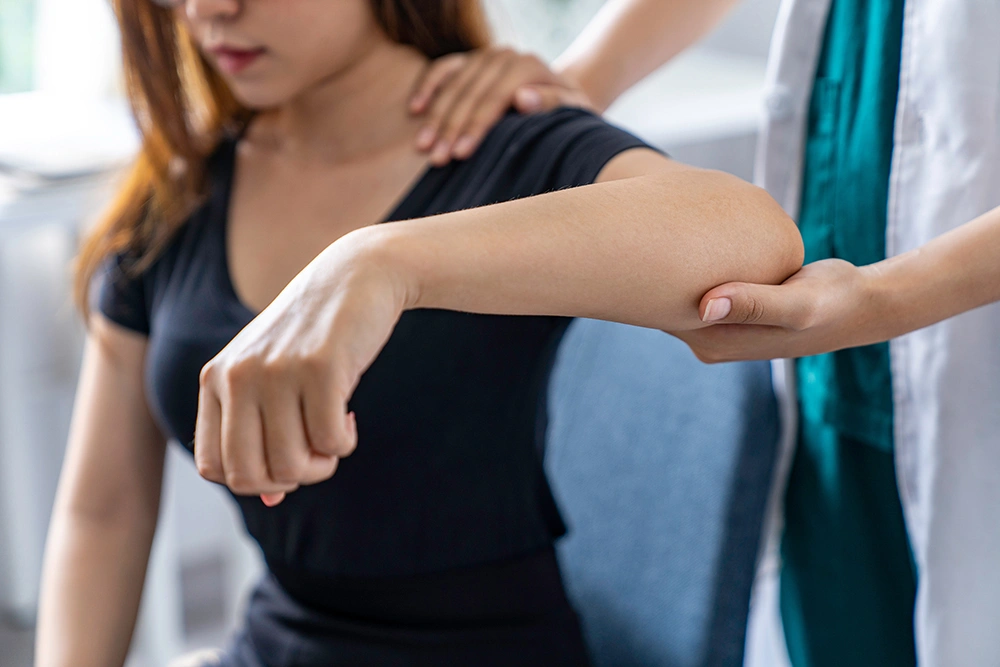


Tennis elbow and golfer’s elbow are two of the most common overuse injuries affecting the forearm and elbow. Despite their names, both conditions can occur in anyone who performs repetitive arm, wrist or gripping movements, not just athletes.
Although they share a similar mechanism of gradual tendon overload, these conditions affect different sides of the elbow and therefore present in different locations. Symptoms often develop slowly and may initially feel manageable, which can delay recognition until pain starts to affect everyday activities such as carrying objects, typing or even holding a cup.
Key Takeaways
- Tennis elbow causes pain on the outside of the elbow, while golfer’s elbow affects the inside of the elbow
- Both conditions are caused by repetitive tendon overload from gripping, lifting, or repetitive wrist movements
- Tennis elbow is commonly linked to wrist extension, while golfer’s elbow is associated with wrist flexion and forearm rotation
- Most cases improve with activity modification, rehabilitation, and non-surgical treatment
- Persistent pain, weakness, or reduced grip strength may require specialist orthopaedic assessment
What Are Tennis Elbow and Golfer’s Elbow?
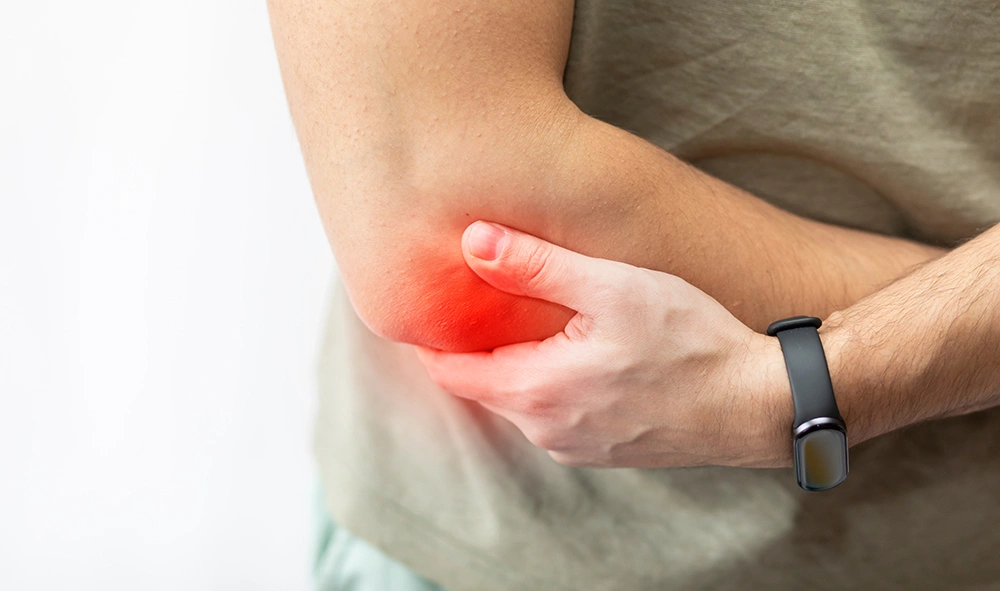
Tennis elbow and golfer’s elbow are common overuse tendon injuries that affect different sides of the elbow. Tennis elbow, also known as lateral epicondylitis, affects the tendons attached to the outer elbow, while golfer’s elbow, or medial epicondylitis, affects the tendons attached to the inner elbow.
Both conditions are recognised as common upper limb sports injuries, particularly in activities involving repetitive gripping, lifting, throwing, or wrist movements. However, they can also affect office workers, gym-goers, and people performing repetitive manual tasks.
Symptoms usually develop gradually over time due to repeated tendon overload rather than from a single injury. Without appropriate rest or treatment, persistent strain may lead to ongoing pain, weakness, and reduced arm function.
What Are the Differences Between Tennis Elbow and Golfer’s Elbow?
Although both conditions involve tendon overload around the elbow, the location of pain and the movements that trigger symptoms are often different.
Feature | 网球肘 | 高尔夫球肘 |
Pain location | Outside of the elbow | Inside of the elbow |
Tendons affected | Forearm extensor tendons | Forearm flexor tendons |
Common aggravating movements | Wrist extension and gripping | Wrist flexion and forearm rotation |
Common activities linked to symptoms | Tennis, typing, lifting, manual work | Golf, weight training, throwing sports |
Common symptoms | Pain during gripping or lifting | Pain during gripping or wrist bending |
People with tennis elbow commonly experience pain while shaking hands, lifting objects, gripping tools, or turning door handles. The discomfort may extend down the forearm and gradually worsen with repetitive activity.
Golfer’s elbow more commonly causes pain along the inner elbow, sometimes extending into the forearm or wrist. Symptoms may worsen during lifting, gripping, throwing, or repetitive wrist bending movements.
How Are These Elbow Conditions Diagnosed?
Diagnosis is usually based on physical examination and review of symptoms. A specialist may assess pain location, grip strength, elbow movement, and symptoms during resisted wrist movements to help distinguish between the two conditions.
In some cases, imaging such as ultrasound or MRI may be recommended to assess tendon damage or rule out other causes of elbow pain.

What Treatment Options Are Available for These Elbow Conditions?
Treatment for both tennis elbow and golfer’s elbow focuses on reducing tendon overload, improving healing, and restoring function. Most cases improve with non-surgical treatment.
Activity Modification and Load Management
Reducing or modifying aggravating activities is often the first step in recovery. This may involve reducing repetitive gripping, lifting, or wrist movements that continue to strain the affected tendon.
Small adjustments to sports technique, training volume, workstation setup, or lifting mechanics may also help reduce ongoing stress on the elbow.
Physiotherapy and Rehabilitation Exercises
Physiotherapy plays an important role in recovery. Progressive strengthening and stretching exercises help improve tendon capacity, reduce overload, and restore forearm function.
Rehabilitation may also address movement patterns or biomechanical factors contributing to repetitive strain.
Bracing and Symptom Support
Counterforce braces or elbow straps may sometimes help reduce stress on the tendon during activity. While these supports do not treat the underlying condition, they may provide temporary symptom relief during recovery.
药物治疗与注射治疗
Short-term anti-inflammatory medication may help reduce pain during flare-ups.
For more persistent cases, injection therapy may sometimes be considered. Platelet-rich plasma (PRP) injections may also be discussed in selected patients when symptoms do not improve with standard conservative treatment.
Surgical Treatment for Persistent Cases
Elbow surgery is rarely required but may be considered when symptoms continue for several months despite structured rehabilitation and significantly affect function.
Depending on the condition, surgery may involve removing damaged tendon tissue and repairing or reattaching healthy tendons.
Restore Ease of Elbow Movement With HC Orthopaedic Surgery

Restore Ease of Elbow Movement With HC Orthopaedic Surgery
我们的专业团队
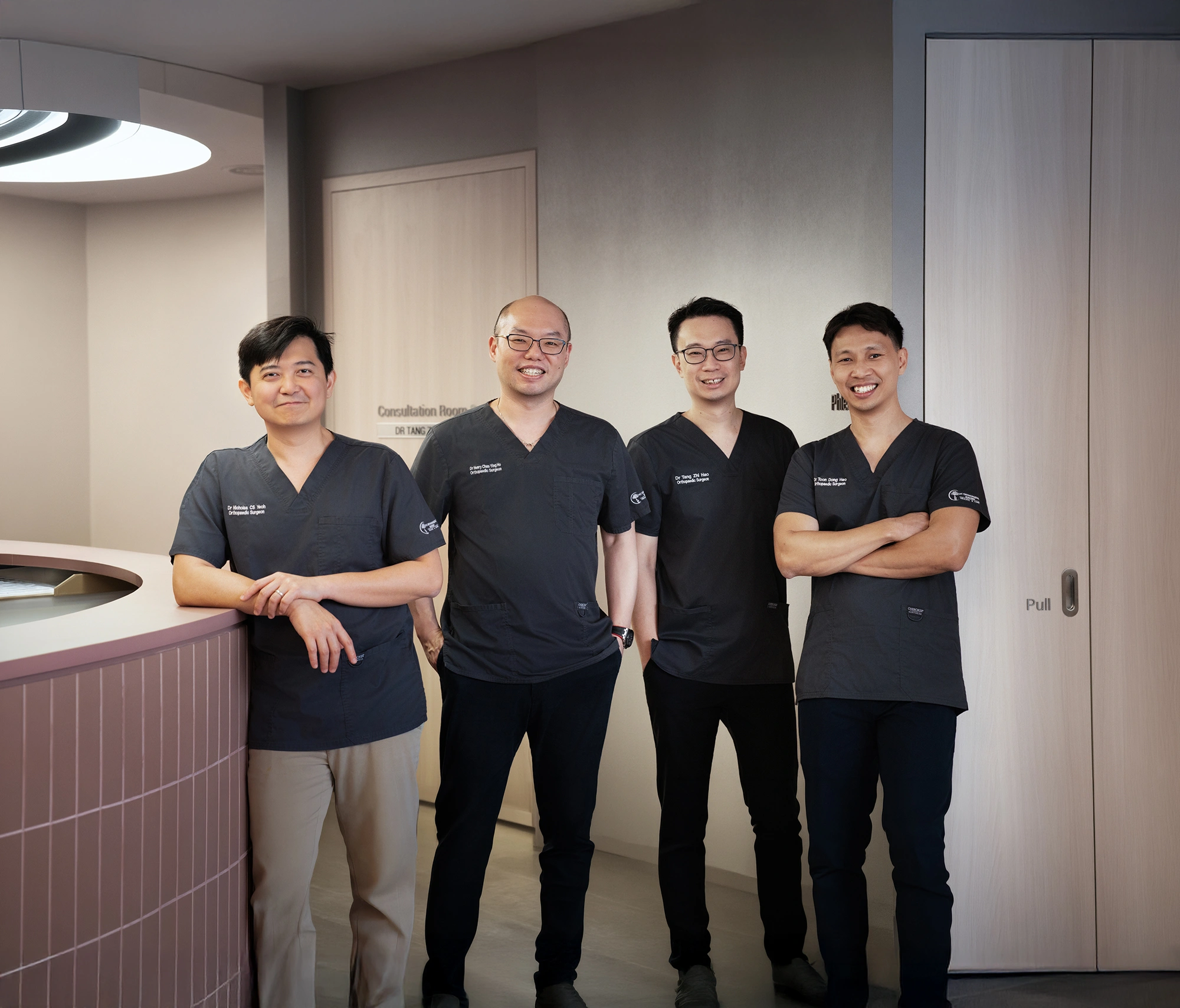
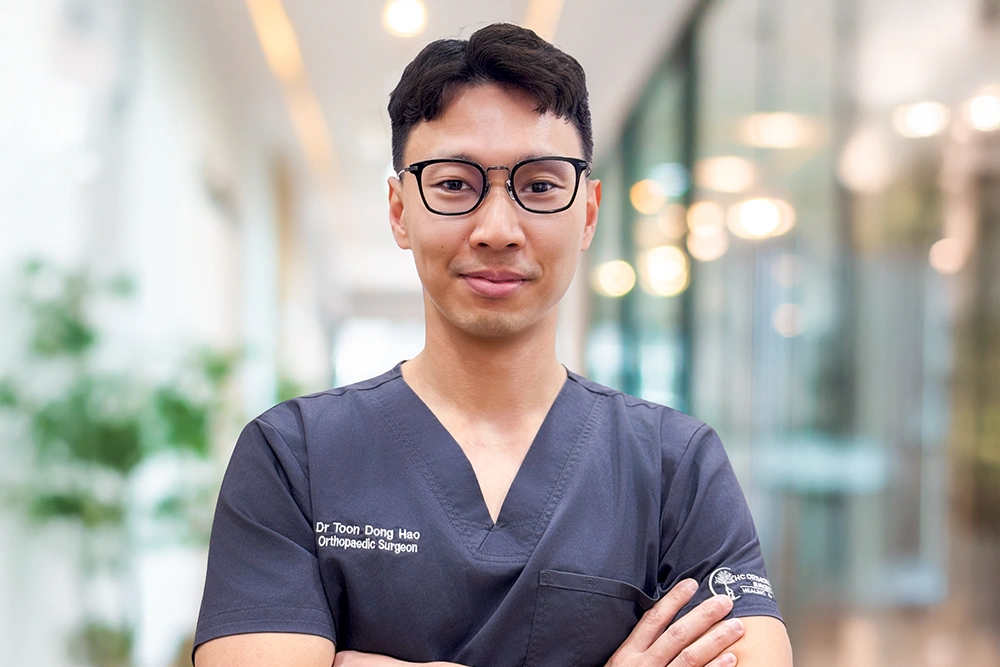
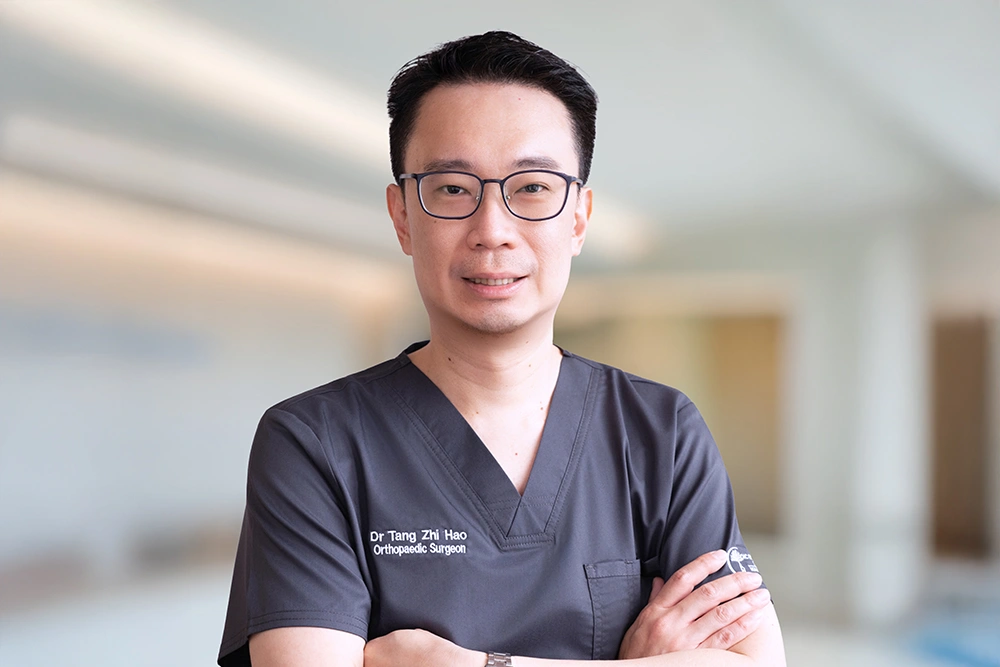
At HC Orthopaedic Surgery in Singapore, patients are cared for by Dr Henry Chan, with Dr Toon Dong Hao providing expertise in elbow and upper limb conditions. The team also includes Dr Nicholas Yeoh and Dr Tang Zhi Hao, offering comprehensive orthopaedic care across a wide range of musculoskeletal injuries. If your elbow pain is persistent or affecting your daily activities, arrange a consultation for an assessment and take the next step towards restoring ease of movement and improving function.
Frequently Asked Questions (FAQs) Tennis Elbow and Golfer’s Elbow
Can you have both tennis elbow and golfer’s elbow?
Is tennis elbow only caused by tennis?
Does golfer’s elbow affect non-golfers?
How long does it take to recover from elbow overuse injuries?
Meet Our Elbow Specialists in Singapore
我们的团队由陈英豪医生、杨进勋医生、童东豪医生和邓智浩医生组成。他们都是经验丰富的骨科医生,拥有各自亚专科领域的专长,并秉持以患者为中心的诊疗理念。

陈英豪医生
医疗总监兼骨科高级顾问医生
内外全科医学士(新加坡),皇家外科医学院会员(爱丁堡),骨外科医学硕士,皇家外科医学院院士(爱丁堡)
陈英豪医生是一位经验丰富的骨科医生,专攻关节置换及复杂翻修手术。他曾凭借新加坡卫生部(MOH)高阶医学深造计划(HMDP)奖学金,在德国著名的Helios Endo-Klinik接受培训,迄今已完成超过1,000例关节置换手术,并擅长运用计算机辅助及机器人辅助关节置换技术,以确保手术效果精准。

杨进勋医生
骨科高级顾问医生
内外全科医学士(爱丁堡),皇家外科医学院会员(爱丁堡),骨外科医学硕士,皇家外科医学院院士(爱丁堡)
杨进勋医生 卫生部认证的骨科专科医生,同时也是爱丁堡皇家外科医学院的院士。他曾凭借卫生部高层次医疗人才引进计划(HMDP)奖学金,在悉尼接受髋关节和膝关节重建方面的专科进修培训,专攻微创关节置换术、机器人辅助手术以及有助于改善康复效果和手术疗效的先进技术。

童东豪医生
骨科高级顾问医生
内外全科医学士(利兹),皇家外科医学院会员(爱丁堡),骨外科医学硕士,皇家外科医学院院士(爱丁堡)
童东豪医生 技术娴熟的骨科医生童东豪医生 爱丁堡皇家外科医学院的院士。童东豪医生 凭借卫生部高层次医疗人才引进计划(HMDP)奖学金,在悉尼接受了肩肘外科高级专科培训。童医生专攻运动损伤、关节镜手术以及复杂的肩、肘和膝关节手术,致力于帮助患者恢复功能和活动能力。

邓智浩医生
骨科高级顾问医生
内外全科医学士(新加坡),皇家外科医学院会员(爱丁堡),骨外科医学硕士,皇家外科医学院院士(爱丁堡)
邓智浩医生 接受过专科进修培训的骨科医生邓智浩医生 专攻足部和踝关节疾病。他曾在首尔延世大学医疗系统下属的世卫医院,师从李镇宇教授,完成了足踝外科专科进修。在开设私人诊所之前,他曾在邱德拔医院担任骨科顾问及副主任。