
Avascular Necrosis (Osteonecrosis)
Treatment in Singapore






You may notice a dull ache deep in your hip that does not fully go away. At first, it might only appear after a long walk or a busy day on your feet. Over time, the discomfort can become more persistent, making it harder to climb stairs, stand for extended periods or even sit comfortably.
In some cases, this gradual and unexplained hip pain is caused by avascular necrosis (AVN), also known as osteonecrosis. This condition occurs when part of the bone loses its blood supply, causing the bone tissue to weaken and eventually collapse. When it affects the hip, the rounded head of the thigh bone is most commonly involved, which can significantly impact mobility and joint function.
Because avascular necrosis often progresses if left untreated, early diagnosis and appropriate orthopaedic care are important to preserve the joint and reduce the risk of long-term arthritis.
What Are the Common Symptoms of Avascular Necrosis?
Symptoms of avascular necrosis vary depending on how advanced the condition is. In its early stages, discomfort may be mild and only noticeable during activity. As the condition progresses, pain can become more persistent and mobility more restricted. Symptoms typically develop gradually rather than suddenly.
Deep Groin or Hip Pain
Pain is most often felt deep in the groin or front of the hip rather than in the buttock. It may initially occur only during weight-bearing activities such as walking or climbing stairs, but can later persist even at rest as the condition worsens.
Progressive Hip Stiffness
As the femoral head begins to lose its smooth contour, hip movement becomes increasingly limited. Everyday tasks such as tying shoelaces, cutting toenails or getting into a car may feel more difficult.
Limp or Abnormal Gait
To reduce discomfort, patients may unconsciously shift weight away from the affected side, resulting in a limp or uneven walking pattern. Over time, this altered gait can place additional strain on the lower back and opposite hip.
Limb Shortening in Advanced Stages
If the femoral head collapses, the affected leg may appear slightly shorter. This can further affect balance, posture and walking stability.
Why It Happens
What Causes Avascular Necrosis?
Since avascular necrosis usually develops when blood flow to the femoral head is directly disrupted, these are the usual events or conditions that can cause bone tissue to weaken and collapse, making them the most common causes of AVN.
Hip Injuries or Fractures
Fractures or dislocations around the hip can damage the blood vessels that supply the femoral head. Even after the bone heals, reduced circulation may increase the risk of avascular necrosis.
Prolonged Steroid Use
Prolonged or high-dose corticosteroid use can interfere with blood flow within the bone and alter fat metabolism, increasing pressure within the bone and reducing circulation.
Excessive Alcohol Intake
Heavy alcohol consumption can disrupt blood supply by affecting fat metabolism and causing blockage of small blood vessels within the bone.
Medical and Blood Disorders
Conditions such as sickle cell disease can impair circulation by blocking small blood vessels, reducing oxygen supply to the bone.
Know Your Risk Profile
What Are the Risk Factors For Avascular Necrosis?
Certain medical conditions and lifestyle factors increase the likelihood of developing avascular necrosis over time, particularly when blood circulation to the bone is already vulnerable.
Autoimmune Disorders
Conditions such as rheumatoid arthritis or systemic lupus erythematosus may increase risk, either due to inflammation of blood vessels or the need for long-term steroid treatment.
Chronic Medical Conditions
Metabolic conditions such as diabetes or high cholesterol can affect small blood vessels and impair bone health.
Decompression Injury
Individuals exposed to rapid pressure changes, such as divers, may develop avascular necrosis due to disruption of blood supply following decompression sickness.
Previous Joint Trauma
A history of significant hip injury increases long-term vulnerability of the femoral head, even years after the initial event.
Understanding the Differences
Types of Avascular Necrosis
Avascular necrosis is commonly classified based on the stage of disease progression. The severity of bone damage influences both symptoms and treatment options.

Pre-Collapse Avascular Necrosis
In the early stage, the femoral head has reduced blood supply but still maintains its normal shape. Symptoms may be mild, with pain occurring mainly during weight-bearing activities. At this stage, joint-preserving treatments may still be possible.

Post-Collapse Avascular Necrosis
As the condition progresses, the weakened bone begins to collapse. The surface of the femoral head becomes irregular, often leading to secondary arthritis. Pain becomes more persistent, movement is restricted and surgical intervention, such as joint replacement, is often required.

Bilateral Avascular Necrosis
In some patients, avascular necrosis affects both hips. This is more common in cases linked to systemic conditions, long-term steroid use or alcohol-related causes.
Understanding Your Evaluation
How Is Avascular Necrosis Diagnosed?
Avascular necrosis can present with symptoms similar to other hip or lower back conditions, making accurate diagnosis essential. The goal of evaluation is to confirm reduced blood supply to the femoral head, determine the stage of bone damage and rule out other joint or spinal causes of pain.
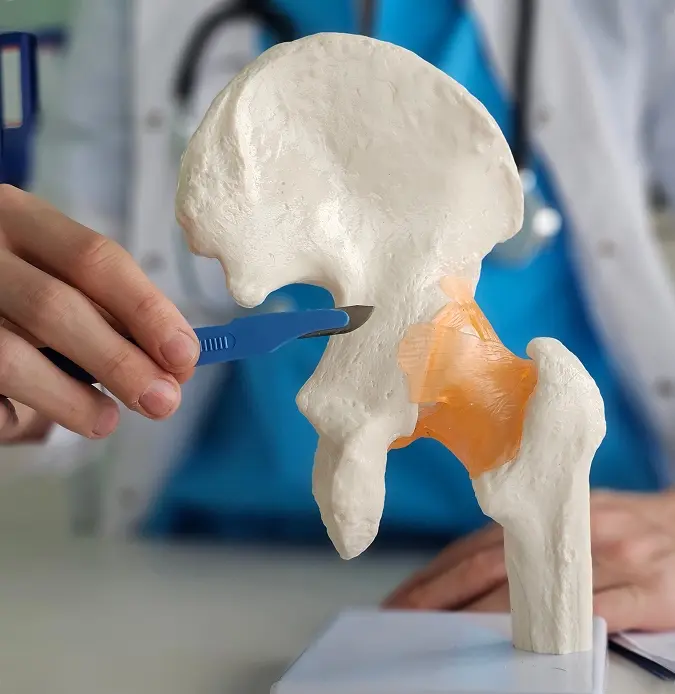
Understanding Your Evaluation
How Is Avascular Necrosis Diagnosed?
Avascular necrosis can present with symptoms similar to other hip or lower back conditions, making accurate diagnosis essential. The goal of evaluation is to confirm reduced blood supply to the femoral head, determine the stage of bone damage and rule out other joint or spinal causes of pain.
Clinical Examination
Your orthopaedic specialist will assess hip range of motion, stiffness and tenderness, particularly in the groin region. Gait analysis, leg length assessment and a review of your medical history and activity level help guide further investigations.
X-ray
X-rays are often the first imaging test performed. They can reveal structural changes such as flattening or collapse of the femoral head, typically seen in more advanced stages. However, early AVN may not be visible on plain X-rays.
MRI or CT Scan
MRI is the most sensitive imaging modality for detecting early avascular necrosis. It can identify changes in bone marrow and blood supply before structural collapse occurs. CT scans are useful for evaluating the extent of bone collapse and assessing complex structural damage, particularly in later stages.
Avascular Necrosis Treatments in Singapore
Non-Surgical Management (Early Stage)
In the early stages, when the femoral head has not collapsed, conservative treatment may help relieve symptoms and delay progression. These include:
NSAIDs may help manage pain. In selected cases, medications that support bone health may be considered.
Reducing high-impact or weight-bearing activities helps decrease stress on the affected hip.
Crutches or walking aids may be used to reduce load on the joint.
Targeted exercises help maintain muscle strength and joint mobility.
Addressing osteoporosis or metabolic risk factors supports long-term joint integrity.
Joint-preserving Surgical Options (Pre-collapse Stage)
When symptoms persist despite conservative care and the femoral head remains structurally intact:
Drilling into the femoral head relieves internal pressure and stimulates blood flow. Bone grafting may be added to provide structural support.
In selected patients, bone realignment redistributes weight away from the damaged area.
Joint Replacement Surgery (Post-collapse Stage)
When the femoral head has collapsed or significant arthritis has developed, joint replacement surgery may be required to restore mobility and relieve pain.
In selected cases, particularly when damage is mainly limited to the femoral head and the hip socket remains relatively preserved, a partial hip replacement may be considered. This procedure replaces the damaged femoral head while retaining the natural socket, helping to relieve pain and improve function.
For advanced avascular necrosis with joint surface damage or secondary arthritis, total hip replacement is often recommended. Both the femoral head and the acetabulum are replaced with prosthetic components to provide reliable pain relief and long-term functional improvement.
Managing Avascular Necrosis at HC Orthopaedic Surgery
Avascular necrosis can progress silently from early bone damage to joint collapse if not addressed in time. Because treatment options vary significantly depending on the stage of disease, accurate diagnosis and timely intervention are essential to preserving hip function and preventing long-term arthritis.

Managing Avascular Necrosis at HC Orthopaedic Surgery
Avascular necrosis can progress silently from early bone damage to joint collapse if not addressed in time. Because treatment options vary significantly depending on the stage of disease, accurate diagnosis and timely intervention are essential to preserving hip function and preventing long-term arthritis.

Our Specialised Team
HC Orthopaedic Surgery is led by Dr Henry Chan, alongside Dr Nicholas Yeoh, Dr Toon Dong Hao and Dr Tang Zhi Hao. With a special interest in computer-assisted joint replacement surgery, Dr Chan previously spearheaded the Joint Replacement Unit at Tan Tock Seng Hospital, where he performed more than 1,000 joint replacements. Complementing this expertise, Dr Yeoh completed advanced fellowship training in hip and knee reconstruction at the internationally recognised North Sydney Orthopaedic and Sports Medicine Centre at Mater Hospital, Sydney. Together, the team combines joint-preserving techniques with advanced reconstructive solutions to provide stage-appropriate care for avascular necrosis, focusing on restoring mobility while supporting long-term hip function.
Frequently Asked Questions (FAQs) About Avascular Necrosis
What is avascular necrosis?
Can avascular necrosis heal on its own?
How fast does avascular necrosis progress?
What can be done to prevent avascular necrosis?
Which activities should I avoid with avascular necrosis?
Can avascular necrosis affect joints other than the hip?
What happens if avascular necrosis is left untreated?
Meet Our Specialist Team
Our team comprises Dr Henry Chan, Dr Nicholas Yeoh, Dr Toon Dong Hao, and Dr Tang Zhi Hao — experienced orthopaedic surgeons with subspecialty experience and a patient-centred approach to care.
Dr Henry Chan
Medical Director & Senior Consultant Orthopaedic Surgeon
MBBS (S’pore), MRCS (Edinburgh), MMed (Orthopaedic Surgery), FRCS (Edinburgh)
Dr Henry Chan is an experienced orthopaedic surgeon specialising in joint replacement and complex revision surgery. Trained at the renowned Helios Endo-Klinik in Germany under the MOH HMDP scholarship, he has performed over 1,000 joint replacements and specialises in computer-assisted and robotic joint replacement techniques for precise outcomes.
Dr Nicholas Yeoh
Senior Consultant Orthopaedic Surgeon
MBChB (Edinburgh), MRCS (Edinburgh), MMed (Orthopaedic Surgery), FRCS (Edinburgh)
Dr Nicholas Yeoh is an MOH-accredited orthopaedic specialist and Fellow of the Royal College of Surgeons of Edinburgh. Fellowship-trained in hip and knee reconstruction in Sydney under the MOH HMDP scholarship, he specialises in minimally invasive joint replacement, robotic surgery and advanced techniques that enhance recovery and surgical outcomes.
Dr Toon Dong Hao
Senior Consultant Orthopaedic Surgeon
MBChB (Leeds), MRCS (Edinburgh), MMed (Orthopaedic Surgery), FRCS (Edinburgh)
Dr Toon Dong Hao is a skilled orthopaedic surgeon and Fellow of the Royal College of Surgeons of Edinburgh. Fellowship-trained in Advanced Shoulder and Elbow Surgery in Sydney under the MOH HMDP scholarship, Dr Toon specialises in sports injuries, arthroscopic surgery and complex shoulder, elbow and knee procedures to restore function and mobility.
Dr Tang Zhi Hao
Senior Consultant Orthopaedic Surgeon
MBBS (S’pore), MRCS (Edinburgh), MMed (Orthopaedic Surgery), FRCS (Edinburgh)
Dr Tang Zhi Hao is a fellowship-trained orthopaedic surgeon specialising in foot and ankle conditions. He completed his Foot and Ankle Surgery fellowship at Severance Hospital, Yonsei University Health System in Seoul under Professor Jin Woo Lee. Prior to private practice, he served as Consultant and Deputy Head of Orthopaedics at Khoo Teck Puat Hospital.