


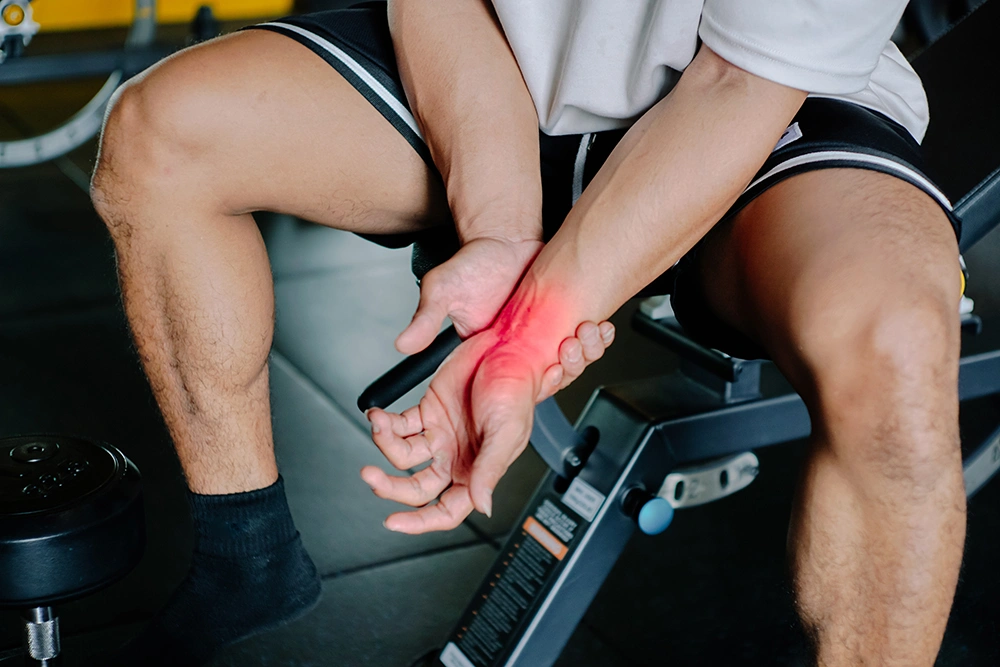
Whether it is discomfort during bench presses, wrist strain from front squats or pain while supporting your body weight during push-ups and handstands, wrist pain is a common problem among gym-goers. Strength training places significant load on the wrists, especially during heavy pressing movements, Olympic lifts and calisthenics exercises. Combined with poor lifting mechanics, limited mobility or sudden increases in training intensity, this repeated stress can lead to pain, weakness and reduced performance over time.
For many lifters, the problem starts subtly, perhaps a sharp pinch when re-racking a barbell or lingering soreness after pull day. But when left unchecked, wrist pain can make even basic training movements uncomfortable and force you to scale back workouts altogether. Identifying the underlying cause early can help prevent more serious injuries and allow you to return to training safely and effectively.
Key Takeaways
- Wrist pain during lifting is often linked to repetitive gripping and loaded wrist extension
- Thumb-side wrist pain may suggest De Quervain’s tenosynovitis
- Tingling or numbness may indicate carpal tunnel syndrome
- Clicking pain on the little-finger side of the wrist may suggest a TFCC injury
- Pain during push-ups or bench pressing may relate to wrist impingement
- Early treatment and training modification can help prevent chronic wrist problems
Why Is the Wrist Vulnerable During Strength Training?
Wrist pain during strength training is commonly linked to repetitive overload of the tendons, ligaments, cartilage, or nerves around the joint. These problems are often considered overuse sports injuries because they develop gradually from repeated stress rather than from a single traumatic event.
Exercises involving gripping, loaded wrist extension, rotational force, or bodyweight support place significant strain on the wrist during training. Bench presses, front squats, Olympic lifts, kettlebell movements, push-ups, and handstands can all increase stress across the joint, particularly when lifting mechanics, mobility, or recovery are limited.
Unlike larger joints, the wrist has a relatively limited ability to absorb repeated heavy loading. Over time, poor movement control, repetitive strain, or sudden increases in training intensity may contribute to tendon irritation, ligament strain, cartilage injury, or nerve compression.
What Are the Common Causes of Wrist Pain in Strength Training?
Wrist pain during training can develop from several different conditions. Some arise from repetitive overload while others may be linked to sudden strain or improper loading mechanics.
De Quervain’s Tenosynovitis
De Quervain’s tenosynovitis, also known as Mummy’s Wrist, affects the tendons on the thumb side of the wrist. Repetitive gripping, lifting, or stabilising movements may irritate the tendon sheath.
Common symptoms include:
- Thumb-side wrist pain
- Tenderness near the base of the thumb
- Pain when gripping weights or rotating the wrist
Carpal Tunnel Syndrome
Carpal tunnel syndrome occurs when the median nerve becomes compressed within the wrist.
Symptoms may include:
- Tingling or numbness in the thumb, index, and middle fingers
- Burning sensations in the hand
- Weakness during gripping movements
- Difficulty holding weights securely
Wrist Tendinopathy
Wrist tendinopathy develops when the tendons controlling wrist and finger movement become irritated from repetitive overload.
Common symptoms include:
- Aching pain during or after training
- Stiffness following exercise
- Pain during gripping or lifting
- Reduced tolerance to pressing or pulling movements
TFCC Injuries
The triangular fibrocartilage complex (TFCC) helps stabilise the little-finger side of the wrist.
TFCC injuries may occur during twisting or load-bearing movements such as deadlifts or kettlebell training.
Symptoms often include:
- Pain on the little-finger side of the wrist
- Clicking or catching sensations
- Weakness during gripping
- Pain during rotation
Wrist Impingement During Extension
Wrist impingement occurs when soft tissues within the joint become compressed during repeated wrist extension.
Push-ups, bench pressing, and handstands commonly aggravate this condition.
Symptoms may include:
- Pain at the back of the wrist
- Pain during pressing exercises
- Discomfort when bending the wrist backwards
What Warning Signs Suggest a More Significant Wrist Injury?
Not all wrist pain is temporary muscle strain. Certain symptoms may indicate more significant injury or inflammation that requires assessment.
Persistent Pain During or After Training
Pain that continues beyond normal post-training soreness or repeatedly returns during pressing, gripping, or pulling exercises may suggest tendon, ligament, or cartilage irritation.
Reduced Grip Strength During Training
Difficulty gripping barbells, dumbbells, kettlebells, or pull-up bars may indicate tendon overload, nerve compression, or structural wrist injury.
Swelling or Localised Tenderness After Exercise
Swelling or tenderness around the wrist joint after training may suggest inflammation or soft tissue strain related to repetitive loading.
Clicking, Catching or Instability During Movement
Clicking or instability during rotational or load-bearing exercises may be associated with cartilage or ligament injuries such as TFCC irritation.
Pain That Begins Affecting Daily Activities
When wrist pain starts interfering with typing, carrying objects, opening doors, or light lifting outside the gym, the condition may be progressing beyond simple training-related irritation.

What Are the Wrist Pain Treatment Options for Athletes?
Diagnosis of both conditions is usually based on a physical examination and a review of symptoms. A specialist may assess pain location, grip strength and range of motion to confirm the diagnosis. In some cases, imaging such as ultrasound or MRI may be recommended to rule out other conditions or assess the severity of tendon damage.
Training Modification to Reduce Wrist Stress
Adjusting or temporarily reducing aggravating exercises allows irritated tissues to recover. This may include modifying grip, reducing load or switching to pain-free variations of movements.
Rehabilitation to Restore Wrist Function
A structured rehabilitation programme helps restore strength, mobility and control in the wrist and forearm. Progressive loading exercises are often used to improve tendon resilience and support safe return to training.
Supportive Bracing and Wrist Protection
Wrist supports or taping techniques may help reduce strain during activity while allowing continued light training in selected cases.
Medication and Injection Therapy
Short-term anti-inflammatory medication may help reduce discomfort during flare-ups. In more persistent cases, injection therapy may be considered to manage inflammation and support recovery.
Surgery
Surgery is usually reserved for conditions that do not improve with conservative treatment and may involve repairing damaged ligaments, tendons, or stabilising wrist structures.
Restoring Wrist Health for Long-Term Mobility
Restoring Wrist Health for Long-Term Mobility

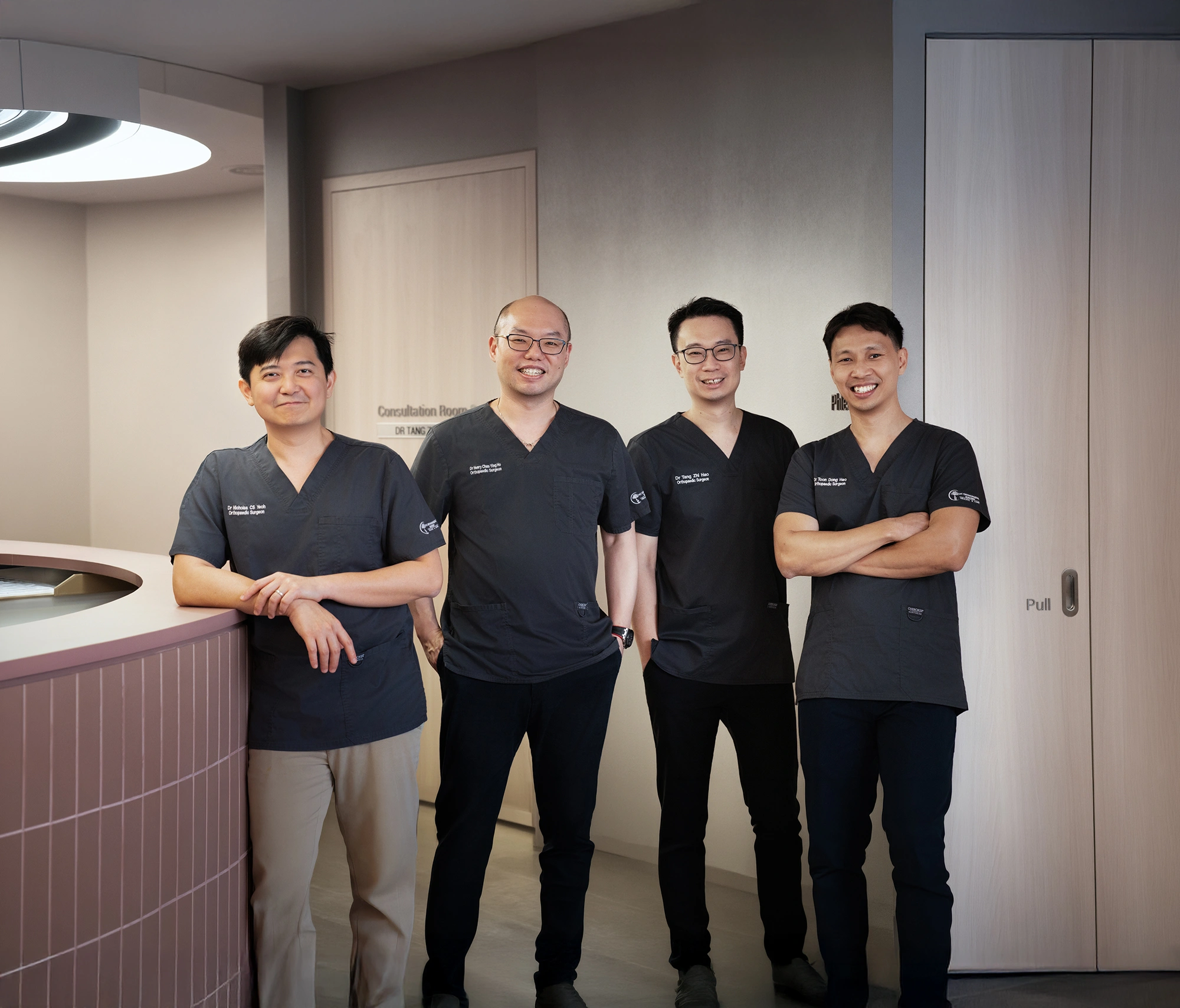
At HC Orthopaedic Surgery in Singapore, patients are cared for by Dr Henry Chan alongside a team of experienced orthopaedic specialists, including Dr Nicholas Yeoh, Dr Toon Dong Hao and Dr Tang Zhi Hao. From conservative rehabilitation to advanced surgical treatment when required, care is tailored to restore function, reduce pain and support a safe return to training and daily activities. If wrist pain is affecting your performance, grip strength or everyday movement, schedule a consultation for a detailed assessment and personalised treatment plan today.
Frequently Asked Questions (FAQs) About Wrist Pain During Strength Training
Should I Stop Lifting if My Wrist Hurts?
Why Does My Wrist Hurt During Push-Ups?
Are Wrist Wraps Helpful?
Can Wrist Pain Become Chronic?
Meet Our Wrist Specialists in Singapore
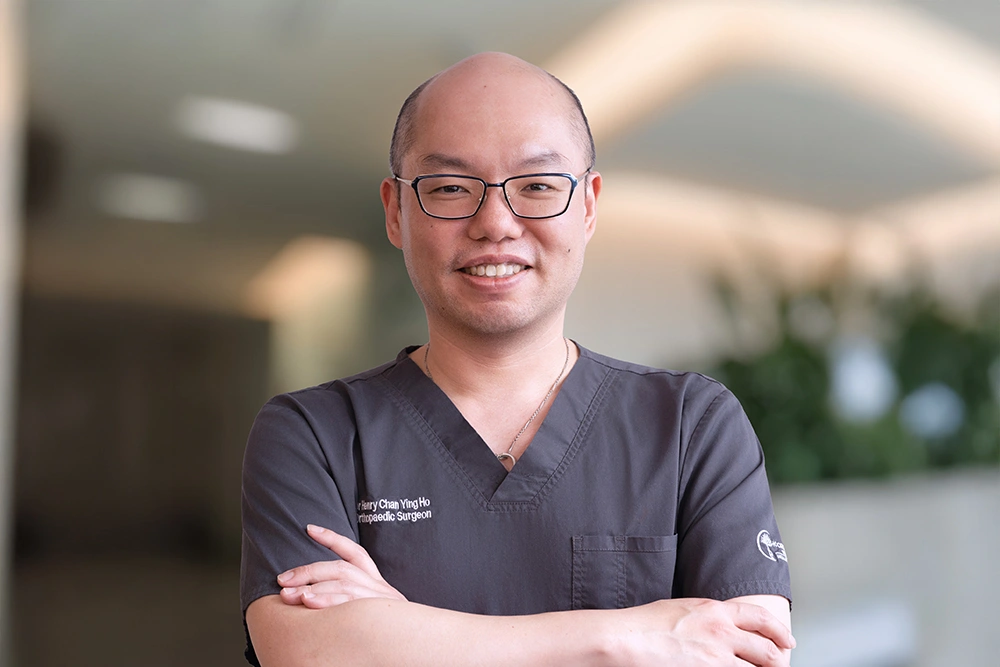
Dr Henry Chan
Medical Director & Senior Consultant Orthopaedic Surgeon
MBBS (S’pore), MRCS (Edinburgh), MMed (Orthopaedic Surgery), FRCS (Edinburgh)
Dr Henry Chan is an experienced orthopaedic surgeon specialising in joint replacement and complex revision surgery. Trained at the renowned Helios Endo-Klinik in Germany under the MOH HMDP scholarship, he has performed over 1,000 joint replacements and specialises in computer-assisted and robotic joint replacement techniques for precise outcomes.
Dr Nicholas Yeoh
Senior Consultant Orthopaedic Surgeon
MBChB (Edinburgh), MRCS (Edinburgh), MMed (Orthopaedic Surgery), FRCS (Edinburgh)
Dr Nicholas Yeoh is an MOH-accredited orthopaedic specialist and Fellow of the Royal College of Surgeons of Edinburgh. Fellowship-trained in hip and knee reconstruction in Sydney under the MOH HMDP scholarship, he specialises in minimally invasive joint replacement, robotic surgery and advanced techniques that enhance recovery and surgical outcomes.
Dr Toon Dong Hao
Senior Consultant Orthopaedic Surgeon
MBChB (Leeds), MRCS (Edinburgh), MMed (Orthopaedic Surgery), FRCS (Edinburgh)
Dr Toon Dong Hao is a skilled orthopaedic surgeon and Fellow of the Royal College of Surgeons of Edinburgh. Fellowship-trained in Advanced Shoulder and Elbow Surgery in Sydney under the MOH HMDP scholarship, Dr Toon specialises in sports injuries, arthroscopic surgery and complex shoulder, elbow and knee procedures to restore function and mobility.
Dr Tang Zhi Hao
Senior Consultant Orthopaedic Surgeon
MBBS (S’pore), MRCS (Edinburgh), MMed (Orthopaedic Surgery), FRCS (Edinburgh)
Dr Tang Zhi Hao is a fellowship-trained orthopaedic surgeon specialising in foot and ankle conditions. He completed his Foot and Ankle Surgery fellowship at Severance Hospital, Yonsei University Health System in Seoul under Professor Jin Woo Lee. Prior to private practice, he served as Consultant and Deputy Head of Orthopaedics at Khoo Teck Puat Hospital.