
Ankle Sprain:
Symptoms, Causes and Treatments






An ankle sprain is a common injury that can occur during sports, exercise or even everyday activities such as stepping off a curb awkwardly or missing a step on the stairs. With many people in Singapore staying active through recreational sports, gym workouts and regular walking, ankle sprains can happen unexpectedly when the foot twists or rolls beyond its normal range of movement. This may lead to pain, swelling and difficulty bearing weight on the affected foot.
The injury occurs when the ligaments that stabilise the ankle joint are stretched or torn. These ligaments play an important role in keeping the bones aligned and supporting the ankle during movement. When they are damaged, the joint may become painful, swollen or less stable. Understanding the symptoms, causes and treatment options for ankle sprains can help guide timely care and support a safe recovery.
What Are the Signs and Symptoms of Ankle Sprains?
An ankle sprain can cause a range of symptoms depending on the severity of the ligament injury. Some symptoms appear immediately after the ankle twists or rolls, while others may develop gradually over the following hours.
Pain Around the Ankle
Pain is usually felt around the outer side of the ankle and may worsen when walking, standing or placing weight on the affected foot.
Swelling
The ankle may become swollen due to inflammation around the injured ligaments. Swelling often develops soon after the injury and can make the joint feel tight or tender.
Bruising
Bruising may appear around the ankle or foot as small blood vessels are damaged during the injury. The skin may turn bluish or purple before gradually fading during recovery.
Difficulty Bearing Weight
Walking or standing on the injured ankle may be uncomfortable or difficult, especially in more severe sprains.
Reduced Range of Motion
The ankle may feel stiff or difficult to move, making it harder to bend the foot up, down or side to side.
Ankle Instability
In more severe sprains, the ankle may feel unstable or prone to giving way, particularly when trying to walk or change direction.
At HC Orthopaedic Surgery, our foot and ankle specialists provide thorough assessment and targeted treatment to support proper healing and help restore stable ankle function.
Why It Happens
What Are the Common Causes of Ankle Sprains?
Ankle sprains usually occur when the foot twists, rolls or turns beyond its normal range of motion. This movement can overstretch or tear the ligaments that stabilise the ankle joint.
Sudden Twisting of the Foot
A quick change in direction or an awkward step can cause the foot to twist inward, placing excessive strain on the ankle ligaments.
Sports-related Movements
Activities that involve running, jumping or rapid direction changes, such as football, basketball or badminton, can increase the risk of ankle sprains.
Uneven Surfaces
Walking or running on uneven ground can cause the ankle to roll unexpectedly, particularly if the foot lands awkwardly.
Landing Incorrectly After a Jump
Landing with the foot tilted inward or outward can overstretch the ankle ligaments and lead to a sprain.
Slips or Missteps
Missing a step on the stairs, slipping on wet surfaces or stepping off a curb awkwardly can cause the ankle to twist suddenly.
Know Your Risk Profile
What Are the Risk Factors for Ankle Sprains?
Certain factors can increase the likelihood of sustaining an ankle sprain by affecting joint stability, muscle support or balance during movement.
Previous Ankle Injuries
Individuals who have sprained their ankle before may have lingering ligament laxity or joint instability, which increases the risk of repeated injuries.
Lack of Conditioning
Weak or poorly conditioned muscles around the ankle and lower leg may not provide sufficient support to stabilise the joint during sudden movements.
Improper Footwear
Shoes that lack adequate support or grip, such as high heels or loose-fitting trainers, can reduce ankle stability and increase the likelihood of twisting injuries.
Poor Balance or Proprioception
Reduced balance or body awareness can make it harder for the ankle to react quickly when the foot lands awkwardly, increasing the risk of a sprain.
Age-related Factors
Younger individuals who participate frequently in sports may be exposed to higher injury risk, while older adults may experience reduced joint stability or muscle strength that increases vulnerability to ankle sprains.
Understanding Your Evaluation
How Is a Sprained Ankle Diagnosed?
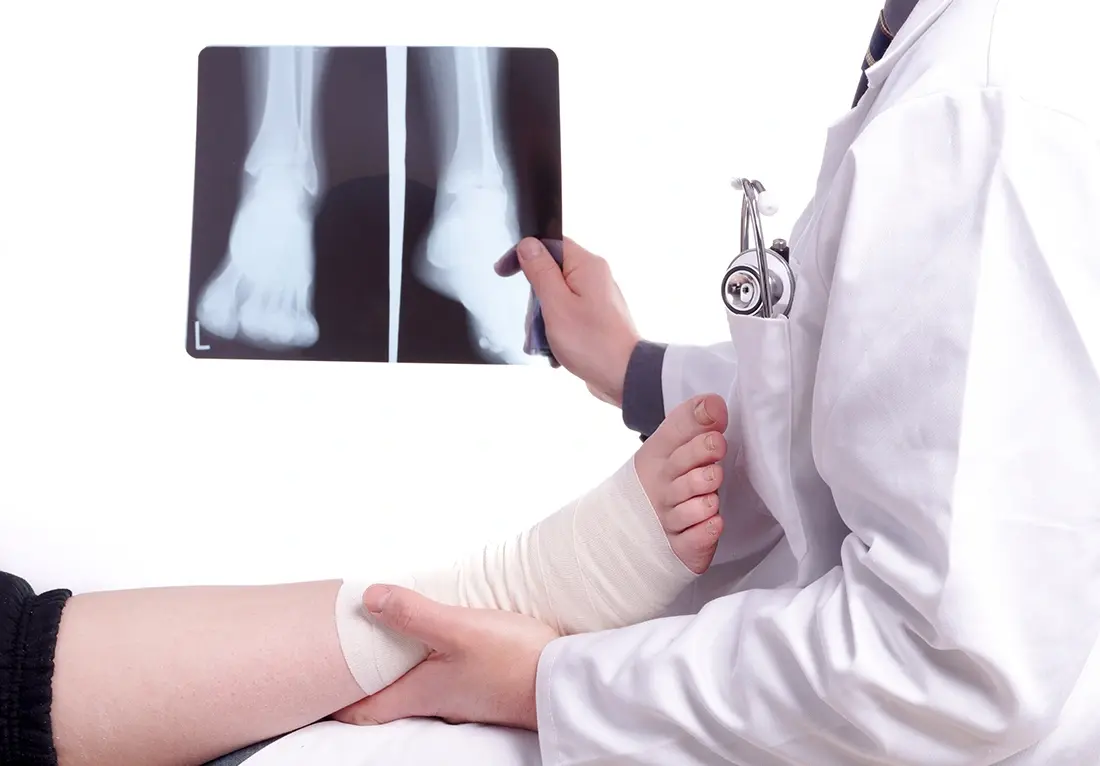
Diagnosing an ankle sprain begins with a clinical evaluation to determine the severity of the injury and rule out other conditions such as fractures or tendon damage. Your specialist will review how the injury occurred, assess your symptoms and examine the ankle for swelling, tenderness and stability.
Understanding Your Evaluation
How Is a Sprained Ankle Diagnosed?
Diagnosing an ankle sprain begins with a clinical evaluation to determine the severity of the injury and rule out other conditions such as fractures or tendon damage. Your specialist will review how the injury occurred, assess your symptoms and examine the ankle for swelling, tenderness and stability.
Physical Examination
During the examination, the doctor will gently move and press on different parts of the ankle to identify areas of pain and assess ligament stability. You may also be asked to perform simple movements to evaluate range of motion and weight-bearing ability.
X-ray
An X-ray may be recommended to rule out fractures or bone injuries that can cause symptoms similar to an ankle sprain. Although ligaments are not visible on X-rays, the scan helps ensure that the bones around the ankle joint are intact.
MRI or Ultrasound
If the injury appears more severe or symptoms persist, imaging tests such as MRI or ultrasound may be used to assess ligament damage and evaluate surrounding soft tissues, including tendons and cartilage. These scans can help determine the extent of the sprain and guide appropriate treatment.
Ankle Sprain Treatments in Singapore
Treatment for an ankle sprain focuses on reducing pain and swelling, protecting the injured ligaments and restoring normal ankle movement. The appropriate approach depends on the severity of the sprain and the extent of ligament damage. Many ankle sprains improve with non-surgical treatment, while more severe injuries may require additional medical intervention.
Rest, Ice, Compression and Elevation (RICE)
In the early stages of an ankle sprain, the RICE approach is commonly recommended to reduce pain and swelling. Resting the ankle, applying ice, using compression bandages and elevating the leg can help control inflammation and protect the injured ligaments.
Activity Modification
As pain and swelling begin to settle, patients are usually advised to gradually resume light movement while avoiding activities that place excessive stress on the ankle. This helps prevent stiffness while allowing the ligaments time to heal.
Physiotherapy and Rehabilitation
Structured physiotherapy helps restore ankle strength, flexibility and stability. Rehabilitation exercises also improve balance and coordination, which can reduce the risk of future sprains.
Ankle Bracing or Support
An ankle brace or supportive taping may be recommended to stabilise the joint during recovery. This support can help protect the ligaments while the ankle gradually returns to normal activity.
Medication for Pain and Inflammation
Anti-inflammatory medications may be prescribed to help manage pain and reduce swelling during the recovery period.
Surgical Treatment (Severe Cases)
Surgery is rarely required for ankle sprains. However, in cases involving severe ligament damage or chronic ankle instability, surgical repair or reconstruction of the ligaments may be considered to restore joint stability.
How to Prevent Ankle Sprains
While ankle sprains cannot always be avoided, certain habits and precautions may help reduce the risk of injury, particularly during sports or daily activities that place stress on the ankle joint.
Strengthen the Muscles Around the Ankle
Building strength in the muscles of the ankle, lower leg and foot can improve joint stability and provide better support during movement.
Improve Balance and Stability
Exercises that improve balance and coordination can help the ankle react more effectively when the foot lands on uneven ground, reducing the likelihood of twisting injuries.
Wear Supportive Footwear
Choosing well-fitting shoes with good grip and ankle support can help stabilise the foot during walking, running or sports activities.
Be Cautious on Uneven Surfaces
Paying attention when walking or running on uneven ground, stairs or kerbs can reduce the risk of missteps that may cause the ankle to roll.
Warm Up Before Physical Activity
Proper warm-ups and stretching before exercise can prepare the muscles and joints for movement, reducing strain on the ankle ligaments.
Gradually Increase Activity Levels
Avoid sudden increases in exercise intensity or duration. Gradually building up activity allows the muscles and ligaments to adapt and lowers the risk of injury.
Get Relief From Ankle Sprains at HC Orthopaedic Surgery
Ankle sprains can range from mild ligament stretching to more significant injuries that affect joint stability and mobility. While many sprains improve with appropriate care, untreated or repeated injuries may lead to ongoing discomfort or chronic ankle instability. Recognising the symptoms early and seeking proper medical evaluation can help ensure the injury is managed appropriately and recovery progresses safely.

Get Relief From Ankle Sprains at HC Orthopaedic Surgery
Ankle sprains can range from mild ligament stretching to more significant injuries that affect joint stability and mobility. While many sprains improve with appropriate care, untreated or repeated injuries may lead to ongoing discomfort or chronic ankle instability. Recognising the symptoms early and seeking proper medical evaluation can help ensure the injury is managed appropriately and recovery progresses safely.

Our Specialised Team
At HC Orthopaedic Surgery, patients with ankle sprains receive comprehensive care focused on accurate diagnosis and appropriate treatment. The practice is led by Dr Henry Chan, alongside Dr Nicholas Yeoh, Dr Toon Dong Hao and Dr Tang Zhi Hao, who collectively bring extensive orthopaedic expertise in managing foot, ankle and lower limb conditions. Our team works closely with patients to guide recovery, restore ankle stability and support a safe return to everyday activities.
Frequently Asked Questions (FAQs) About Ankle Sprain
Can I walk on a sprained ankle?
When should I see a doctor for an ankle sprain?
How long does it take to recover from an ankle sprain?
What is the difference between an ankle sprain and an ankle strain?
What happens if an ankle sprain is left untreated?
Meet Our Specialist Team
Our team comprises Dr Henry Chan, Dr Nicholas Yeoh, Dr Toon Dong Hao, and Dr Tang Zhi Hao — experienced orthopaedic surgeons with subspecialty experience and a patient-centred approach to care.
Dr Henry Chan
Medical Director & Senior Consultant Orthopaedic Surgeon
MBBS (S’pore), MRCS (Edinburgh), MMed (Orthopaedic Surgery), FRCS (Edinburgh)
Dr Henry Chan is an experienced orthopaedic surgeon specialising in joint replacement and complex revision surgery. Trained at the renowned Helios Endo-Klinik in Germany under the MOH HMDP scholarship, he has performed over 1,000 joint replacements and specialises in computer-assisted and robotic joint replacement techniques for precise outcomes.
Dr Nicholas Yeoh
Senior Consultant Orthopaedic Surgeon
MBChB (Edinburgh), MRCS (Edinburgh), MMed (Orthopaedic Surgery), FRCS (Edinburgh)
Dr Nicholas Yeoh is an MOH-accredited orthopaedic specialist and Fellow of the Royal College of Surgeons of Edinburgh. Fellowship-trained in hip and knee reconstruction in Sydney under the MOH HMDP scholarship, he specialises in minimally invasive joint replacement, robotic surgery and advanced techniques that enhance recovery and surgical outcomes.
Dr Toon Dong Hao
Senior Consultant Orthopaedic Surgeon
MBChB (Leeds), MRCS (Edinburgh), MMed (Orthopaedic Surgery), FRCS (Edinburgh)
Dr Toon Dong Hao is a skilled orthopaedic surgeon and Fellow of the Royal College of Surgeons of Edinburgh. Fellowship-trained in Advanced Shoulder and Elbow Surgery in Sydney under the MOH HMDP scholarship, Dr Toon specialises in sports injuries, arthroscopic surgery and complex shoulder, elbow and knee procedures to restore function and mobility.
Dr Tang Zhi Hao
Senior Consultant Orthopaedic Surgeon
MBBS (S’pore), MRCS (Edinburgh), MMed (Orthopaedic Surgery), FRCS (Edinburgh)
Dr Tang Zhi Hao is a fellowship-trained orthopaedic surgeon specialising in foot and ankle conditions. He completed his Foot and Ankle Surgery fellowship at Severance Hospital, Yonsei University Health System in Seoul under Professor Jin Woo Lee. Prior to private practice, he served as Consultant and Deputy Head of Orthopaedics at Khoo Teck Puat Hospital.