
Ankle Fracture:
Symptoms, Causes and Treatments






If you play sports on the weekends, train regularly at the gym, or prepare for your IPPT, ankle injuries are always a possibility. While most twists and falls result in sprains, a significant impact or awkward landing can sometimes lead to something more serious, such as an ankle fracture. Even if you are not particularly sporty, daily life in Singapore keeps many people on their feet, and a misstep or fall can occasionally result in a more serious injury.
An ankle fracture occurs when one or more of the bones forming the ankle joint breaks. It is usually caused by higher-force injuries, including contact sports, sudden changes in direction, falls or accidents. It can affect active adults, but is also seen in older individuals after a fall, particularly if bone strength is reduced. Because the symptoms of a fracture can resemble a severe sprain, it is important not to dismiss persistent pain, marked swelling or difficulty bearing weight. Understanding how ankle fractures happen and how they are treated can help you seek timely care and recover safely.
Signs & Symptoms Explained
What Are the Signs and Symptoms of an Ankle Fracture?

Signs & Symptoms Explained
What Are the Signs and Symptoms of an Ankle Fracture?
An ankle fracture can sometimes feel similar to a severe sprain, but there are key features that may suggest a broken bone rather than a ligament injury.
Common signs and symptoms include:
- Immediate, intense pain at the time of injury
- Swelling around the ankle, which may develop quickly
- Bruising or discolouration
- Difficulty or inability to bear weight on the affected foot
- Tenderness when pressing over the bone
- Visible deformity, such as the ankle looking out of shape, in more severe cases
Some people may also hear or feel a “crack” at the moment of injury. In unstable fractures, the ankle may feel loose or unable to support standing. If there is severe pain, obvious deformity, numbness, or the skin is broken with bone visible, this is a medical emergency and requires immediate attention.
If you are unsure whether your injury is a sprain or a fracture, or if your symptoms are not improving, get properly assessed by our foot and ankle specialists at HC Orthopaedic Surgery to reduce complications and support a safer recovery.
Why It Happens
What Are the Common Causes of Ankle Fractures?
An ankle fracture typically occurs when the joint is subjected to a force strong enough to break one or more of the surrounding bones. This may happen suddenly during a traumatic incident or as a result of a significant fall.
Common causes include:
Twisting or Rotating the Ankle
One of the most common causes is a forceful “rolling” or twisting of the ankle, similar to what causes a sprain. If the rotational force is strong enough, the ligaments may tear or pull off a small fragment of bone, known as an avulsion fracture. In other cases, the bone itself may break under the stress of the twist.
High-Impact Falls or Collisions
Falling from a height or landing awkwardly during sports can transmit significant force through the ankle joint. This direct impact, sometimes combined with rotational force, may cause the bones to crack or result in more unstable fractures. Motor-vehicle accidents can also involve high-energy impacts that lead to complex fracture patterns.
Stress Fractures from Overuse
In some cases, a fracture develops gradually rather than from a single injury. Stress fractures occur due to repetitive loading over time and are more commonly seen in runners, military trainees and athletes who increase training intensity too quickly without allowing adequate recovery.
Know Your Risk Profile
What Are the Risk Factors for Ankle Fractures?
While accidents can happen to anyone, certain factors can make the ankle more vulnerable to injury or increase the likelihood that a fall or twist results in a fracture rather than a sprain.
Participation in High-impact Sports
Sports that involve jumping, rapid changes in direction or physical contact, such as football, basketball or badminton, place significant stress on the ankle joint. The combination of speed, pivoting and external force increases the risk of more serious injuries.
Bone Density Issues (Osteoporosis)
As we age, bone density can decrease, making bones more porous and fragile. In individuals with osteoporosis or low bone density, even a relatively minor fall or twisting injury may result in a fracture.
Previous Ankle Injuries
A history of repeated ankle sprains or prior fractures can lead to chronic instability. An ankle that is prone to “rolling” is at higher risk of sustaining a more severe injury in the future.
Increasing Age
Advancing age is associated with changes in balance, muscle strength and reaction time, all of which increase the risk of falls. Combined with reduced bone strength, this makes fractures more likely in older adults.
Sudden Increase in Training Intensity
Rapidly increasing training volume or intensity, particularly in runners, military personnel or individuals preparing for fitness tests, can increase the risk of stress fractures due to repetitive loading without adequate recovery.
Improper Footwear or Unsafe Surfaces
Wearing shoes that lack adequate support or participating in activities on uneven or slippery surfaces can increase the likelihood of the ankle twisting unexpectedly.
Excess Body Weight
Carrying excess body weight increases the load placed on the ankle joint. During a fall or twisting injury, greater force may be transmitted through the bones, which can increase the risk of fracture.
Understanding the Differences
Types of Ankle Fractures
Not all ankle fractures are the same. The type of fracture depends on how many bones are involved, whether the joint remains stable and whether the bones are out of position. These factors help determine whether treatment can be non-surgical or if surgery is needed.
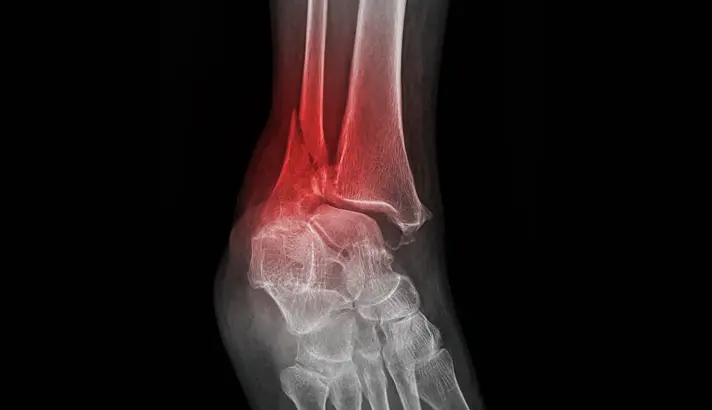
Unimalleolar Fracture
A unimalleolar fracture involves a break in one of the bones that form the ankle joint, most commonly the fibula on the outer side. If the fracture is stable and the bones remain well aligned, it can often be treated without surgery using a cast or walking boot. Regular follow-up and imaging may be needed to ensure the bones heal in the correct position.
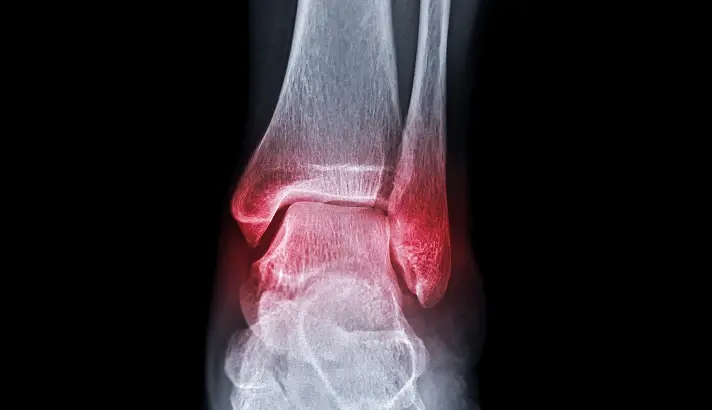
Bimalleolar and Trimalleolar Fractures
These fractures involve two or three parts of the ankle joint. Because multiple stabilising structures are affected, the ankle is often unstable. Surgical fixation is commonly recommended to restore alignment and stabilise the joint, which helps reduce the risk of long-term complications such as chronic instability or post-traumatic arthritis.

Compound (Open) Fractures
In more severe injuries, the broken bone may pierce through the skin. This is known as an open fracture. Open fractures are a medical emergency due to the increased risk of infection. Urgent surgical cleaning of the wound and stabilisation of the fracture are required to reduce complications and promote proper healing.
Understanding Your Evaluation
How is an Ankle Fracture Diagnosed?
Diagnosing an ankle fracture begins with a careful clinical assessment, followed by appropriate imaging. A doctor will ask about how the injury occurred and examine the ankle for swelling, tenderness, deformity and the ability to bear weight. This helps determine whether imaging is required and what type of fracture may be present.

Understanding Your Evaluation
How is an Ankle Fracture Diagnosed?
Diagnosing an ankle fracture begins with a careful clinical assessment, followed by appropriate imaging. A doctor will ask about how the injury occurred and examine the ankle for swelling, tenderness, deformity and the ability to bear weight. This helps determine whether imaging is required and what type of fracture may be present.
X-ray Imaging
X-rays are the primary imaging tool used to confirm an ankle fracture. Images are typically taken from several angles to identify the location of the break and assess whether the bones remain properly aligned. The X-ray also helps determine whether the ankle joint is stable or if there are signs of widening that suggest associated ligament injury.
Stress or Weight-Bearing X-rays
If the initial X-rays show a fracture but stability is uncertain, additional views may be taken. In selected cases, stress views or weight-bearing X-rays are performed to assess whether the bones shift abnormally under load, which would indicate instability and influence treatment decisions.
CT and MRI Scans
For more complex fractures, especially those involving the joint surface, a CT scan may be recommended. CT imaging provides a detailed three-dimensional view of the fracture pattern, which is helpful for surgical planning. An MRI scan is not routinely required for most ankle fractures but may be used if a stress fracture is suspected despite normal X-rays, or if there is concern about significant cartilage, ligament or tendon injury.
Ankle Fracture Treatments in Singapore
Our treatment strategy focuses on protecting the joint while the bone heals and gradually restoring your ability to bear weight.
Non-Surgical Treatment
Non-surgical management may be appropriate for stable fractures where the bones remain well aligned and the ankle joint is not unstable.
Immobilisation
The ankle is immobilised in a cast or controlled-ankle-motion walking boot to allow the bone to heal in the correct position. The duration of immobilisation typically ranges from four to eight weeks, depending on the fracture pattern and healing progress.
Weight-bearing Guidance
Some stable fractures allow for early protected weight-bearing in a boot, while others require a period of non-weight-bearing using crutches. This decision depends on fracture stability and follow-up imaging.
Swelling Control and Pain Management
Elevation, ice and short-term use of appropriate pain medication may be recommended. Reducing swelling is important, especially in the early phase of recovery.
Monitoring During Healing
Repeat X-rays are usually performed to ensure the fracture remains stable and properly aligned. If displacement develops, surgical treatment may be reconsidered.
Rehabilitation
Once the fracture shows signs of healing, physiotherapy is introduced to restore ankle movement, strength and balance. This helps reduce stiffness and lowers the risk of recurrent injury.
Surgical Treatment
Surgery is typically recommended for fractures that are displaced, unstable, involve multiple parts of the ankle or affect the joint surface.
Open Reduction and Internal Fixation (ORIF)
This is the most common procedure. The bones are repositioned into their correct alignment and stabilised using plates and screws. The goal is to restore the anatomy of the ankle joint as accurately as possible to reduce the risk of long-term complications such as post-traumatic arthritis.
Fixation of Syndesmotic Injury
If the ligaments between the tibia and fibula are disrupted, additional screws or fixation devices may be used to stabilise the ankle mortise.
External Fixation
In high-energy injuries with severe swelling or soft tissue damage, a temporary external frame may be applied to stabilise the ankle before definitive surgery is performed.
Bone Grafting
Bone grafting is not routinely required but may be considered in cases involving bone loss, severe comminution or delayed healing.
Get Back on Your Feet at HC Orthopaedic Surgery
An ankle fracture requires careful evaluation and a structured treatment plan to restore joint alignment, maintain stability and reduce the risk of long-term complications such as chronic instability or post-traumatic arthritis. Whether the injury is stable and suitable for conservative care or requires surgical fixation, timely and appropriate management is key to achieving a safe and durable recovery.

Get Back on Your Feet at HC Orthopaedic Surgery
An ankle fracture requires careful evaluation and a structured treatment plan to restore joint alignment, maintain stability and reduce the risk of long-term complications such as chronic instability or post-traumatic arthritis. Whether the injury is stable and suitable for conservative care or requires surgical fixation, timely and appropriate management is key to achieving a safe and durable recovery.

Our Specialised Team
At HC Orthopaedic Surgery, we provide comprehensive care for ankle fractures, from stable injuries managed conservatively to complex trauma requiring surgical fixation. Our team is led by Dr Henry Chan, together with Dr Nicholas Yeoh, Dr Toon Dong Hao and Dr Tang Zhi Hao, whose areas of interest include foot and ankle surgery, revision and replacement, sports injuries, and fractures and trauma. We are committed to delivering evidence-based, stage-appropriate treatment tailored to your condition and recovery goals.
Frequently Asked Questions (FAQs) About Ankle Fractures
How can I tell the difference between a sprain and a fracture?
How long does it take for a broken ankle to heal?
Will I need to have the plates and screws removed later?
Can I drive with a broken ankle?
Is it normal for my ankle to still swell months after the injury?
Meet Our Specialist Team
Our team comprises Dr Henry Chan, Dr Nicholas Yeoh, Dr Toon Dong Hao, and Dr Tang Zhi Hao — experienced orthopaedic surgeons with subspecialty experience and a patient-centred approach to care.
Dr Henry Chan
Medical Director & Senior Consultant Orthopaedic Surgeon
MBBS (S’pore), MRCS (Edinburgh), MMed (Orthopaedic Surgery), FRCS (Edinburgh)
Dr Henry Chan is an experienced orthopaedic surgeon specialising in joint replacement and complex revision surgery. Trained at the renowned Helios Endo-Klinik in Germany under the MOH HMDP scholarship, he has performed over 1,000 joint replacements and specialises in computer-assisted and robotic joint replacement techniques for precise outcomes.
Dr Nicholas Yeoh
Senior Consultant Orthopaedic Surgeon
MBChB (Edinburgh), MRCS (Edinburgh), MMed (Orthopaedic Surgery), FRCS (Edinburgh)
Dr Nicholas Yeoh is an MOH-accredited orthopaedic specialist and Fellow of the Royal College of Surgeons of Edinburgh. Fellowship-trained in hip and knee reconstruction in Sydney under the MOH HMDP scholarship, he specialises in minimally invasive joint replacement, robotic surgery and advanced techniques that enhance recovery and surgical outcomes.
Dr Toon Dong Hao
Senior Consultant Orthopaedic Surgeon
MBChB (Leeds), MRCS (Edinburgh), MMed (Orthopaedic Surgery), FRCS (Edinburgh)
Dr Toon Dong Hao is a skilled orthopaedic surgeon and Fellow of the Royal College of Surgeons of Edinburgh. Fellowship-trained in Advanced Shoulder and Elbow Surgery in Sydney under the MOH HMDP scholarship, Dr Toon specialises in sports injuries, arthroscopic surgery and complex shoulder, elbow and knee procedures to restore function and mobility.
Dr Tang Zhi Hao
Senior Consultant Orthopaedic Surgeon
MBBS (S’pore), MRCS (Edinburgh), MMed (Orthopaedic Surgery), FRCS (Edinburgh)
Dr Tang Zhi Hao is a fellowship-trained orthopaedic surgeon specialising in foot and ankle conditions. He completed his Foot and Ankle Surgery fellowship at Severance Hospital, Yonsei University Health System in Seoul under Professor Jin Woo Lee. Prior to private practice, he served as Consultant and Deputy Head of Orthopaedics at Khoo Teck Puat Hospital.