
Ankle Arthritis and Stiffness Treatment
in Singapore






If you are suffering from ankle arthritis, you may notice persistent pain, stiffness, or swelling around the joint that makes everyday movement more difficult. Activities such as walking, climbing stairs, or standing for long periods may gradually become uncomfortable as the ankle loses flexibility and strength.
Ankle arthritis develops when the cartilage within the joint wears down or becomes damaged, causing the bones to move less smoothly. This can occur with age, after previous ankle injuries such as fractures or severe sprains, or as a result of inflammatory conditions that affect the joints.
Treatment aims to relieve pain, improve mobility, and help you stay active. Depending on the severity of the condition, options may include physiotherapy, supportive braces, medication, or surgical procedures designed to preserve or restore joint function. An orthopaedic assessment can help determine the most suitable treatment plan for your condition.
What Are the Common Symptoms of Ankle Arthritis?
Ankle arthritis can affect people differently depending on the cause and severity of joint damage. Some individuals experience mild discomfort only during activity, while others develop persistent pain and stiffness that gradually limits movement. Some of the most common symptoms include:
Ankle Pain
Pain in the ankle joint is one of the most common symptoms. It may worsen during walking, climbing stairs, or other weight-bearing activities, and can become more persistent as the condition progresses.
Joint Stiffness
Stiffness may be more noticeable after periods of rest, such as in the morning or after sitting for a long time. The ankle may feel tight or difficult to move when first starting to walk.
Swelling Around the Ankle
Inflammation within the joint can lead to visible swelling around the ankle. The area may also feel tender or warm to the touch.
Reduced Range of Motion
As cartilage wears down, the ankle may become harder to bend or rotate fully. This can make activities such as squatting, climbing stairs, or walking on slopes more difficult.
Grinding or Clicking Sensation
Some people notice a grinding, clicking, or catching sensation when moving the ankle joint. This may occur when the smooth cartilage surface becomes damaged.
Difficulty Walking on Uneven Surfaces
Uneven ground may feel more challenging to navigate due to pain, stiffness, or reduced ankle stability.
Changes in Walking Pattern
To reduce discomfort, some people unconsciously adjust how they walk. Over time, this altered gait may place additional strain on surrounding joints such as the knees or hips.
If you are experiencing persistent ankle pain, stiffness or swelling, seek assessment from the foot and ankle specialists at HC Orthopaedic Surgery for an accurate diagnosis and appropriate management.
Why It Happens
What Causes Ankle Arthritis?
Ankle arthritis develops when the cartilage that cushions the ankle joint becomes worn or damaged, causing the bones to move less smoothly against each other. Unlike arthritis in the knee or hip, ankle arthritis is often linked to previous injury or joint damage rather than age alone.
Wear and Tear
Repeated stress on the ankle joint over time can gradually wear down the protective cartilage. As the cartilage thins, the bones may rub against each other, leading to pain, stiffness, and reduced mobility.
Autoimmune Inflammation
In conditions such as rheumatoid arthritis, the immune system mistakenly attacks the lining of the joint. This leads to chronic inflammation that can damage cartilage and surrounding joint structures.
Injury or Trauma
Previous ankle fractures, severe sprains, or ligament injuries can damage cartilage or alter joint alignment. Over time, these changes may accelerate cartilage breakdown and lead to post-traumatic arthritis.
Infections
Joint infections caused by bacteria or other pathogens can damage cartilage and joint tissues. If not treated promptly, this may result in long-term joint degeneration.
Gout or Metabolic Conditions
Conditions such as gout can cause the build-up of uric acid crystals within the joint, leading to inflammation and cartilage damage. Certain metabolic disorders may also contribute to joint deterioration.
Know Your Risk Profile
What Are the Risk Factors for Ankle Arthritis?
Certain factors may increase the likelihood of developing ankle arthritis or accelerate joint degeneration.
Age
Cartilage naturally becomes thinner and less resilient with age, which can increase susceptibility to joint degeneration.
Previous Ankle Injuries
Past fractures, sprains, or ligament damage may alter joint mechanics and increase the risk of arthritis developing later.
Excess Body Weight
Carrying excess weight places additional stress on the ankle joint, which can accelerate cartilage wear over time.
High-impact Activities
Sports or occupations that place repeated stress on the ankle, such as running or jumping, may increase the risk of joint damage.
Family History
A family history of arthritis or joint disorders may increase the likelihood of developing similar conditions.
What Are the Common Types of Ankle Arthritis?
Ankle arthritis can develop from different underlying conditions that affect the cartilage and joint lining. The most common types vary in their causes, progression and treatment approach.
Osteoarthritis
Osteoarthritis is a degenerative form of arthritis that occurs when the cartilage in the ankle joint gradually wears down over time. As the cartilage thins, the bones may begin to rub against each other, leading to pain, stiffness and reduced mobility.
Post-traumatic Arthritis
Post-traumatic arthritis develops after a previous ankle injury, such as a fracture, severe sprain or ligament damage. Even after the injury heals, changes in joint alignment or cartilage damage can lead to gradual joint degeneration.
Rheumatoid Arthritis
Rheumatoid arthritis is an autoimmune condition in which the immune system attacks the lining of the joint. This causes inflammation that can damage cartilage, bone and surrounding tissues in the ankle.
Gout-related Arthritis
Gout occurs when uric acid crystals accumulate within the joint, triggering sudden episodes of inflammation and severe pain. Repeated gout attacks can eventually damage the ankle joint and lead to chronic arthritis.
Understanding Your Evaluation
How Is Ankle Arthritis Diagnosed?
Diagnosing ankle arthritis typically begins with a discussion of your symptoms, medical history and a physical examination of the ankle joint. To confirm the diagnosis and identify the underlying cause, your doctor may recommend several diagnostic tests.
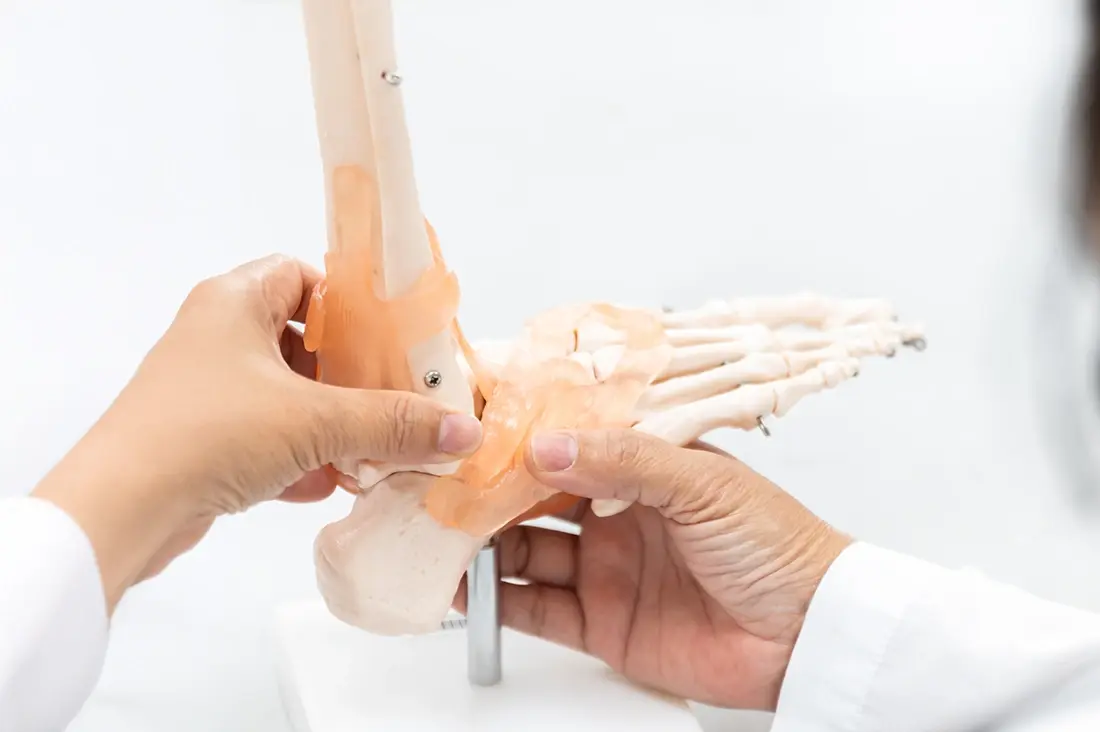
Understanding Your Evaluation
How Is Ankle Arthritis Diagnosed?
Diagnosing ankle arthritis typically begins with a discussion of your symptoms, medical history and a physical examination of the ankle joint. To confirm the diagnosis and identify the underlying cause, your doctor may recommend several diagnostic tests.
Blood Tests
Certain blood tests can help identify markers of inflammation, such as erythrocyte sedimentation rate (ESR) and C-reactive protein (CRP). These tests may also detect autoimmune conditions, including rheumatoid arthritis, through markers such as rheumatoid factor (RF) and anti-cyclic citrullinated peptide (anti-CCP) antibodies.
Imaging Tests
Imaging studies provide detailed views of the ankle joint and help assess the extent of joint damage.
- X-rays can show cartilage loss, joint space narrowing and bone spurs.
- MRI scans provide detailed images of cartilage, ligaments and other soft tissues around the ankle.
- Ultrasound may be used to detect inflammation or fluid within the joint.
Joint Fluid Analysis
In some cases, a fluid sample may be taken from the ankle joint through a procedure called arthrocentesis. The fluid is analysed to rule out conditions such as infection or gout, which can cause symptoms similar to arthritis.
Ankle Arthritis Treatments in Singapore
Treatment for ankle arthritis aims to reduce pain, improve joint movement, and help patients maintain daily activities. Management typically begins with conservative care, although surgery may be recommended in more advanced cases or when non-surgical treatments do not provide sufficient relief.
Non-Surgical Treatment
Many patients experience symptom relief with non-surgical treatments tailored to the cause and severity of the condition.
Medications
Medications may be prescribed to reduce pain and inflammation. These can include pain relievers such as paracetamol or non-steroidal anti-inflammatory drugs (NSAIDs). For autoimmune forms of arthritis, disease-modifying antirheumatic drugs (DMARDs) may be used, while corticosteroids may provide short-term relief from inflammation.
Physiotherapy
Physiotherapy programmes may include exercises to improve ankle range of motion, strengthen surrounding muscles, and support joint stability. Heat or cold therapy may also be used to help manage pain and swelling.
Occupational Therapy
Occupational therapy can provide practical strategies to help patients perform daily activities while reducing strain on the ankle joint.
Weight Management
Maintaining a healthy body weight can reduce pressure on the ankle joint, particularly during weight-bearing activities, which may help improve mobility and reduce discomfort.
Assistive Devices
Braces, ankle supports, or walking aids may be recommended to reduce stress on the joint, improve stability, and make movement more comfortable.
Surgical Treatment
Surgery may be considered when ankle arthritis is severe or when conservative treatments no longer provide adequate relief.
Arthroscopy
Ankle arthroscopy is a minimally invasive procedure that uses small instruments and a camera inserted through tiny incisions to diagnose and treat joint problems. It may be used to remove loose fragments, smooth damaged cartilage, or treat inflamed tissues.
Joint Replacement Surgery
In cases of advanced joint damage, ankle joint replacement (arthroplasty) may be considered. This procedure involves replacing the damaged joint surfaces with artificial components to reduce pain and restore movement.
Osteotomy
An osteotomy involves cutting and repositioning bones to improve joint alignment and redistribute pressure across the ankle joint.
Synovectomy
A synovectomy removes part or all of the inflamed joint lining (synovium) to reduce pain, swelling, and stiffness in certain inflammatory conditions.
Joint Fusion (Arthrodesis)
Joint fusion involves permanently joining the bones of the ankle joint to eliminate painful movement. Although this limits joint motion, it can provide significant pain relief and improve stability.
How to Prevent Ankle Arthritis and Stiffness
While not all cases of ankle arthritis can be prevented, certain lifestyle habits and injury-prevention strategies may help reduce the risk of joint damage and slow the progression of cartilage wear.
Prevent and Treat Ankle Injuries Early
Injuries such as fractures and severe sprains are a common cause of ankle arthritis. Seeking prompt treatment and allowing proper healing can help restore joint alignment and reduce the risk of long-term joint damage.
Maintain a Healthy Body Weight
Excess body weight increases pressure on the ankle joint during everyday activities. Maintaining a healthy weight can help reduce stress on the joint and slow cartilage wear.
Strengthen and Stretch the Ankle
Regular exercises that strengthen the muscles supporting the ankle can improve joint stability. Stretching and mobility exercises may also help maintain flexibility and reduce stiffness.
Wear Supportive Footwear
Shoes that provide adequate support and cushioning can help distribute pressure more evenly across the foot and ankle, reducing strain on the joint.
Manage Underlying Joint Conditions
Inflammatory conditions such as rheumatoid arthritis or gout can increase the risk of ankle joint damage. Proper medical management can help control inflammation and protect joint health over time.
Get Relief From Ankle Arthritis at HC Orthopaedic Surgery
Ankle arthritis and stiffness can worsen gradually if left untreated, leading to increasing pain, reduced mobility and progressive joint damage. Seeking medical attention early allows for timely diagnosis, better symptom control and a wider range of treatment options that may help slow joint deterioration and preserve ankle function. Early treatment can also help patients maintain daily activities, remain active and reduce the risk of more complex joint problems over time.

Get Relief From Ankle Arthritis at HC Orthopaedic Surgery
Ankle arthritis and stiffness can worsen gradually if left untreated, leading to increasing pain, reduced mobility and progressive joint damage. Seeking medical attention early allows for timely diagnosis, better symptom control and a wider range of treatment options that may help slow joint deterioration and preserve ankle function. Early treatment can also help patients maintain daily activities, remain active and reduce the risk of more complex joint problems over time.

Our Specialised Team
At HC Orthopaedic Surgery, patients receive comprehensive care for ankle arthritis, from conservative treatments to advanced surgical solutions when necessary. The team includes Dr Henry Chan, Dr Nicholas Yeoh, Dr Toon Dong Hao and Dr Tang Zhi Hao, who provide specialised foot and ankle care tailored to each patient’s condition and lifestyle goals. With a focus on accurate diagnosis and personalised treatment planning, the clinic aims to help patients manage pain and restore mobility safely and effectively.
Frequently Asked Questions (FAQs) About Ankle Arthritis
Can ankle arthritis affect both ankles?
How does ankle arthritis affect walking?
Can ankle arthritis worsen over time?
Can ankle arthritis cause foot deformities?
Is ankle arthritis curable?
Can ankle arthritis flare up after activity?
Does ankle arthritis cause chronic pain even at rest?
Is swelling a sign that ankle arthritis is worsening?
Meet Our Specialist Team
Our team comprises Dr Henry Chan, Dr Nicholas Yeoh, Dr Toon Dong Hao, and Dr Tang Zhi Hao — experienced orthopaedic surgeons with subspecialty experience and a patient-centred approach to care.
Dr Henry Chan
Medical Director & Senior Consultant Orthopaedic Surgeon
MBBS (S’pore), MRCS (Edinburgh), MMed (Orthopaedic Surgery), FRCS (Edinburgh)
Dr Henry Chan is an experienced orthopaedic surgeon specialising in joint replacement and complex revision surgery. Trained at the renowned Helios Endo-Klinik in Germany under the MOH HMDP scholarship, he has performed over 1,000 joint replacements and specialises in computer-assisted and robotic joint replacement techniques for precise outcomes.
Dr Nicholas Yeoh
Senior Consultant Orthopaedic Surgeon
MBChB (Edinburgh), MRCS (Edinburgh), MMed (Orthopaedic Surgery), FRCS (Edinburgh)
Dr Nicholas Yeoh is an MOH-accredited orthopaedic specialist and Fellow of the Royal College of Surgeons of Edinburgh. Fellowship-trained in hip and knee reconstruction in Sydney under the MOH HMDP scholarship, he specialises in minimally invasive joint replacement, robotic surgery and advanced techniques that enhance recovery and surgical outcomes.
Dr Toon Dong Hao
Senior Consultant Orthopaedic Surgeon
MBChB (Leeds), MRCS (Edinburgh), MMed (Orthopaedic Surgery), FRCS (Edinburgh)
Dr Toon Dong Hao is a skilled orthopaedic surgeon and Fellow of the Royal College of Surgeons of Edinburgh. Fellowship-trained in Advanced Shoulder and Elbow Surgery in Sydney under the MOH HMDP scholarship, Dr Toon specialises in sports injuries, arthroscopic surgery and complex shoulder, elbow and knee procedures to restore function and mobility.
Dr Tang Zhi Hao
Senior Consultant Orthopaedic Surgeon
MBBS (S’pore), MRCS (Edinburgh), MMed (Orthopaedic Surgery), FRCS (Edinburgh)
Dr Tang Zhi Hao is a fellowship-trained orthopaedic surgeon specialising in foot and ankle conditions. He completed his Foot and Ankle Surgery fellowship at Severance Hospital, Yonsei University Health System in Seoul under Professor Jin Woo Lee. Prior to private practice, he served as Consultant and Deputy Head of Orthopaedics at Khoo Teck Puat Hospital.