
Elbow Osteoarthritis:
Symptoms, Causes and Treatments

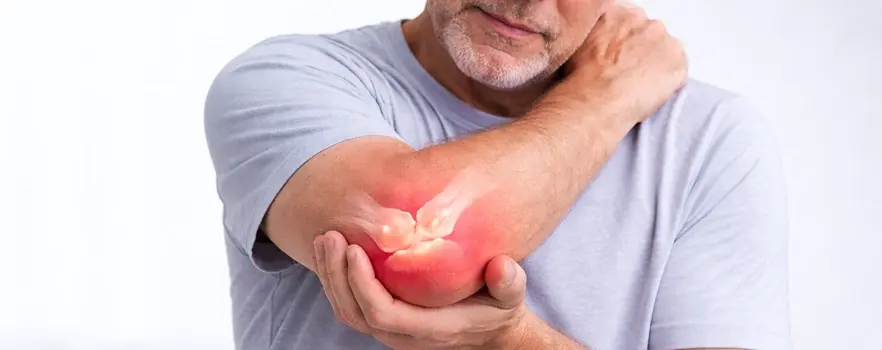
Elbow osteoarthritis occurs when the cartilage in the elbow wears down, causing the joint to become stiff and painful. This can make everyday tasks such as lifting objects, turning door handles, carrying groceries, or even simple movements like bending and straightening the arm more difficult. Early assessment and appropriate treatment are important to relieve symptoms, maintain function and slow further joint damage.
Know Your Risk Profile
Causes and Risk Factors of Elbow Osteoarthritis
Elbow osteoarthritis typically develops when repeated mechanical stress or prior joint injury leads to cartilage degeneration. Over time, these changes reduce the joint’s ability to move smoothly, resulting in stiffness and pain. Several factors can increase the likelihood of this degenerative process.
Age and Sex
Elbow osteoarthritis is more common between the ages of 40 and 50, particularly in men. Degenerative changes may progress gradually and become more noticeable with time.
Previous Elbow Injury
Past fractures or dislocations can damage the joint surface and affect how the elbow moves. Over time, this uneven joint loading can accelerate cartilage wear and contribute to elbow osteoarthritis.
Ligament Injury and Joint Instability
Ligament damage may cause the elbow to become unstable. This alters the forces across the joint and increases stress on the cartilage, leading to gradual degeneration.
Repetitive Arm Movements
Frequent gripping, lifting or repetitive elbow motion can cause microtrauma to the joint. This is commonly seen in manual occupations such as painting, construction and hairdressing.
Sports-Related Overuse
Racket sports such as tennis and badminton place repeated strain on the elbow. Over time, this can increase joint wear and contribute to osteoarthritis.
Signs & Symptoms Explained
What Are the Symptoms of Elbow Osteoarthritis?
Elbow osteoarthritis typically develops gradually as the cartilage within the joint wears down. Symptoms often worsen with movement and joint use. Over time, discomfort, stiffness, and reduced range of motion may begin to interfere with daily activities that require bending, lifting, or gripping.
Pain and Stiffness
Pain is often felt during movement and may worsen after activity. The elbow may also feel stiff, especially in the morning or after resting.
Reduced Range of Motion
You may find it harder to fully straighten or bend the arm. This can make everyday tasks like lifting, reaching or carrying items more difficult.
Grinding or Clicking Sensation
Some people notice a grating or creaking feeling when moving the elbow. This happens when cartilage wears down, and the joint surfaces become less smooth.
Locking or Catching
The elbow may occasionally feel stuck during movement. This can occur when small bone or cartilage fragments interfere with joint motion.
Swelling and Tightness
Swelling may develop as the condition progresses, often causing a tight or pressured feeling around the joint. This may also contribute to discomfort during movement.
Numbness or Tingling in the Fingers
In later stages, swelling may irritate nearby nerves, causing tingling or numbness in the ring and little finger. This may come and go or worsen over time.
Understanding Your Evaluation
How Is Elbow Osteoarthritis Diagnosed?
A doctor diagnosing elbow osteoarthritis will need to confirm that cartilage degeneration is the source of symptoms and assess the extent of joint involvement. An evaluation will also be performed to evaluate pain patterns, functional limitation, and structural joint changes.
Understanding Your Evaluation
How Is Elbow Osteoarthritis Diagnosed?
A doctor diagnosing elbow osteoarthritis will need to confirm that cartilage degeneration is the source of symptoms and assess the extent of joint involvement. An evaluation will also be performed to evaluate pain patterns, functional limitation, and structural joint changes.
The diagnostic process typically includes:
- Clinical Assessment
A detailed history is taken to understand the duration, progression, and triggers of symptoms, as well as any previous elbow injuries or repetitive strain. Physical examination focuses on joint tenderness, swelling, crepitus, and limitations in flexion, extension, or forearm rotation. Stability and overall arm function are also assessed.
- X-ray
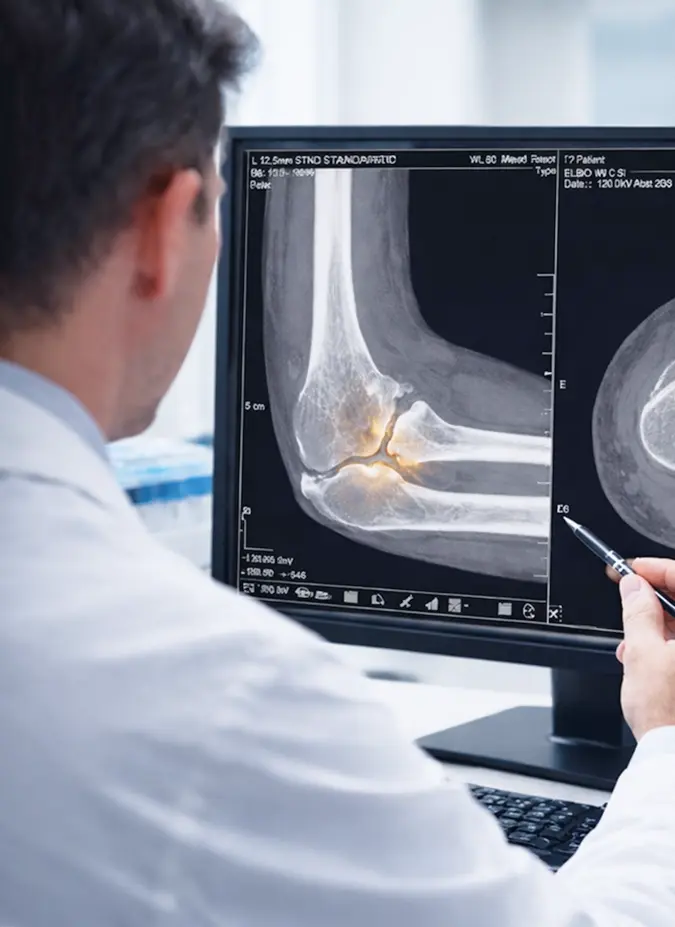
X-rays are the primary imaging tool used to confirm elbow osteoarthritis. They can demonstrate joint space narrowing, bone spur (osteophyte) formation, subchondral sclerosis, and other structural changes associated with cartilage loss.
- CT Scan
A CT scan provides a more detailed evaluation of bone architecture and joint surfaces. It is particularly useful when large osteophytes, loose bodies, or complex joint changes require clearer visualisation, especially in surgical planning.
- MRI Scan
MRI is used selectively to evaluate soft tissue structures such as cartilage integrity, ligaments, and tendons. It may be recommended when symptoms are disproportionate to X-ray findings or when additional soft tissue pathology is suspected.
Exploring Treatment Options
Elbow Osteoarthritis Treatments in Singapore
The appropriate treatment for elbow osteoarthritis depends on the severity of one’s symptoms, the extent of cartilage degeneration, and the impact on one’s daily activities. While some patients respond well to conservative management, surgical intervention is considered when symptoms persist or significantly limit function.

Non-Surgical Treatments
Most early cases are managed conservatively to reduce pain and maintain movement. Options include:
- Medication
Pain relievers or short courses of anti-inflammatory medication may be prescribed where appropriate.
- Corticosteroid Injections
Targeted injections can temporarily reduce inflammation and ease pain in selected patients.
- Physiotherapy
Guided exercises help improve range of motion, strengthen surrounding muscles and reduce stiffness.
- Activity Modification
Adjusting repetitive or heavy activities and using supportive braces may reduce strain on the joint.

Surgical Treatments
Surgery may be considered if symptoms persist despite conservative care. Common surgical options for elbow osteoarthritis include:
- Arthroscopic Surgery
A minimally invasive procedure to remove loose fragments, smooth joint surfaces and improve motion.
- Elbow Replacement Surgery
In advanced cases with severe joint damage, replacement surgery may relieve pain and restore function, though lifting limits usually apply.
Get Relief from Elbow Osteoarthritis at HC Orthopaedic Surgery
Elbow osteoarthritis can make everyday tasks feel more difficult, from carrying groceries and lifting objects to simply bending or straightening your arm. These changes often build up over time, which is why it is important not to ignore symptoms and seek medical attention as soon as possible.
Get Relief from Elbow Osteoarthritis at HC Orthopaedic Surgery
Elbow osteoarthritis can make everyday tasks feel more difficult, from carrying groceries and lifting objects to simply bending or straightening your arm. These changes often build up over time, which is why it is important not to ignore symptoms and seek medical attention as soon as possible.

Our Specialised Team
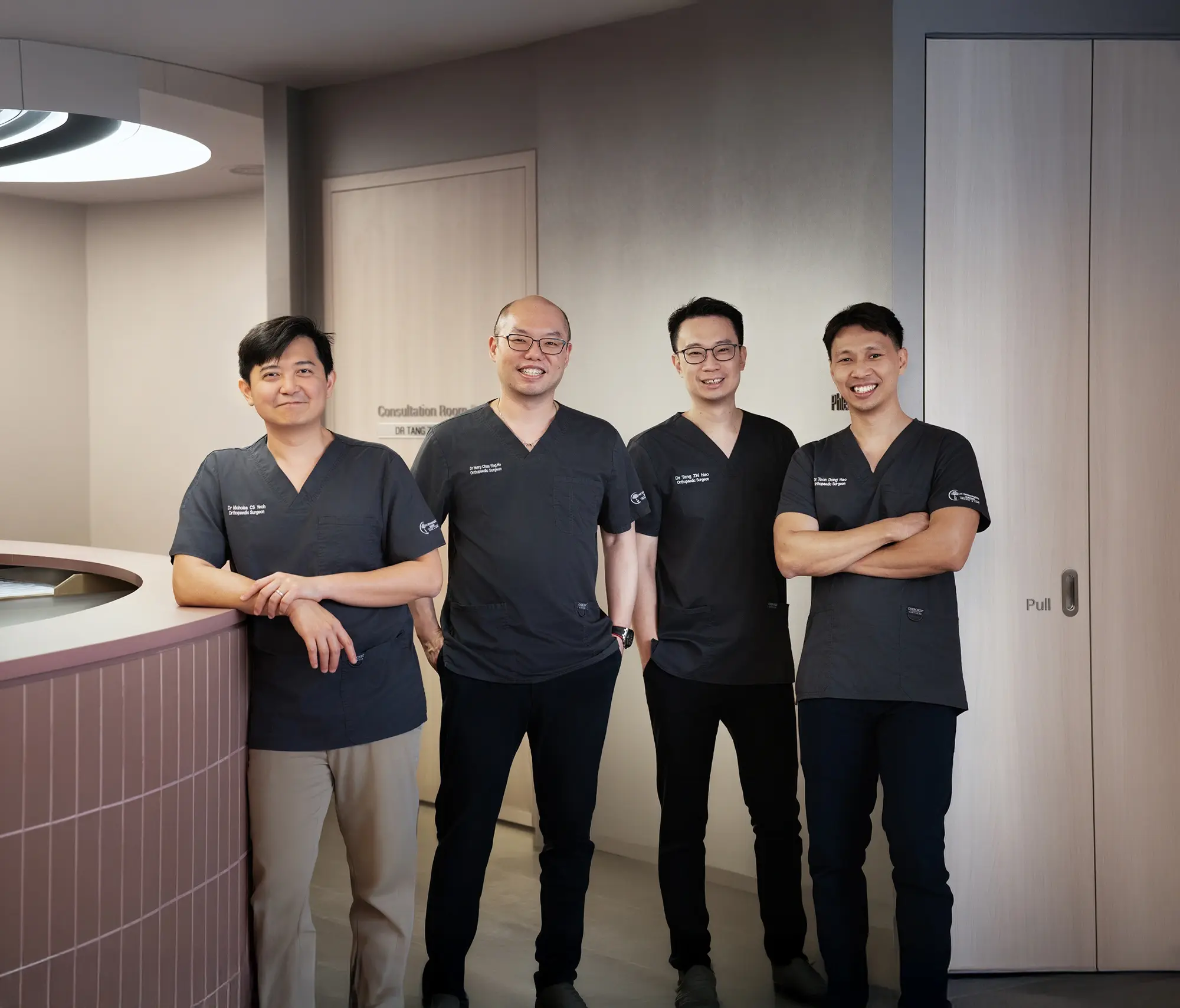
At HC Orthopaedic Surgery, patients can be assured that we provide effective, evidence-based care tailored to each individual’s needs, ensuring thorough assessment, accurate diagnosis and personalised treatment plans for optimal recovery and elbow function.
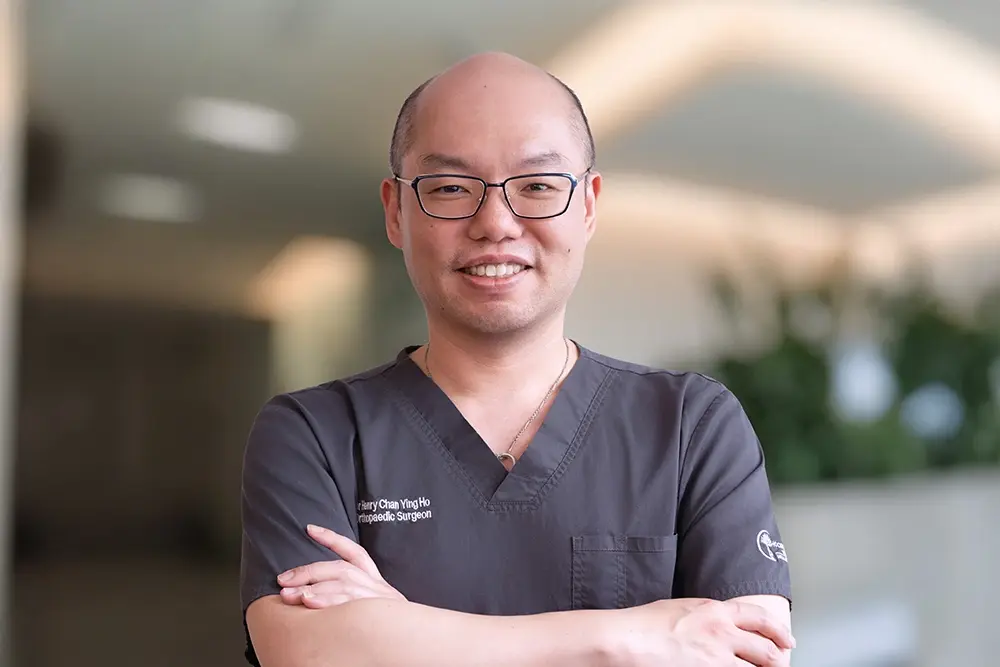
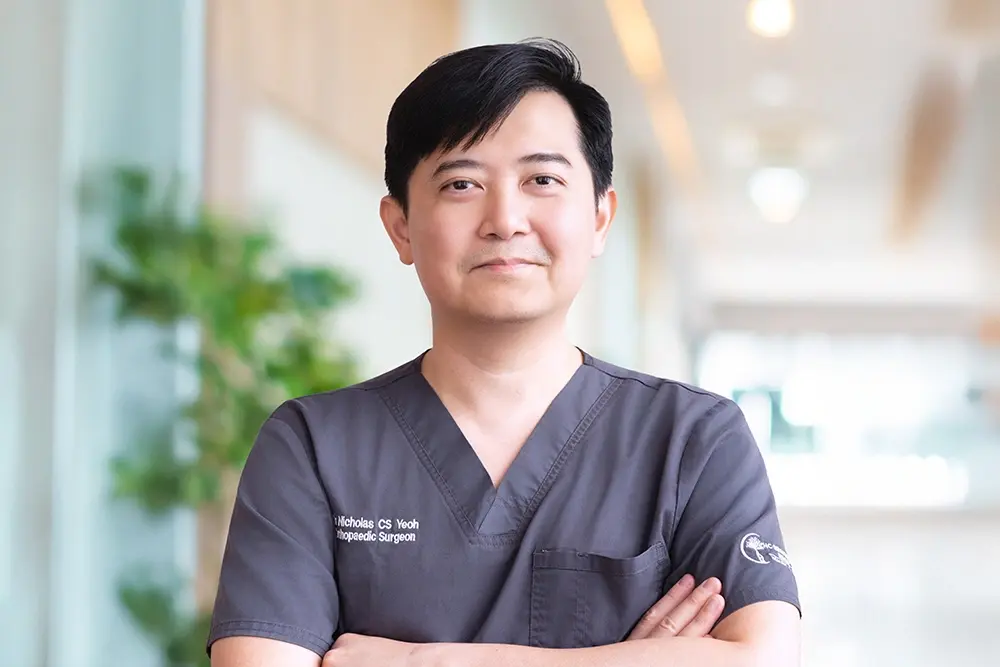
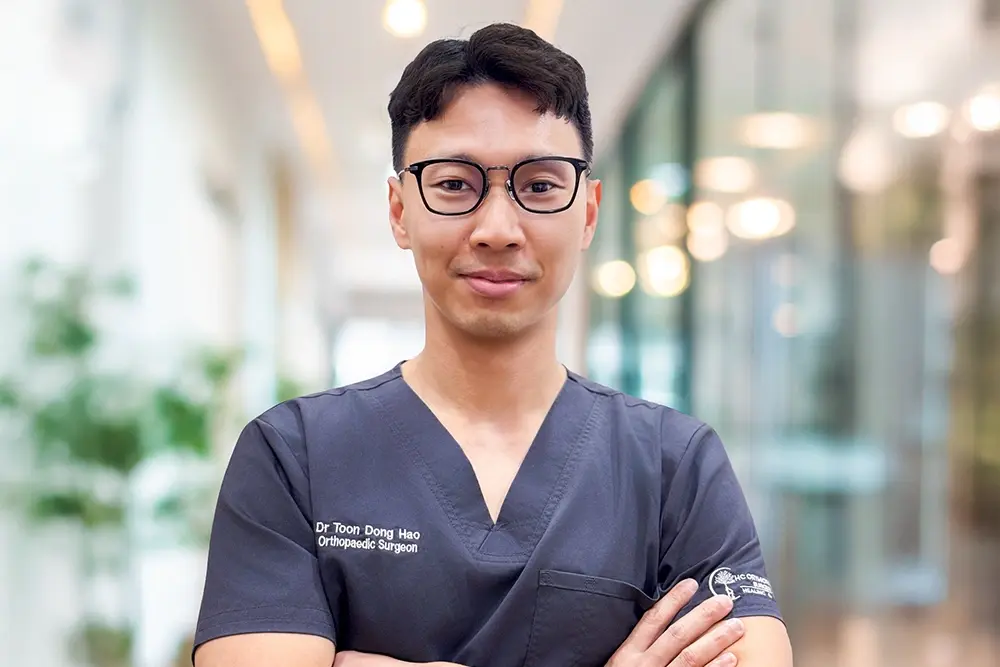
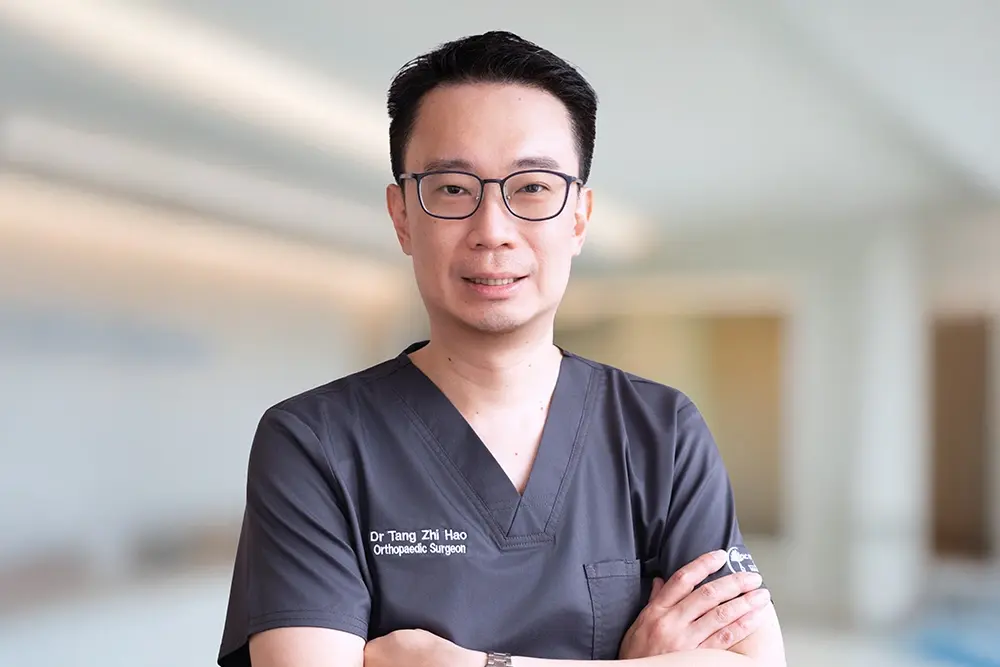
Our specialists, Dr Henry Chan, Dr Nicholas Yeoh, Dr Toon Dong Hao and Dr Tang Zhi Hao, are experienced in the management of elbow conditions, in particular Dr Toon, who was awarded the Health Manpower Development Plan (HMDP) Scholarship by the Ministry of Health Singapore and undertook his fellowship in Advanced Shoulder and Elbow Surgery in Sydney, Australia. Get in touch with us today to receive safe and effective care for your elbow.
Frequently Asked Questions (FAQs) About Elbow Osteoarthritis
What foods should I avoid with elbow osteoarthritis?
What happens if elbow osteoarthritis goes untreated?
What are the stages of elbow osteoarthritis?
- Stage I - Early cartilage wear begins, which may cause mild stiffness or discomfort during movement.
- Stage II - Joint inflammation may increase, leading to swelling, pain and more noticeable stiffness.
- Stage III - Cartilage loss becomes more significant, and bone spurs may develop, causing reduced range of motion and occasional nerve irritation.
- Stage IV - Severe joint damage may occur, with marked stiffness, persistent pain and, in rare cases, joint fusion that significantly limits movement.
How do I know if I have osteoarthritis or tennis elbow?
Can elbow osteoarthritis be cured?
When should I seek medical attention for elbow pain?
Meet Our Specialist Team
Our team comprises Dr Henry Chan, Dr Nicholas Yeoh, Dr Toon Dong Hao, and Dr Tang Zhi Hao — experienced orthopaedic surgeons with subspecialty experience and a patient-centred approach to care.
Dr Henry Chan
Medical Director & Senior Consultant Orthopaedic Surgeon
MBBS (S’pore), MRCS (Edinburgh), MMed (Orthopaedic Surgery), FRCS (Edinburgh)
Dr Henry Chan is an experienced orthopaedic surgeon specialising in joint replacement and complex revision surgery. Trained at the renowned Helios Endo-Klinik in Germany under the MOH HMDP scholarship, he has performed over 1,000 joint replacements and specialises in computer-assisted and robotic joint replacement techniques for precise outcomes.
Dr Nicholas Yeoh
Senior Consultant Orthopaedic Surgeon
MBChB (Edinburgh), MRCS (Edinburgh), MMed (Orthopaedic Surgery), FRCS (Edinburgh)
Dr Nicholas Yeoh is an MOH-accredited orthopaedic specialist and Fellow of the Royal College of Surgeons of Edinburgh. Fellowship-trained in hip and knee reconstruction in Sydney under the MOH HMDP scholarship, he specialises in minimally invasive joint replacement, robotic surgery and advanced techniques that enhance recovery and surgical outcomes.
Dr Toon Dong Hao
Senior Consultant Orthopaedic Surgeon
MBChB (Leeds), MRCS (Edinburgh), MMed (Orthopaedic Surgery), FRCS (Edinburgh)
Dr Toon Dong Hao is a skilled orthopaedic surgeon and Fellow of the Royal College of Surgeons of Edinburgh. Fellowship-trained in Advanced Shoulder and Elbow Surgery in Sydney under the MOH HMDP scholarship, Dr Toon specialises in sports injuries, arthroscopic surgery and complex shoulder, elbow and knee procedures to restore function and mobility.
Dr Tang Zhi Hao
Senior Consultant Orthopaedic Surgeon
MBBS (S’pore), MRCS (Edinburgh), MMed (Orthopaedic Surgery), FRCS (Edinburgh)
Dr Tang Zhi Hao is a fellowship-trained orthopaedic surgeon specialising in foot and ankle conditions. He completed his Foot and Ankle Surgery fellowship at Severance Hospital, Yonsei University Health System in Seoul under Professor Jin Woo Lee. Prior to private practice, he served as Consultant and Deputy Head of Orthopaedics at Khoo Teck Puat Hospital.