


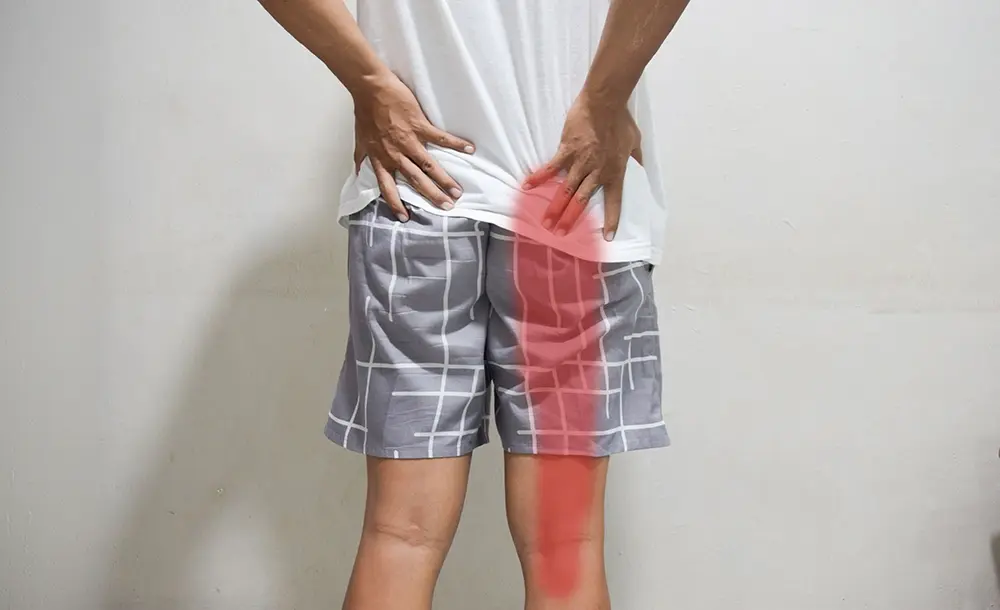
Sciatica is notoriously unpredictable, often vanishing for weeks only to return with sudden intensity. This intermittent nature frequently creates a false sense of security, yet these pain-free intervals usually signal a temporary reduction in inflammation rather than the resolution of the underlying structural compression.
As the body’s longest nerve, the sciatic nerve is uniquely vulnerable to multiple choke points across the lower back and hips. Because its environment is so tightly packed, even minor postural adjustments can fluctuate the pressure on the nerve, making these quiet windows the optimal time for a specialist to assess the root cause before the next acute flare-up occurs.
The Mechanics of the Sciatic Nerve: Why it Flares
Sciatica symptoms flare up when the combined stress of physical pressure and chemical irritation exceeds your nerve’s biological tolerance. This on-and-off sensation is rarely random; it’s the result of these three specific mechanical and biological shifts occurring within your spine:
- The Neurological Threshold
Pain is rarely constant because the nerve only sends distress signals once compression crosses a specific intensity tripwire, meaning you may have an underlying issue that only hurts when aggravated.
- Inflammatory Cycles
Internal inflammation is dynamic rather than static; it fluctuates based on your activity levels, blood flow, and systemic triggers, causing the nerve to swell and become hypersensitive in waves.
- Dynamic Compression
Microscopic shifts in your spinal alignment during routine movements—such as bending or twisting—can physically nudge a disc or bone spur onto the nerve, switching the pain on and off instantly.
Common Causes of Intermittent Sciatica
While many factors can irritate the nerve, these three primary structural issues are responsible for the vast majority of phantom pain cycles:
Lumbar Disc Herniation (Slipped Disc)
A slipped disc causes intermittent pain because the soft, jelly-like centre of the disc is dynamic; it can bulge outward to pinch the nerve during heavy lifting or high-impact activity and then partially retract during rest. This is why you may feel perfectly fine while standing—which offloads the spine—only to experience excruciating radiating pain after five minutes of sitting, as the seated posture increases intradiscal pressure and forces the bulge against the nerve.
Spinal Stenosis and Postural Openings
Spinal stenosis involves a narrowing of the bony canal that houses your nerves, where pain is dictated by your spinal posture rather than just activity. This creates the classic ‘shopping trolley’ sign: walking upright closes the space and triggers pain, but leaning forward onto a trolley or desk opens the canal and provides instant relief by physically decompressing the nerve.
Piriformis Syndrome
Unlike spinal issues, piriformis syndrome occurs when the sciatic nerve is trapped by a muscle in the buttock, leading to pain that only appears when the muscle is fatigued, cramped, or inflamed. These flares are often situational, triggered only after the muscle has been under prolonged strain, such as during a long drive or a high-intensity workout, and disappear once the muscle relaxes.
Why Your Sciatica Pain Disappears (and Why That’s a Warning)
When sciatica pain suddenly vanishes without treatment, it’s often a clinical red flag rather than a sign of recovery. This quiet phase can mask progressive neurological decline that requires immediate professional attention.
- The Numbness Trap
A sudden lack of pain can signify nerve fatigue, a dangerous stage where the nerve is so severely compressed that it loses the ability to transmit any signals, including pain, leading to a false sense of healing.
- Chronic Compensation
To avoid the phantom pain, your body unconsciously shifts your weight, causing guarding patterns that often lead to secondary injuries and wear-and-tear in the opposite hip, knee, or ankle.
- The Risk of Permanent Damage
Prolonged silent compression may eventually transition into motor nerve damage, manifesting as muscle wasting (atrophy) or permanent weakness in the leg if the structural root cause remains unaddressed.
Invisible Lifestyle Triggers in Singapore

In Singapore’s high-pressure environment, many patients unknowingly aggravate their sciatica through daily micro-habits that maintain a constant state of low-level nerve irritation. Some of these factors include:
- Office Ergonomics
Standard workstation setups often encourage slumping, which rounds the lower back and places maximum mechanical load on the lumbar discs, slowly grinding them down against the nerve roots.
- Dehydration and Disc Health
Your spinal discs are roughly 80% water; failing to hydrate properly in Singapore’s heat reduces the cushioning height of these discs, making it much easier for them to bulge and strike a nerve.
- Footwear Factors
Wearing unsupportive footwear or high heels shifts your pelvic tilt forward, creating a hyper-arch in the lower back that can trigger a dormant nerve pinch during a simple walk.
Why You Should Get Intermittent Pain Checked Early
Seeking a specialist assessment during a quiet phase is the most strategic move for long-term mobility, as it allows for a clear-headed evaluation of the nerve's structural environment. When you’re not experiencing sciatica pain, your body isn't in a state of acute guarding, allowing for a more accurate diagnostic mapping of the underlying injury.
- Preventing Silent Damage
Specialist intervention identifies demyelination—the wearing away of the nerve's protective coating—before it leads to permanent signal loss, ensuring the nerve's internal architecture is preserved even when pain signals are dormant.
- Wider Treatment Options
Early clinical mapping allows for the use of non-invasive protocols like targeted decompression or precision injections; these conservative windows often close once the nerve undergoes chronic scarring, leaving spinal decompression surgery as the only remaining option.
- Objective Baseline Testing
A specialist uses this time to establish your baseline neurological function—measuring reflex speed and muscle power—to create a benchmark that determines if your condition is truly improving or secretly deteriorating over time.
Precision Diagnosis at HC Orthopaedic Surgery
Resolving the cycle of intermittent sciatica requires moving beyond symptom management toward a definitive structural solution. At HC Orthopaedic Surgery, we prioritise high-resolution MRI diagnostics to identify the exact choke points along the nerve that standard imaging often misses. By combining this clarity with clinical testing, we ensure that even when your pain is in a quiet phase, we are accurately mapping the underlying pathology to prevent future flare-ups.
Precision Diagnosis at HC Orthopaedic Surgery
Resolving the cycle of intermittent sciatica requires moving beyond symptom management toward a definitive structural solution. At HC Orthopaedic Surgery, we prioritise high-resolution MRI diagnostics to identify the exact choke points along the nerve that standard imaging often misses. By combining this clarity with clinical testing, we ensure that even when your pain is in a quiet phase, we are accurately mapping the underlying pathology to prevent future flare-ups.

Our Specialised Team
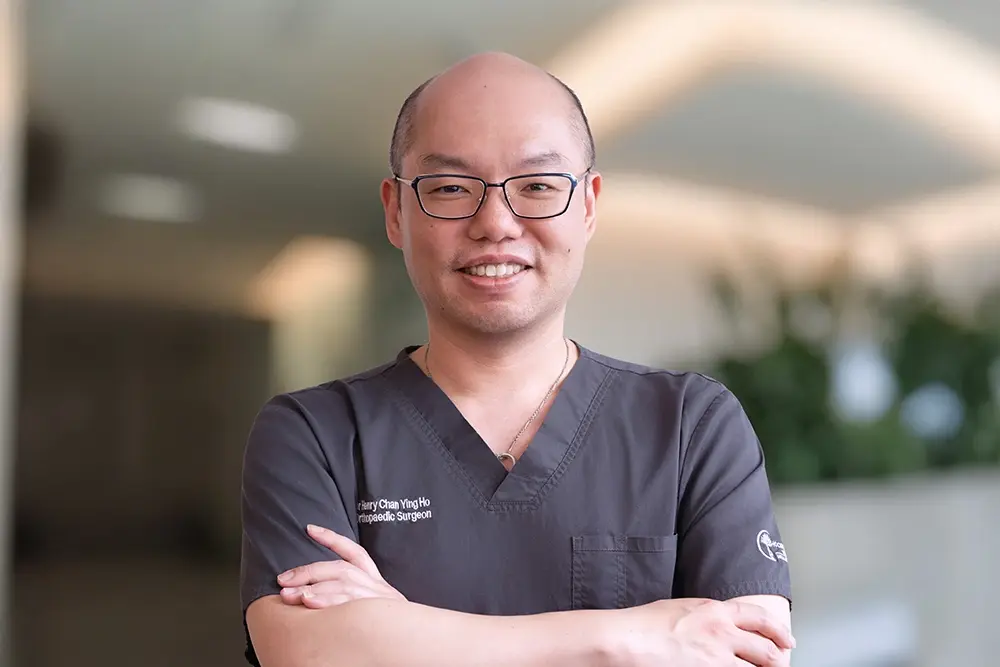
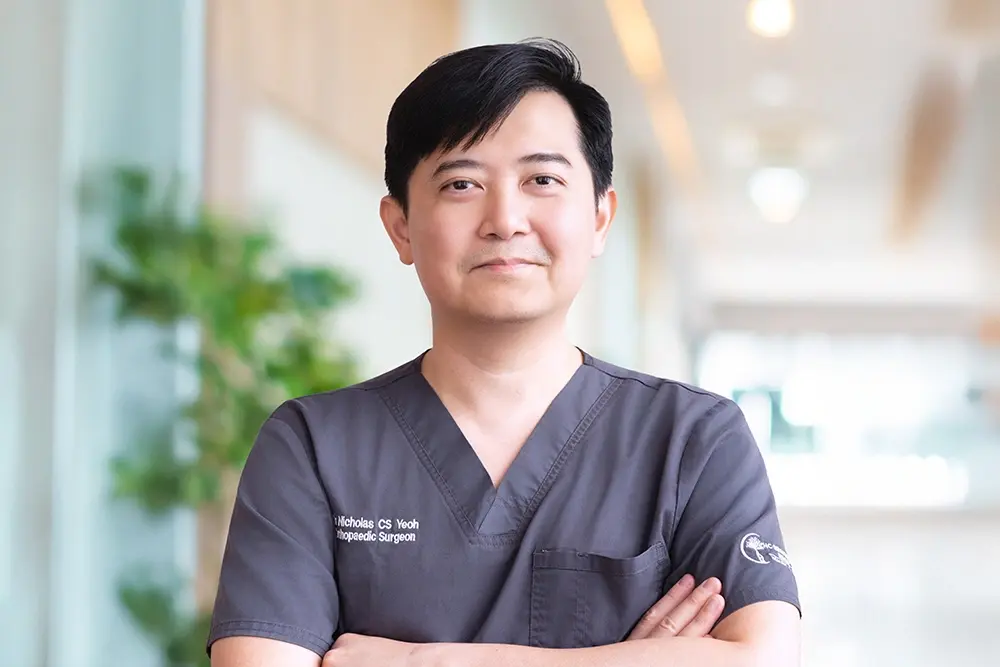
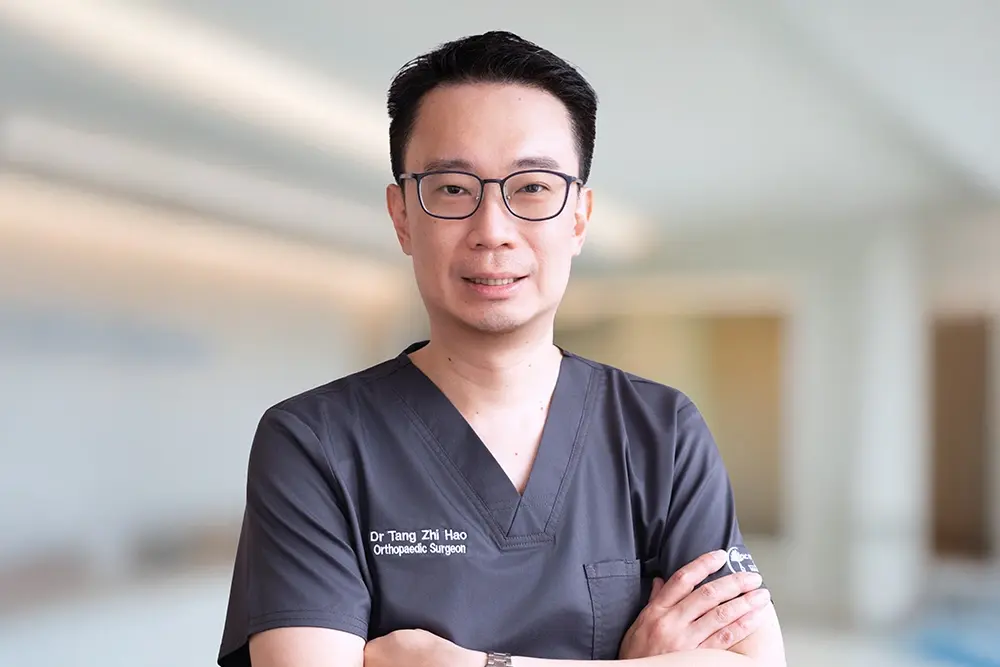
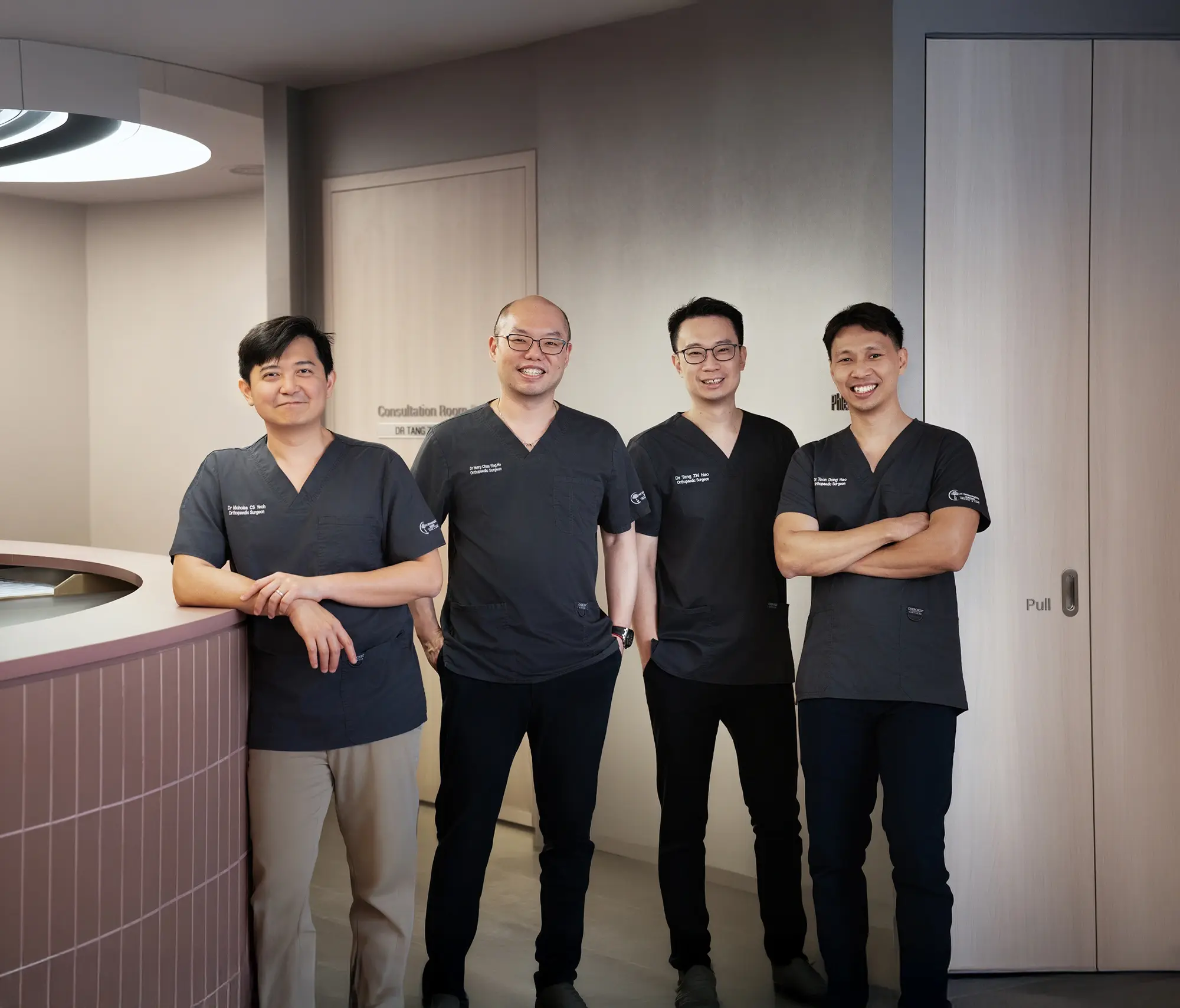
Our spine specialists, Dr Henry Chan, Dr Nicholas Yeoh, Dr Toon Dong Hao, and Dr Tang Zhi Hao, provide tailored, evidence-based interventions ranging from targeted inflammatory management to advanced minimally invasive decompression. Don't let the temporary absence of pain lead to permanent nerve damage; contact our clinic today to book an expert assessment and start your journey toward a stable, pain-free life.
Frequently Asked Questions (FAQs) About Sciatica
Can sciatica go away on its own without surgery?
Why does my sciatica feel worse in the morning?
Is walking good for sciatic nerve pain?
Meet Our Sciatica Specialist in Singapore
Our team comprises Dr Henry Chan, Dr Nicholas Yeoh, Dr Toon Dong Hao, and Dr Tang Zhi Hao — experienced orthopaedic surgeons with subspecialty experience and a patient-centred approach to care.
Dr Henry Chan
Medical Director & Senior Consultant Orthopaedic Surgeon
MBBS (S’pore), MRCS (Edinburgh), MMed (Orthopaedic Surgery), FRCS (Edinburgh)
Dr Henry Chan is an experienced orthopaedic surgeon specialising in joint replacement and complex revision surgery. Trained at the renowned Helios Endo-Klinik in Germany under the MOH HMDP scholarship, he has performed over 1,000 joint replacements and specialises in computer-assisted and robotic joint replacement techniques for precise outcomes.
Dr Nicholas Yeoh
Senior Consultant Orthopaedic Surgeon
MBChB (Edinburgh), MRCS (Edinburgh), MMed (Orthopaedic Surgery), FRCS (Edinburgh)
Dr Nicholas Yeoh is an MOH-accredited orthopaedic specialist and Fellow of the Royal College of Surgeons of Edinburgh. Fellowship-trained in hip and knee reconstruction in Sydney under the MOH HMDP scholarship, he specialises in minimally invasive joint replacement, robotic surgery and advanced techniques that enhance recovery and surgical outcomes.
Dr Toon Dong Hao
Senior Consultant Orthopaedic Surgeon
MBChB (Leeds), MRCS (Edinburgh), MMed (Orthopaedic Surgery), FRCS (Edinburgh)
Dr Toon Dong Hao is a skilled orthopaedic surgeon and Fellow of the Royal College of Surgeons of Edinburgh. Fellowship-trained in Advanced Shoulder and Elbow Surgery in Sydney under the MOH HMDP scholarship, Dr Toon specialises in sports injuries, arthroscopic surgery and complex shoulder, elbow and knee procedures to restore function and mobility.
Dr Tang Zhi Hao
Senior Consultant Orthopaedic Surgeon
MBBS (S’pore), MRCS (Edinburgh), MMed (Orthopaedic Surgery), FRCS (Edinburgh)
Dr Tang Zhi Hao is a fellowship-trained orthopaedic surgeon specialising in foot and ankle conditions. He completed his Foot and Ankle Surgery fellowship at Severance Hospital, Yonsei University Health System in Seoul under Professor Jin Woo Lee. Prior to private practice, he served as Consultant and Deputy Head of Orthopaedics at Khoo Teck Puat Hospital.