
Many people judge the severity of their knee pain by how much it hurts. While pain is an important symptom, it is not the only measure of how significantly a knee condition is affecting your life. Difficulty walking, disturbed sleep, reduced independence and giving up activities you once enjoyed can all have an equally meaningful impact on your overall wellbeing.
Recognising these gradual changes can help you decide when it is time to seek specialist advice. While many people improve with conservative treatment, patients with advanced knee arthritis that continues to significantly affect quality of life may eventually wish to discuss whether knee replacement surgery is appropriate.
Key Takeaways
- Knee pain becomes a quality-of-life problem when it begins affecting your mobility, sleep, independence or ability to enjoy everyday activities—not simply how much it hurts.
- Many people gradually change their daily routines to avoid knee pain without realising how much their lifestyle has been affected.
- Difficulty walking, climbing stairs, sleeping comfortably or participating in activities you enjoy may indicate it is time to seek specialist assessment.
- It is an opportunity to better understand your condition and discuss the treatment options available.
- For patients with advanced knee arthritis, knee replacement surgery aims to improve mobility, restore function and support a better quality of life, not simply relieve pain.
How Knee Pain Can Affect Your Quality of Life
Knee pain does not have to be severe to affect your quality of life. In many cases, the greatest impact comes from the gradual changes to how you move, work, sleep and participate in everyday life.
Mobility and Independence
Simple movements such as walking longer distances, climbing stairs, standing for extended periods or getting in and out of a chair may become increasingly difficult. You may also find yourself relying more on handrails, walking aids or assistance from others to complete everyday tasks.
Sleep and Energy Levels
Knee pain can make it difficult to find a comfortable sleeping position or cause you to wake during the night. Over time, poor sleep may contribute to fatigue, reduced concentration and lower energy levels during the day.
Work and Everyday Activities
Whether you have a physically demanding job or spend long hours sitting at a desk, knee pain can make work more challenging. Everyday activities such as shopping, housework, gardening or caring for family members may also become more difficult or take longer to complete.
Exercise and Social Life
Many people gradually reduce or stop activities they once enjoyed because of knee pain. Walking for exercise, travelling, playing sports or participating in social outings may become less frequent.

Signs You're Adapting to Knee Pain Without Realising It
Many people adjust their daily routines to accommodate knee pain without consciously recognising how much their lifestyle has changed. Although these adaptations may reduce discomfort in the short term, they can also mask the true impact your knee condition is having on your quality of life.
You may be adapting to knee pain if you find yourself:
- Choosing lifts instead of stairs whenever possible.
- Parking closer to entrances to reduce walking distances.
- Planning outings around places where you know you can sit and rest.
- Walking more slowly or avoiding longer walks altogether.
- Turning down social activities, travel or exercise because of your knee.
- Asking family members for help with tasks you previously managed independently.
- Avoiding kneeling, squatting or carrying heavier items.
- Thinking twice before doing everyday activities because you are anticipating knee pain.
These changes often happen gradually, making them easy to overlook. Looking back at how your daily routine has changed over the past year may reveal how much your knee pain is influencing the way you live, move and stay active.
When Should You Consider Seeing a Knee Specialist?
Many people assume they should only see a knee specialist when the pain becomes unbearable. In reality, the decision to seek specialist advice often depends on how much your knee condition is affecting your mobility, independence and ability to do the things that matter to you, rather than the severity of pain alone.
You may benefit from a specialist assessment if:
- Pain continues despite appropriate conservative treatment, including physiotherapy, medication or injections.
- Everyday activities become increasingly difficult, such as walking, climbing stairs or getting in and out of a chair.
- Your knee pain regularly disrupts your sleep or limits your ability to stay active.
- You have stopped participating in activities you previously enjoyed because of your knee.
- You feel less confident moving around, worrying that your knee may give way or prevent you from keeping up with daily demands.
- Your symptoms are affecting your independence, requiring you to rely more on family members or walking aids.
Seeing a knee specialist does not automatically mean surgery will be recommended. A comprehensive assessment helps identify the underlying cause of your symptoms, assess how your knee function has been affected and determine the most appropriate treatment for your individual needs.
The Goal Is to Help You Stay Active and Independent
The aim of treating chronic knee pain is not simply to reduce pain, but to help you maintain your mobility, independence and ability to participate in the activities that are important to you. The most appropriate treatment depends on the underlying cause of your symptoms, how much your knee function is affected and your personal goals.
Depending on your condition, treatment may help you:
- Walk longer distances more comfortably.
- Climb stairs with greater confidence.
- Return to low-impact exercise and recreational activities.
- Sleep more comfortably through the night.
- Carry out everyday tasks with less difficulty.
- Travel, socialise and spend time with family more easily.
Many patients achieve meaningful improvement with conservative treatment, such as physiotherapy, medication or injections. However, when advanced knee arthritis continues to significantly affect quality of life despite these measures, knee replacement surgery may be considered as one option to improve mobility, function and overall quality of life.
Regain Your Independence with HC Orthopaedic Surgery

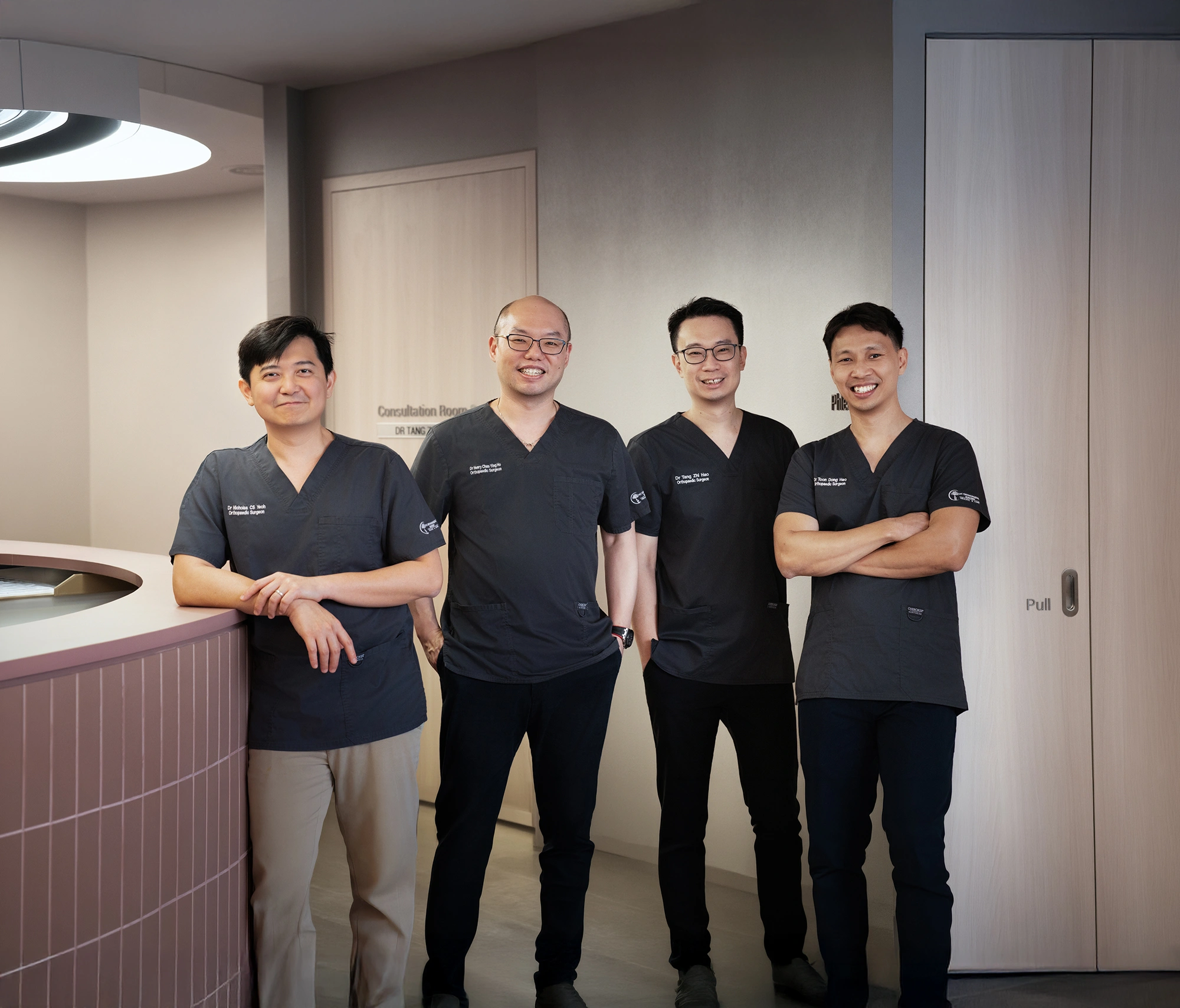
Our Specialised Team
FAQs About Knee Pain and Quality of Life
Does knee pain have to be constant before I should seek treatment?
Does age determine whether I should consider knee replacement surgery?
Will reducing my activity help protect my knee?
Can both knees be affected even if only one hurts now?
Meet Our Knee Specialists in Singapore
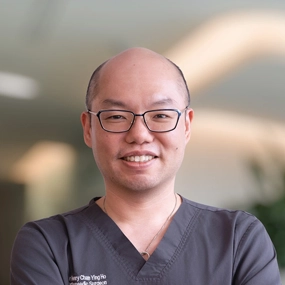
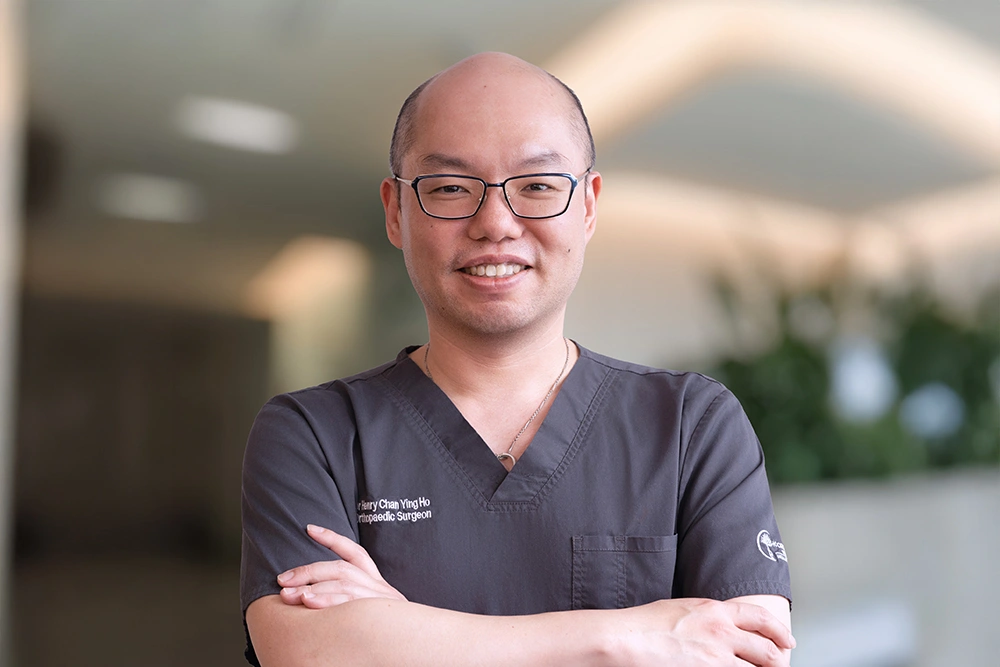
Dr Henry Chan
Medical Director & Senior Consultant Orthopaedic Surgeon
MBBS (S’pore), MRCS (Edinburgh), MMed (Orthopaedic Surgery), FRCS (Edinburgh)
Dr Henry Chan is an experienced orthopaedic surgeon specialising in joint replacement and complex revision surgery. Trained at the renowned Helios Endo-Klinik in Germany under the MOH HMDP scholarship, he has performed over 1,000 joint replacements and specialises in computer-assisted and robotic joint replacement techniques for precise outcomes.
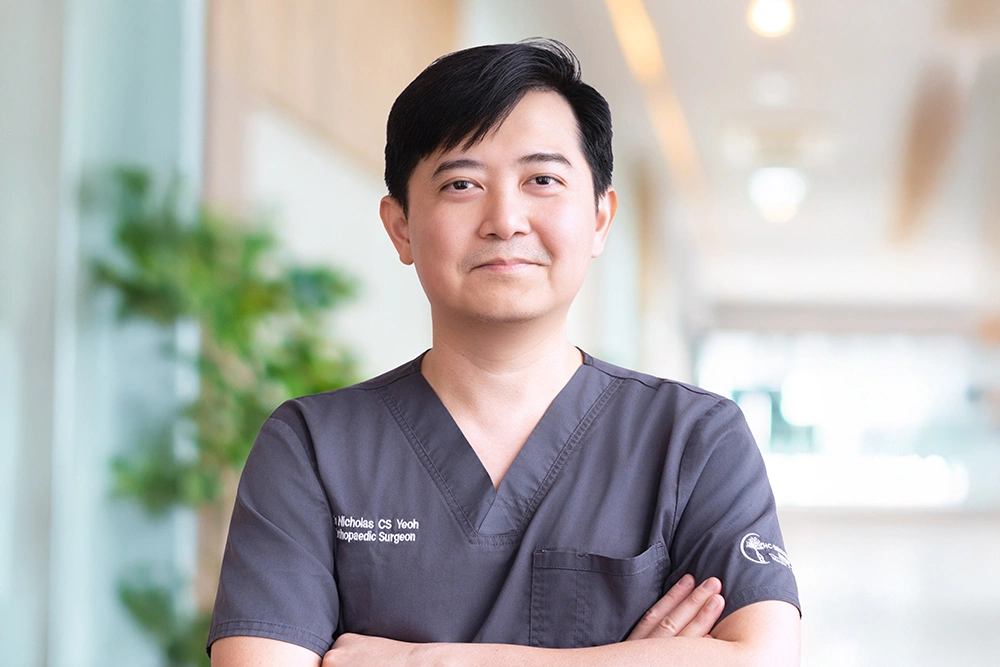
Dr Nicholas Yeoh
Senior Consultant Orthopaedic Surgeon
MBChB (Edinburgh), MRCS (Edinburgh), MMed (Orthopaedic Surgery), FRCS (Edinburgh)
Dr Nicholas Yeoh is an MOH-accredited orthopaedic specialist and Fellow of the Royal College of Surgeons of Edinburgh. Fellowship-trained in hip and knee reconstruction in Sydney under the MOH HMDP scholarship, he specialises in minimally invasive joint replacement, robotic surgery and advanced techniques that enhance recovery and surgical outcomes.
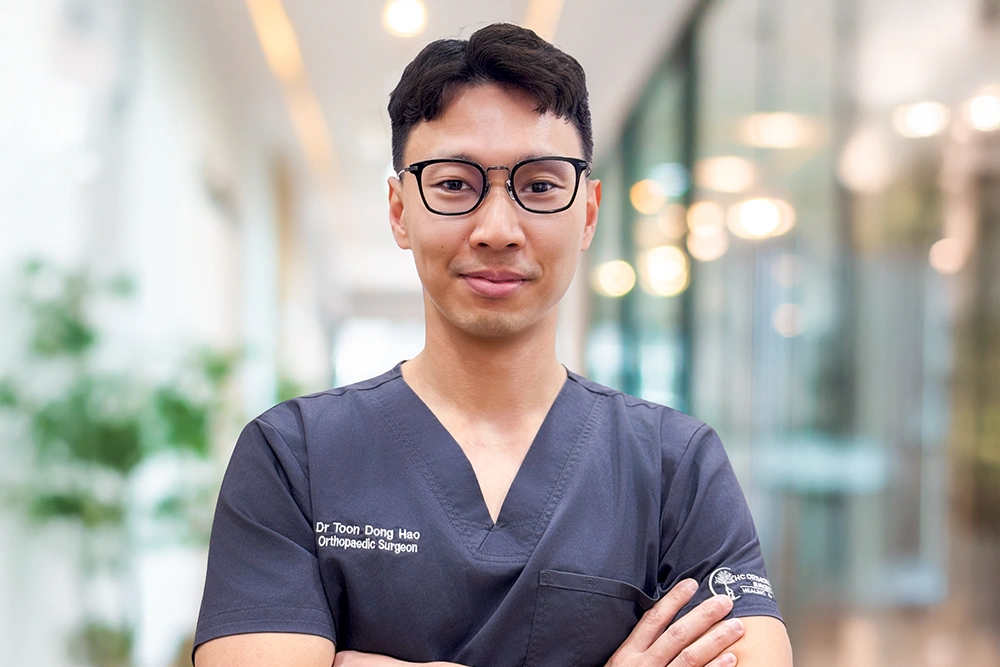
Dr Toon Dong Hao
Senior Consultant Orthopaedic Surgeon
MBChB (Leeds), MRCS (Edinburgh), MMed (Orthopaedic Surgery), FRCS (Edinburgh)
Dr Toon Dong Hao is a skilled orthopaedic surgeon and Fellow of the Royal College of Surgeons of Edinburgh. Fellowship-trained in Advanced Shoulder and Elbow Surgery in Sydney under the MOH HMDP scholarship, Dr Toon specialises in sports injuries, arthroscopic surgery and complex shoulder, elbow and knee procedures to restore function and mobility.
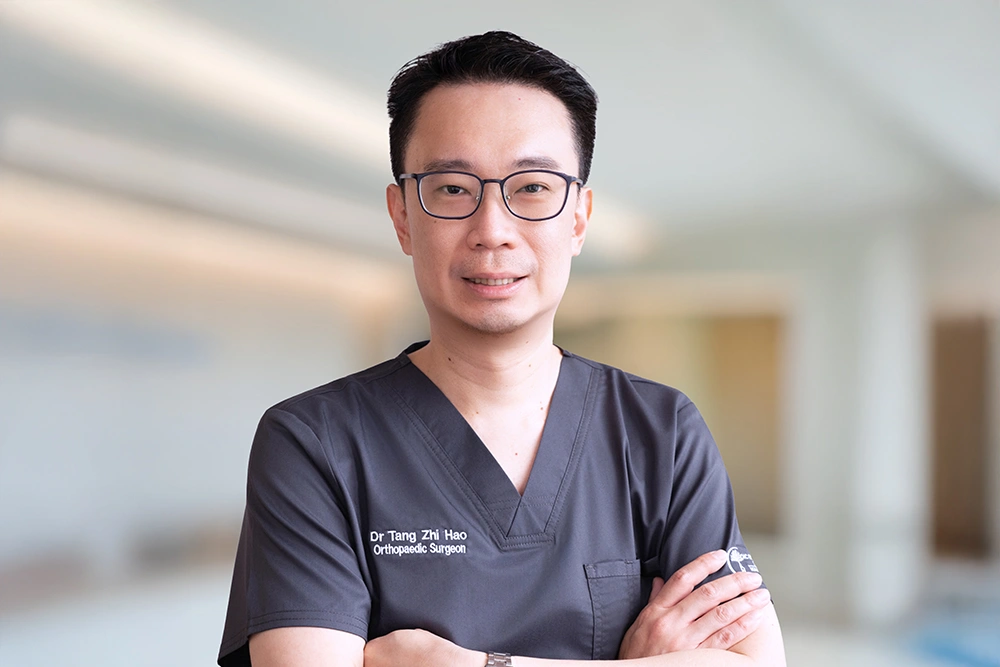
Dr Tang Zhi Hao
Senior Consultant Orthopaedic Surgeon
MBBS (S’pore), MRCS (Edinburgh), MMed (Orthopaedic Surgery), FRCS (Edinburgh)
Dr Tang Zhi Hao is a fellowship-trained orthopaedic surgeon specialising in foot and ankle conditions. He completed his Foot and Ankle Surgery fellowship at Severance Hospital, Yonsei University Health System in Seoul under Professor Jin Woo Lee. Prior to private practice, he served as Consultant and Deputy Head of Orthopaedics at Khoo Teck Puat Hospital.