





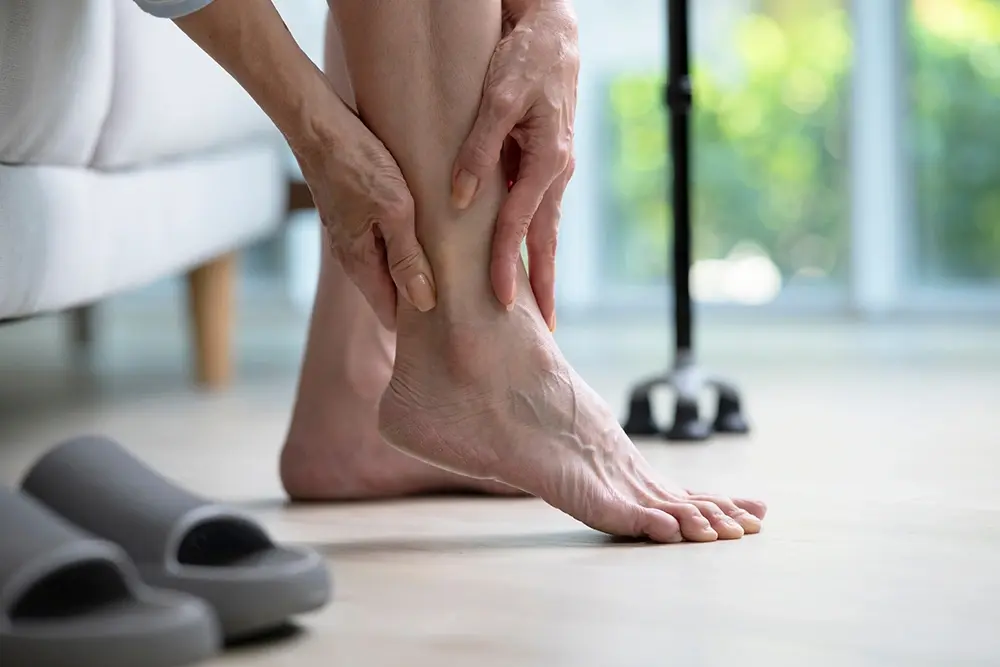
Foot and ankle discomfort is often dismissed as a temporary byproduct of a long day on one’s feet or an ill-fitting pair of shoes. However, when pain persists beyond a few days, it’s rarely just a lingering strain. Persistent aches in the lower limbs often indicate an underlying mechanical failure—such as a structural misalignment or chronic tissue inflammation—that rest alone cannot resolve.
Because these internal issues tend to worsen under the daily load of walking, ignoring the early signals only allows the damage to compound. Therefore, addressing the root cause before the joint undergoes permanent change is essential in not only restoring your full function but also in ensuring your long-term mobility for years to come.
Beyond the Surface: Why Foot Pain Isn't Always Just a Strain
The human foot is an intricate architectural structure of 26 bones and dozens of tendons designed to absorb significant mechanical loads. Because of this complexity, a persistent ache is rarely an isolated incident; it’s usually a signal that the joint’s structural harmony has been disrupted.
When a single component, such as the medial arch, is compromised, it triggers a kinetic chain reaction. To protect the injured area, your body unconsciously shifts its weight, forcing other muscles and joints to overcompensate. This is why an untreated issue in the heel often manifests as secondary pain in the ankle or even the lower back.
Rather than a simple strain, persistent pain suggests that this cycle of overcompensation has reached a breaking point. In cases like this, shifting your perspective from managing a vague ache to identifying a mechanical imbalance is the first step toward a definitive clinical diagnosis.
The Geography of Discomfort: Identifying the Root Source
To move toward an accurate diagnosis, you must first localise the discomfort. Identifying exactly where the pain manifests helps distinguish between simple inflammation and deep-seated mechanical failure:
- The Posterior Trigger: Achilles and Heel Pain
Discomfort at the back of the heel often stems from the Achilles tendon or the surrounding bursae. Chronic Achilles tendonitis or heel bursitis typically presents as a dull ache that intensifies with activity or tight footwear. If left unaddressed, the tendon can thicken, leading to permanent stiffness and a reduced range of motion.
- The Plantar Surface: The Morning First-Step Pain
Pain along the bottom of the foot, particularly a sharp sensation during your first steps in the morning, is a hallmark of plantar fasciitis. While you sleep, the plantar fascia—the ligament supporting your arch—contracts. The sudden weight-bearing load of standing causes micro-tears in the tissue, resulting in acute pain that typically dulls as the ligament warms up through movement.
- The Lateral Ankle: The Legacy of Old Sprains
Pain on the outer side of the ankle is frequently the result of ligamentous laxity caused by previous injuries. If an old sprain was never properly rehabilitated, the joint remains unstable, leading to chronic ankle instability. This often feels like a deep, persistent ache or a sensation that the ankle might give way on uneven surfaces.
The Mechanics of Persistence: Why Some Injuries Don't Heal
Understanding why foot and ankle pain becomes chronic requires looking at the physiological and mechanical hurdles unique to the lower limbs:
- Constant Weight-Bearing Stress
Unlike other joints, the feet never truly rest because they must support your entire body weight with every step taken during daily activity.
- Limited Blood Supply in Tendons
Certain areas, like the mid-portion of the Achilles tendon, have a watershed zone with poor vascularity that significantly slows the natural repair of micro-tears.
- Compensatory Gait Patterns
Unconsciously altering your stride to avoid pain creates abnormal mechanical loads on healthy tissues, often leading to secondary injuries before the primary one heals.
- Tissue Hypoxia and Scarring
Persistent inflammation can restrict oxygen flow to the site of injury, causing the body to replace flexible ligament fibres with stiff, non-functional scar tissue.
When Mechanical Pain Becomes Inflammatory

When mechanical imbalances are left uncorrected, the constant friction and uneven loading eventually trigger a shift from simple discomfort to chronic pathology.
Ankle Osteoarthritis: The Loss of Joint Gliding
Healthy joints rely on a smooth layer of cartilage to facilitate fluid, pain-free movement. In cases of chronic instability or post-traumatic wear, this cartilage thins, leading to ankle osteoarthritis. Patients often report a grinding sensation and a noticeable loss of range of motion as the joint loses its ability to glide smoothly under pressure.
Nerve Entrapment: Beyond Structural Pain
Not all persistent pain is musculoskeletal; sometimes, the structural inflammation begins to compress local nerves. Tarsal tunnel syndrome is a common example, where the posterior tibial nerve becomes squeezed. It’s vital to distinguish this from structural pain, as nerve entrapment typically manifests as:
- Burning sensations that radiate along the sole of the foot.
- Tingling or pins and needles regardless of activity level.
- Electrical shocks that can trigger even when the foot is at rest.
Diagnostic Pathways: Mapping the Internal Damage
Identifying the structural origin of foot and ankle pain requires more than a physical exam. The following systematic diagnostic pathway allows specialists to see how the foot performs under pressure and what is happening beneath the surface:
- Step 1: The Biomechanical Gait Analysis
The way you move provides immediate evidence of mechanical failure. By observing your gait, a specialist can identify abnormal guarding patterns or misalignments in your stride that indicate which muscles are overcompensating. This analysis reveals the story of your pain by showing exactly where the kinetic chain is breaking down.
- Step 2: Dynamic Imaging (Ultrasound or MRI)
Standard imaging often misses invisible soft tissue issues that only manifest during movement or deep within the joint. Ultrasounds allow for a dynamic view of tendons and ligaments in real-time, while an MRI provides a high-resolution look at micro-tears, bone oedema, and chronic inflammation that are otherwise hidden from view.
- Step 3: Weight-Bearing X-Rays
Traditional X-rays taken while sitting can be misleading, as they do not reflect the foot's structural integrity under load. Weight-bearing X-rays are essential for visualising joint space narrowing and bone alignment while the foot is supporting your body weight. This is the only way to accurately assess the degree of cartilage wear or structural collapse in the arches.
Targeted Recovery: Moving Beyond Generic Rest
Resting an injury may provide temporary relief, but clinical interventions such as the following are required to address the mechanical imbalances that cause pain to recur:
- Custom Orthotic Therapy
Unlike off-the-shelf inserts, custom orthotics are engineered to redistribute pressure and realign the foot’s architecture. By correcting these specific misalignments, they neutralise the kinetic chain reaction and prevent secondary joint strain.
- Extracorporeal Shockwave Therapy (ESWT)
For chronic tendon pathologies like plantar fasciitis or Achilles tendonitis, shockwave therapy uses acoustic energy to stimulate blood flow and trigger a healing response in dormant, scarred tissue. This non-invasive approach is particularly effective for injuries that have failed to respond to traditional physiotherapy.
- Minimally Invasive Structural Realignment
When conservative measures are insufficient, modern surgical techniques allow for the correction of structural issues through tiny incisions. These procedures focus on restoring the foot's natural mechanics with significantly reduced downtime and less post-operative discomfort compared to traditional open surgery.
Reclaiming Your Mobility With HC Orthopaedic Surgery
Reclaiming Your Mobility With HC Orthopaedic Surgery

Our Specialised Team
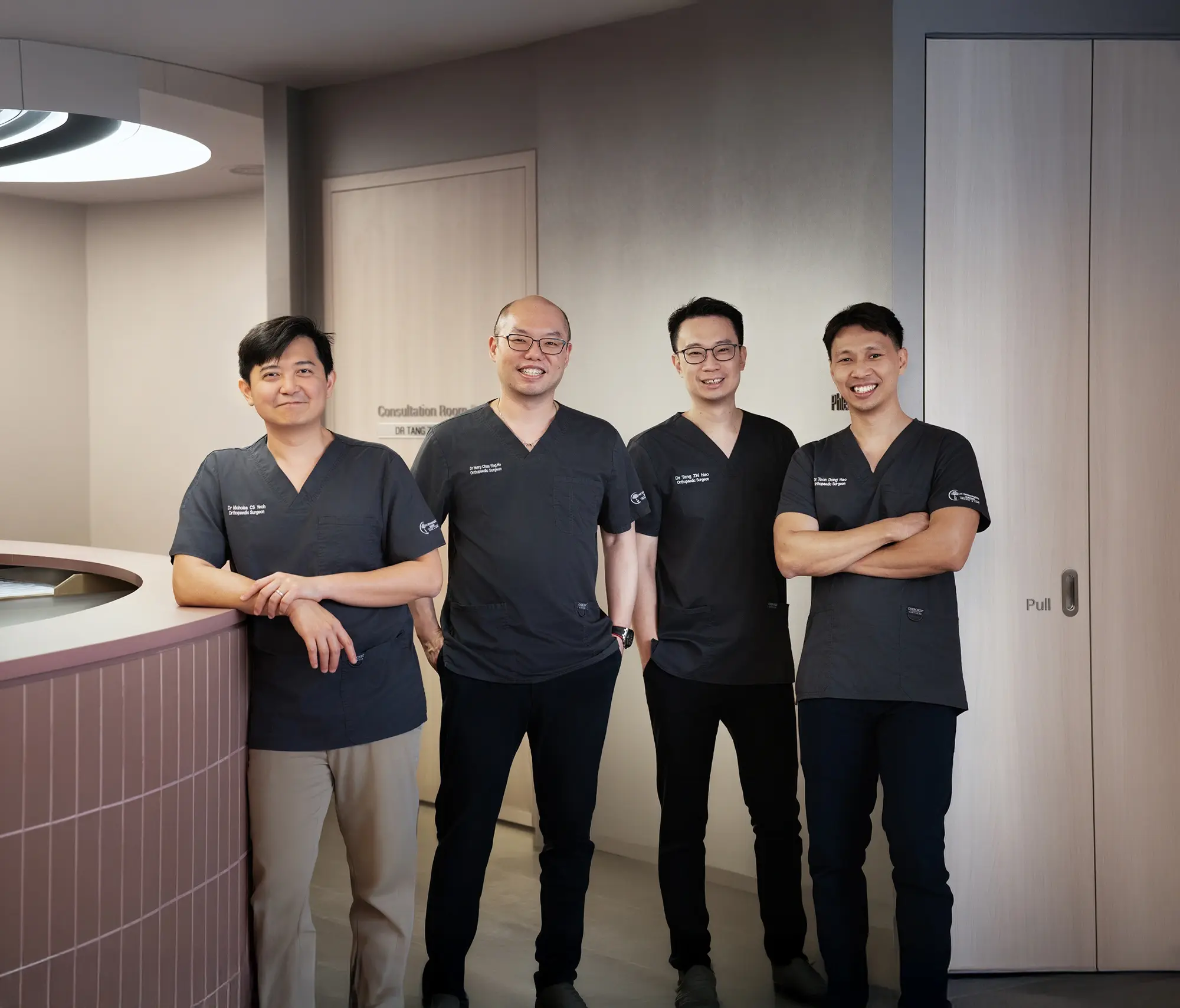
At HC Orthopaedic Surgery, we specialise in precise clinical mapping to identify the exact stage of your structural wear. Our team of foot and ankle specialists, consisting Dr Henry Chan, Dr Nicholas Yeoh, Dr Toon Dong Hao and Dr Tang Zhi Hao, utilises comprehensive assessments to determine if non-surgical interventions—such as custom orthotics, shockwave therapy, or targeted rehabilitation—can effectively halt the progression of your condition. By addressing the root of the pain before permanent structural loss occurs, we help you maintain an active lifestyle without the need for invasive measures.
If you’re struggling with recurring aches, stiffness, or a catching sensation that rest cannot resolve, contact us today to schedule a comprehensive clinical assessment and diagnostic review.
Frequently Asked Questions (FAQs) About Foot and Ankle Pain
Why does my foot pain feel worse first thing in the morning?
Can an old ankle sprain cause pain years later?
Is it normal for foot pain to travel up to my knee or hip?
Meet Our Foot and Ankle Specialist in Singapore
Our team comprises Dr Henry Chan, Dr Nicholas Yeoh, Dr Toon Dong Hao, and Dr Tang Zhi Hao — experienced orthopaedic surgeons with subspecialty experience and a patient-centred approach to care.
Dr Henry Chan
Medical Director & Senior Consultant Orthopaedic Surgeon
MBBS (S’pore), MRCS (Edinburgh), MMed (Orthopaedic Surgery), FRCS (Edinburgh)
Dr Henry Chan is an experienced orthopaedic surgeon specialising in joint replacement and complex revision surgery. Trained at the renowned Helios Endo-Klinik in Germany under the MOH HMDP scholarship, he has performed over 1,000 joint replacements and specialises in computer-assisted and robotic joint replacement techniques for precise outcomes.
Dr Nicholas Yeoh
Senior Consultant Orthopaedic Surgeon
MBChB (Edinburgh), MRCS (Edinburgh), MMed (Orthopaedic Surgery), FRCS (Edinburgh)
Dr Nicholas Yeoh is an MOH-accredited orthopaedic specialist and Fellow of the Royal College of Surgeons of Edinburgh. Fellowship-trained in hip and knee reconstruction in Sydney under the MOH HMDP scholarship, he specialises in minimally invasive joint replacement, robotic surgery and advanced techniques that enhance recovery and surgical outcomes.
Dr Toon Dong Hao
Senior Consultant Orthopaedic Surgeon
MBChB (Leeds), MRCS (Edinburgh), MMed (Orthopaedic Surgery), FRCS (Edinburgh)
Dr Toon Dong Hao is a skilled orthopaedic surgeon and Fellow of the Royal College of Surgeons of Edinburgh. Fellowship-trained in Advanced Shoulder and Elbow Surgery in Sydney under the MOH HMDP scholarship, Dr Toon specialises in sports injuries, arthroscopic surgery and complex shoulder, elbow and knee procedures to restore function and mobility.
Dr Tang Zhi Hao
Senior Consultant Orthopaedic Surgeon
MBBS (S’pore), MRCS (Edinburgh), MMed (Orthopaedic Surgery), FRCS (Edinburgh)
Dr Tang Zhi Hao is a fellowship-trained orthopaedic surgeon specialising in foot and ankle conditions. He completed his Foot and Ankle Surgery fellowship at Severance Hospital, Yonsei University Health System in Seoul under Professor Jin Woo Lee. Prior to private practice, he served as Consultant and Deputy Head of Orthopaedics at Khoo Teck Puat Hospital.