






Hip arthritis often masks itself as a recurring muscle strain, leading many to dismiss the early, intermittent discomfort as a minor soft-tissue issue. However, this silent onset allows the joint’s structural integrity to slowly erode while the body unconsciously overcompensates by shifting the mechanical load to the lower back and knees.
Because these symptoms develop gradually, relying on extreme pain as a trigger for consultation is a significant diagnostic mistake that often limits your clinical path to a total hip replacement. By the time the discomfort is constant, the joint has typically reached a bone-on-bone state where biological preservation treatments, such as viscosupplementation or specialised physiotherapy, are no longer viable.
Therefore, it's essential to transition from vague awareness to a definitive clinical diagnosis at the first sign of mechanical change. Identifying the specific nature of your symptoms early—whether it's a catch in the groin or persistent morning stiffness—is the only way to implement a targeted strategy that safeguards your long-term mobility.
The Anatomy of the Ache: Where is the Pain Located?
Understanding the precise location of your pain is the first step in distinguishing between a temporary soft-tissue injury and a chronic joint condition. While most patients expect hip arthritis to manifest on the outer hip, the clinical reality is often the opposite:
- The Groin Misconception
The hip is a deep ball-and-socket joint located closer to the midline of the body than many realise, so the primary site of arthritis pain is almost always the groin. If you feel a deep, sharp ache when sitting or a dull throb in the inner thigh, it’s likely originating from the joint itself. Pain on the lateral side of the hip is more commonly associated with trochanteric bursitis or muscle tendonitis.
- The Trap of Referred Pain
Because the nerves serving the hip and knee follow a similar pathway, hip degeneration often manifests as referred pain in the knee. It’s common for patients to seek treatment for knee discomfort, only for an assessment to reveal that the knee is healthy while the hip joint has narrowed.
- Deep vs. Superficial Sensations
Distinguishing between intra-articular arthritis and external issues like bursitis depends on the depth of the sensation. Arthritis is felt as a deep, internal lock within the pelvis that worsens with weight-bearing movements. Superficial issues are typically tender to the touch, meaning if you can pinpoint the pain by pressing on the skin over your hip bone, it’s likely external inflammation.
Decoding the Early Red Flags
Early hip arthritis doesn’t always present as a constant ache; instead, it often appears as a series of mechanical limitations that disrupt your daily rhythm. Recognising these red flags allows you to intervene before the joint undergoes significant structural changes:
- The Start-Stop Stiffness
One of the most common early indicators is the gel phenomenon, where the joint feels locked or stiff after periods of inactivity. You may find that the first few steps after waking up or rising from a chair are difficult, but the joint loosens up after a few minutes of movement. This cycle occurs because the lubricating synovial fluid within the joint has become inflamed or depleted.
- Reduced Range of Motion
As the joint space narrows, you may lose the ability to rotate or flex the hip fully. This often manifests during routine mechanical tasks, such as struggling to put on socks, tie shoelaces, or enter and exit a car comfortably. These limitations are not merely due to muscle tightness but are the result of the femur meeting resistance within the worn socket.
- The Compensatory Gait
When a joint is compromised, the body unconsciously alters its walking pattern to minimise pressure on the painful area. This guarding often leads to a subtle limp or a shorter stride on the affected side, known as an antalgic gait. Over time, this imbalance can lead to secondary strain in the lower back or the opposite knee as they work to stabilise your weight.
Identifying Mechanical Locking and Grinding
As hip arthritis progresses, the symptoms often shift from a dull ache to distinct mechanical sensations within the joint. These physical signals indicate that the smooth surfaces of the joint are no longer gliding seamlessly, creating friction that can be both felt and heard:
- Bone-on-Bone Friction
The presence of crepitus—a grinding or crunching sensation—is a clear clinical sign that the protective hyaline cartilage has worn thin. When this occurs, the raw surfaces of the femur and acetabulum rub against each other during movement. This friction not only causes sharp pain but also triggers the formation of bone spurs, which further restrict your movement and increase joint inflammation.
- Labral Irritation and Clicking
Early-stage arthritis often affects the labrum, the ring of specialised cartilage that acts as a seal for the hip socket. When the joint environment changes due to arthritis, the labrum can become frayed or irritated, leading to a noticeable clicking or snapping sensation during certain rotations. These sounds are often the result of the joint catching on loose fragments of cartilage or inflamed tissue within the socket.
The Timing of Agony: When Does the Pain Peak?
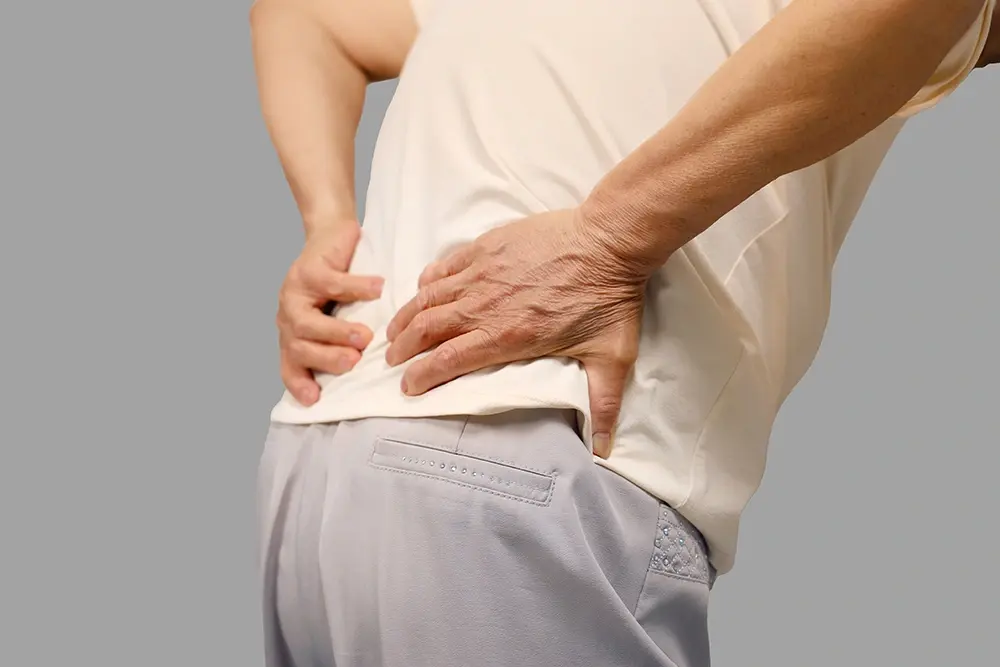
The discomfort caused by hip arthritis isn't constant; it fluctuates based on your activity levels and environmental factors. Recognising these patterns helps in distinguishing chronic joint decay from temporary muscle fatigue:
- Activity-Induced Soreness
While you might feel some stiffness during movement, the peak of arthritic pain often occurs hours after exercise or even the following morning. This delayed soreness happens because the mechanical stress of activity triggers a slow inflammatory response within the joint capsule. Unlike a simple muscle strain that warms up and improves, arthritic joints often flare significantly once the body is at rest.
- Weather Sensitivity
Many patients report increased discomfort during cold or damp weather due to changes in barometric pressure. When the atmospheric pressure drops, the tissues within the hip joint can expand, putting increased pressure on the already sensitive nerve endings. This expansion within the confined space of the joint capsule leads to a noticeable increase in stiffness and a deep, throbbing ache.
- Nocturnal Aches
An inability to find a comfortable sleeping position is a significant indicator of advanced inflammation. In the later stages of arthritis, the pain persists even when the joint is non-weight-bearing, often waking you up as you shift positions. This nocturnal discomfort suggests that the inflammation has become chronic, as the joint remains irritated despite the absence of physical load.
Diagnostic Pathways: The Clinical Journey to Certainty
A diagnosis isn't a single event, but a systematic process of elimination to ensure treatment addresses the structural root of your pain. By following a structured clinical pathway, specialists can differentiate between intra-articular hip decay and external soft-tissue issues:
- Step 1: The Mechanical Assessment
The process begins with a physical evaluation, often utilising the FABER (Flexion, Abduction, and External Rotation) test. By placing the hip in specific positions, clinicians can determine if the pain originates within the joint or is being referred from the sacroiliac joint or the lower back. This movement helps pinpoint whether the restriction is mechanical or muscular.
- Step 2: Initial Radiographic Screening (X-Ray)
Weight-bearing X-rays are the gold standard for identifying the structural hallmarks of arthritis. These images allow the clinician to see joint space narrowing, where the protective cartilage has thinned, and the presence of osteophytes (bone spurs). These changes provide concrete evidence of the joint's current stage of wear.
- Step 3: Advanced Visualisation (MRI)
If X-rays are inconclusive or if symptoms suggest soft-tissue damage, an MRI is utilised to provide a more detailed view. This scan is essential for detecting bone marrow oedema—swelling within the bone itself—or labral tears that are invisible on standard X-rays. It's a crucial step for patients whose symptoms are severe despite relatively normal X-ray results.
- Step 4: Differential Diagnosis
The final step involves a logical breakdown to rule out mimicking conditions. Clinicians must ensure the pain isn't caused by hip bursitis, an inguinal hernia, or sciatica originating from the lumbar spine. This rigorous exclusion process ensures that the resulting treatment plan—whether conservative or surgical—is targeted at the true source of your discomfort.
Diagnose Hip Arthritis Early With HC Orthopaedic Surgery

Diagnose Hip Arthritis Early With HC Orthopaedic Surgery

Our Specialised Team
At HC Orthopaedic Surgery, we specialise in precise clinical mapping to identify the exact stage of your joint wear. Our team of hip specialists, comprising Dr Henry Chan, Dr Nicholas Yeoh, Dr Toon Dong Hao and Dr Tang Zhi Hao, utilises comprehensive assessments to determine if non-surgical interventions—such as viscosupplementation, targeted physiotherapy, or lifestyle modifications—can effectively halt the progression of your arthritis. By addressing the root of the pain before permanent structural loss occurs, we help you maintain an active lifestyle without the immediate need for a total hip replacement.
If you’re experiencing persistent hip stiffness or a catching sensation in the groin, don't wait for the pain to become debilitating. Book an appointment with us today to secure a definitive diagnosis and a personalised recovery plan.
Frequently Asked Questions (FAQs) About Hip Arthritis
Can hip arthritis be reversed without surgery?
How can I tell the difference between a hip strain and arthritis?
Is walking good or bad for an arthritic hip?
Meet Our Hip Specialist in Singapore
Our team comprises Dr Henry Chan, Dr Nicholas Yeoh, Dr Toon Dong Hao, and Dr Tang Zhi Hao — experienced orthopaedic surgeons with subspecialty experience and a patient-centred approach to care.
Dr Henry Chan
Medical Director & Senior Consultant Orthopaedic Surgeon
MBBS (S’pore), MRCS (Edinburgh), MMed (Orthopaedic Surgery), FRCS (Edinburgh)
Dr Henry Chan is an experienced orthopaedic surgeon specialising in joint replacement and complex revision surgery. Trained at the renowned Helios Endo-Klinik in Germany under the MOH HMDP scholarship, he has performed over 1,000 joint replacements and specialises in computer-assisted and robotic joint replacement techniques for precise outcomes.
Dr Nicholas Yeoh
Senior Consultant Orthopaedic Surgeon
MBChB (Edinburgh), MRCS (Edinburgh), MMed (Orthopaedic Surgery), FRCS (Edinburgh)
Dr Nicholas Yeoh is an MOH-accredited orthopaedic specialist and Fellow of the Royal College of Surgeons of Edinburgh. Fellowship-trained in hip and knee reconstruction in Sydney under the MOH HMDP scholarship, he specialises in minimally invasive joint replacement, robotic surgery and advanced techniques that enhance recovery and surgical outcomes.
Dr Toon Dong Hao
Senior Consultant Orthopaedic Surgeon
MBChB (Leeds), MRCS (Edinburgh), MMed (Orthopaedic Surgery), FRCS (Edinburgh)
Dr Toon Dong Hao is a skilled orthopaedic surgeon and Fellow of the Royal College of Surgeons of Edinburgh. Fellowship-trained in Advanced Shoulder and Elbow Surgery in Sydney under the MOH HMDP scholarship, Dr Toon specialises in sports injuries, arthroscopic surgery and complex shoulder, elbow and knee procedures to restore function and mobility.
Dr Tang Zhi Hao
Senior Consultant Orthopaedic Surgeon
MBBS (S’pore), MRCS (Edinburgh), MMed (Orthopaedic Surgery), FRCS (Edinburgh)
Dr Tang Zhi Hao is a fellowship-trained orthopaedic surgeon specialising in foot and ankle conditions. He completed his Foot and Ankle Surgery fellowship at Severance Hospital, Yonsei University Health System in Seoul under Professor Jin Woo Lee. Prior to private practice, he served as Consultant and Deputy Head of Orthopaedics at Khoo Teck Puat Hospital.