



A meniscus tear may sound like a single type of knee injury, but two people with the same diagnosis can have very different treatment plans. One may improve without surgery, while another may be advised to have the meniscus repaired or part of the damaged tissue trimmed.
One reason for these differences is where the tear occurs. Understanding its location can provide useful context for why a particular treatment is recommended and what your recovery may involve.
Why Does the Location of a Meniscus Tear Matter?
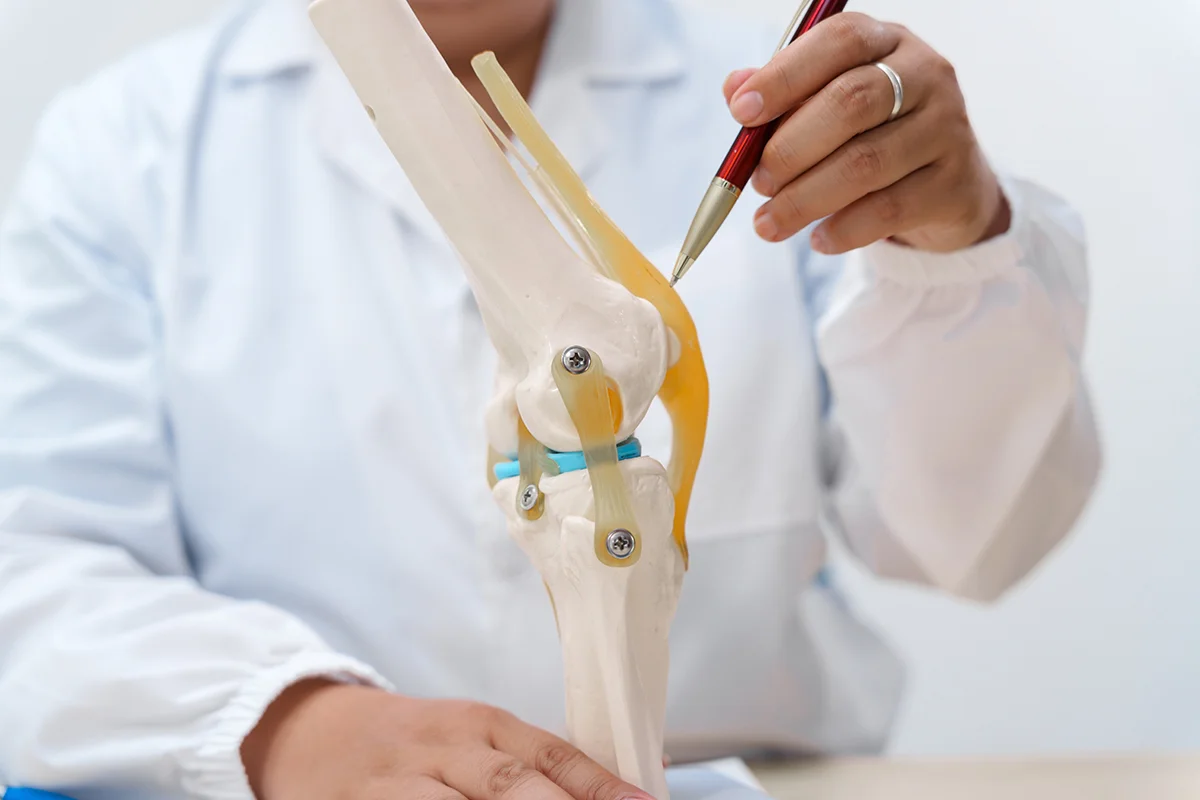
Each knee has two menisci, the medial meniscus on the inner side and the lateral meniscus on the outer side. These C-shaped structures help distribute load across the knee and contribute to joint stability.
Blood supply to the meniscus is not uniform. It is greatest around the outer edge and becomes progressively limited towards the centre. For this reason, the meniscus is commonly divided into three vascular zones, and location of a tear can influence its healing potential and whether surgical repair may be considered.
How Do Meniscus Tear Zones Influence Treatment?
Each of the three zones has a different healing potential. This can influence whether a meniscus tear may respond to non-surgical treatment, be suitable for repair or require a different surgical approach.
Red-Red Zone
The red-red zone is the outer portion of the meniscus, closest to the joint capsule. It receives the greatest blood supply and therefore has the strongest healing potential.
Some small, stable tears in this area may improve with non-surgical treatment because of the stronger blood supply. If surgery is required, certain tears may also be suitable for meniscus repair, where the torn tissue is sutured together and allowed to heal.
Red-White Zone
The red-white zone lies between the well-supplied outer edge and the inner part of the meniscus. Blood supply is more limited here, so healing is possible in some cases but less predictable.
A tear in this zone may still be considered for repair depending on factors such as its pattern, stability and tissue quality. Your age and activity demands may also form part of the decision.
White-White Zone
The white-white zone is the inner portion of the meniscus and has little to no direct blood supply. As a result, tears in this region have limited potential to heal naturally.
When a symptomatic tear in this area cannot be repaired, partial meniscectomy may be considered. This involves removing the unstable or damaged portion of the meniscus while preserving as much healthy tissue as possible.
How Does Tear Location Affect Your Recovery?
Tear location can influence recovery indirectly because it helps determine which treatment approach may be suitable. Recovery after a repair is generally different from recovery after trimming damaged tissue or managing a tear without surgery.
Non-Surgical Treatment
Some stable tears, particularly those that are not causing significant mechanical symptoms, may be managed without surgery. Treatment can include activity modification and physiotherapy to improve knee movement, strength and control.
For a minor tear that responds well to conservative care, recovery may take around four to six weeks, although this varies depending on the tear, your symptoms and the demands you place on your knee.
Meniscus Repair
When a tear is suitable for repair, recovery usually takes longer because the repaired tissue needs time to heal. You may initially need crutches or a knee brace, with temporary restrictions on weight-bearing or certain knee movements depending on the repair.
Full recovery commonly takes around three to six months, with rehabilitation progressing gradually towards strengthening, higher-demand activities and eventual return to sport.
Partial Meniscectomy
Partial meniscectomy does not require the torn edges to heal back together, so rehabilitation is generally quicker than after a repair. Weight-bearing and movement can often progress sooner, depending on your individual recovery.
Many patients can resume routine activities within approximately four to six weeks after partial meniscectomy. However, recovery and return to sport may take longer depending on the extent of the procedure and individual rehabilitation progress. A shorter recovery does not necessarily make meniscectomy the preferred option, as preserving healthy meniscal tissue remains important where possible.
Does Tear Location Alone Determine Your Treatment?
No single feature of a meniscus tear determines how it should be treated. While location indicates its healing potential, your meniscus tear specialist will also consider:
- The size and pattern of the tear
- Whether the torn tissue is stable or displaced
- The quality of the meniscus tissue
- Whether the tear is acute or degenerative
- Your age and activity level
- Other knee injuries, such as an ACL tear
- How your symptoms respond to non-surgical treatment
For example, two tears within the red-red zone may not both be suitable for repair if their patterns or tissue quality differ. Your treatment is therefore based on the overall characteristics of the injury rather than its location alone.
A meniscus tear on an MRI does not always tell you how much it will affect your knee or what should happen next. Persistent pain, swelling, catching or locking, as well as difficulty returning to your usual activities, can help indicate when further assessment is warranted.

Making Sense of Your Meniscus Injury
A meniscus tear on an MRI does not always tell you how much it will affect your knee or what should happen next. Persistent pain, swelling, catching or locking, as well as difficulty returning to your usual activities, can help indicate when further assessment is warranted.

Our Specialised Team
At HC Orthopaedic Surgery in Singapore, meniscus tears and other knee conditions are managed by Dr Henry Chan alongside Dr Nicholas Yeoh. The wider orthopaedic team also includes Dr Tang Zhi Hao.
If your knee symptoms are persisting after an injury or affecting how you move, contact the clinic to arrange a consultation and find out what your next steps may involve.
FAQs About Meniscus Tear Location and Recovery
Can a meniscus tear extend across more than one vascular zone?
Can the location of a meniscus tear change over time?
Are tears near the meniscus root treated differently?
Meet Our Doctors
Dr Henry Chan
Medical Director & Senior Consultant Orthopaedic Surgeon
MBBS (S’pore), MRCS (Edinburgh), MMed (Orthopaedic Surgery), FRCS (Edinburgh)
Dr Nicholas Yeoh
Senior Consultant Orthopaedic Surgeon
MBChB (Edinburgh), MRCS (Edinburgh), MMed (Orthopaedic Surgery), FRCS (Edinburgh)
Dr Tang Zhi Hao
Senior Consultant Orthopaedic Surgeon
MBBS (S’pore), MRCS (Edinburgh), MMed (Orthopaedic Surgery), FRCS (Edinburgh)