



You may have persistent pain in your groin, thigh or knee and naturally assume that the problem lies in the area that hurts. But when symptoms keep returning or do not improve as expected, the source of the pain may not be so straightforward.
Hip problems can sometimes cause discomfort elsewhere in the lower limb, making it harder to recognise where your symptoms are actually coming from. This is particularly relevant when there is little or no obvious pain directly around the hip itself.
Recognising the connection between the hip and pain elsewhere in the leg can help you make better sense of ongoing symptoms and know when they warrant further assessment.
Understanding Referred Pain From the Hip
The location where you feel pain does not always correspond to the structure causing it. One reason is referred pain, where a problem in one part of the body is perceived as discomfort somewhere else.
The hip joint and surrounding structures share sensory nerve pathways with other areas of the lower limb. As a result, pain arising from the hip may sometimes be perceived in the groin, thigh or knee rather than directly over the hip joint. This is why the site of your pain can provide useful clues, but may not be enough to identify its source on its own.
Why Is Groin Pain Common With Hip Problems?
Groin pain is one of the more characteristic patterns associated with conditions affecting the hip joint itself. Because the joint lies deep within the body, discomfort may be felt towards the front of the hip and into the groin rather than over the outer side.
Conditions that can produce this pattern include:
- Hip osteoarthritis
- Hip labral tears
- Femoroacetabular impingement (FAI)
- Avascular necrosis
- Certain hip fractures or stress injuries
You may notice the discomfort more when walking, climbing stairs, getting in and out of a car or rotating your leg. Stiffness or reduced hip movement may also occur alongside the pain.
How Can Hip Pain Travel Into the Thigh?
Pain arising from the hip may extend from the groin into the front or inner part of your thigh. In some cases, it may travel further down the leg.
This can occur with degenerative joint conditions such as hip osteoarthritis, which may cause discomfort extending from the groin into the front or inner thigh. You may initially interpret this as a thigh or muscle problem, particularly if you do not have obvious pain directly over the hip.
The way the discomfort behaves can be informative. Pain related to the hip may become more noticeable with weight-bearing activities or movements that rotate or flex the joint. You may also gradually find it harder to put on shoes, cross your legs or bend towards your feet.
When Hip Pain Is Felt at the Knee
Pain from the hip can travel down the thigh and be felt around the knee. For some people, knee pain may even be more noticeable than discomfort at the hip itself.
This can make the source difficult to identify. If the knee does not fully explain your symptoms, your orthopaedic specialist may also assess your hip movement, strength and walking pattern.
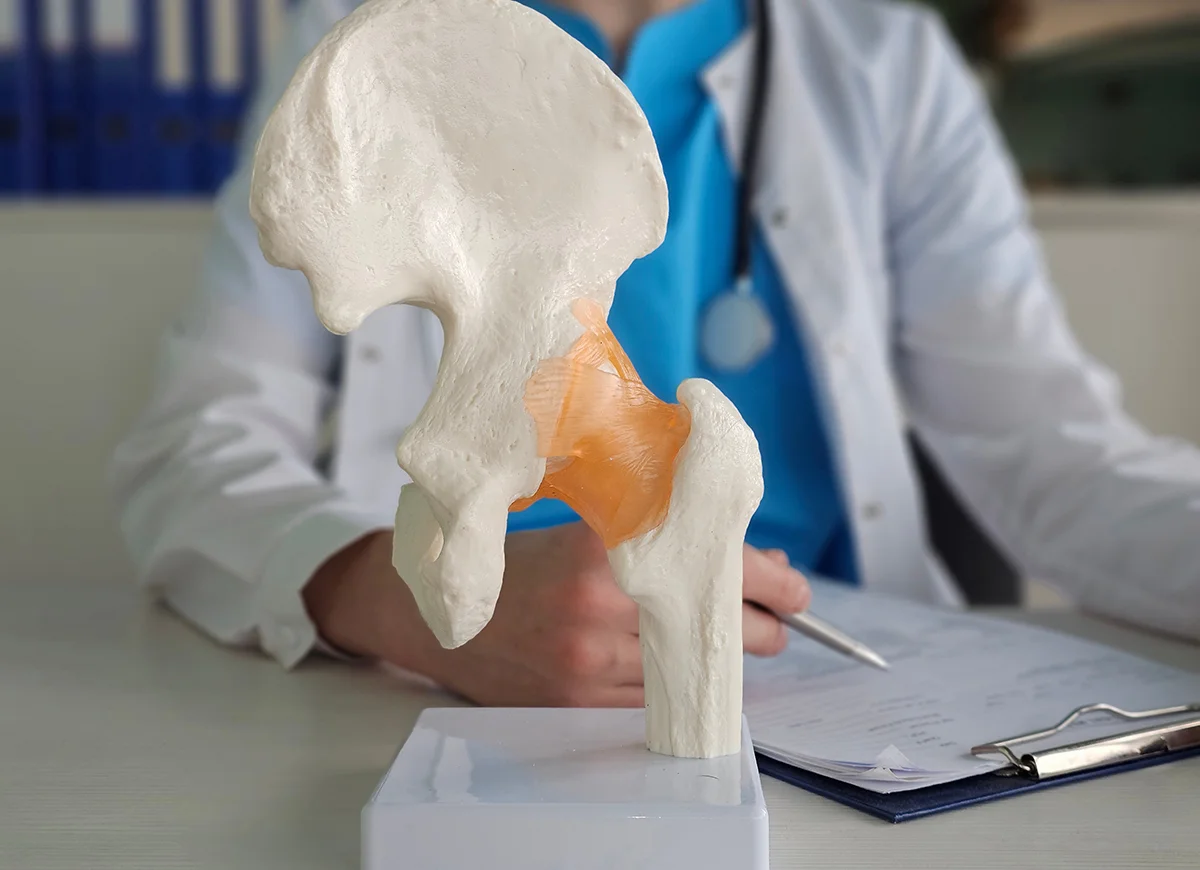
How a Hip Doctor Identifies the Source of Pain
Because hip pain can arise from the bones, cartilage, labrum, tendons or surrounding muscles, identifying the affected structure is important before treatment is considered. Your hip doctor will review your symptoms, medical history and daily activities, followed by a physical examination of your hip and lower limb. This can help determine whether pain felt in your groin, thigh or knee may be originating from the hip.
If further investigation is needed, imaging such as X-rays or magnetic resonance imaging (MRI) scans may be recommended, depending on your symptoms and examination findings. These investigations can help assess the hip joint and identify conditions such as hip arthritis, labral tears, fractures or joint degeneration.
Groin, thigh or knee pain may sometimes be associated with an underlying hip problem. Rather than focusing only on where the discomfort is felt, establishing where it begins can provide a clearer basis for treatment and help prevent the root problem from being overlooked.

Finding the Source of Persistent Lower Limb Pain
Groin, thigh or knee pain may sometimes be associated with an underlying hip problem. Rather than focusing only on where the discomfort is felt, establishing where it begins can provide a clearer basis for treatment and help prevent the root problem from being overlooked.

Our Specialised Team
At HC Orthopaedic Surgery in Singapore, hip conditions are managed by Dr Henry Chan and Dr Nicholas Yeoh, with experience in assessing and managing a range of hip conditions. The wider orthopaedic team also includes Dr Tang Zhi Hao.
If you have persistent groin, thigh or knee pain that may be related to your hip, contact the clinic to arrange an assessment and determine the next steps for your care.
FAQs About Referred Pain From the Hip
Can you have a hip problem even if you can still walk normally?
Does age affect the likely cause of hip-related pain?
When should you see a hip surgeon for referred pain?
Meet Our Doctors
Dr Henry Chan
Medical Director & Senior Consultant Orthopaedic Surgeon
MBBS (S’pore), MRCS (Edinburgh), MMed (Orthopaedic Surgery), FRCS (Edinburgh)
Dr Nicholas Yeoh
Senior Consultant Orthopaedic Surgeon
MBChB (Edinburgh), MRCS (Edinburgh), MMed (Orthopaedic Surgery), FRCS (Edinburgh)
Dr Tang Zhi Hao
Senior Consultant Orthopaedic Surgeon
MBBS (S’pore), MRCS (Edinburgh), MMed (Orthopaedic Surgery), FRCS (Edinburgh)