



When your feet hurt, changing your shoes is often one of the first things you try. You may switch to a wider fit, different insoles or reduce activities that make the discomfort worse. If the pain settles, footwear may have been part of the problem. If it keeps returning, however, there may be more to consider.
Persistent symptoms can point to an issue that is not being addressed by footwear changes alone. In some cases, the shoes are aggravating an underlying problem rather than causing it. Understanding that distinction can help you recognise when repeated adjustments are no longer enough and when your symptoms may need a closer assessment.
Structural Foot Problems That Can Cause Ongoing Symptoms
The shape and alignment of your feet affect how forces are distributed when you stand and move. Changes in these structures can contribute to persistent symptoms, particularly during weight-bearing activities.
Examples include:
- Bunions: A change in the alignment of the big toe joint can cause a prominent bump, pain and difficulty fitting into certain shoes
- Flat feet: A lowered arch can alter the mechanics of your foot and ankle, sometimes contributing to pain or fatigue
- High arches: A higher arch can concentrate pressure on certain areas of the foot and affect stability
- Arthritis: Degeneration within the foot or ankle joints may cause pain, stiffness and reduced movement
When Foot Pain May Arise From Soft Tissues
Not every persistent foot problem involves the bones or joints. The tendons, ligaments and other soft tissues that support your feet can also become injured or irritated.
Plantar fasciitis, for example, commonly causes pain around the heel and sole of the foot. Achilles tendon disorders can cause pain towards the back of the heel or ankle, while ligament injuries may lead to ongoing pain or instability following a sprain.
Signs That Footwear May Not Be the Main Problem
The way your symptoms behave over time can provide useful clues. Rather than focusing only on whether a particular shoe feels comfortable, consider whether the problem continues across different footwear and activities.
Further assessment may be worthwhile if you notice:
- Pain that persists despite changing shoes
- Recurrent swelling or stiffness
- A visible change in the shape or alignment of your foot
- Pain that returns whenever you increase your activity
- Difficulty bearing weight comfortably
- Reduced stability when walking
- Symptoms that are gradually becoming more frequent
These signs do not identify a specific condition on their own. If they persist despite footwear changes, assessment by a foot specialist may be warranted.
How a Foot Specialist Assesses Persistent Pain
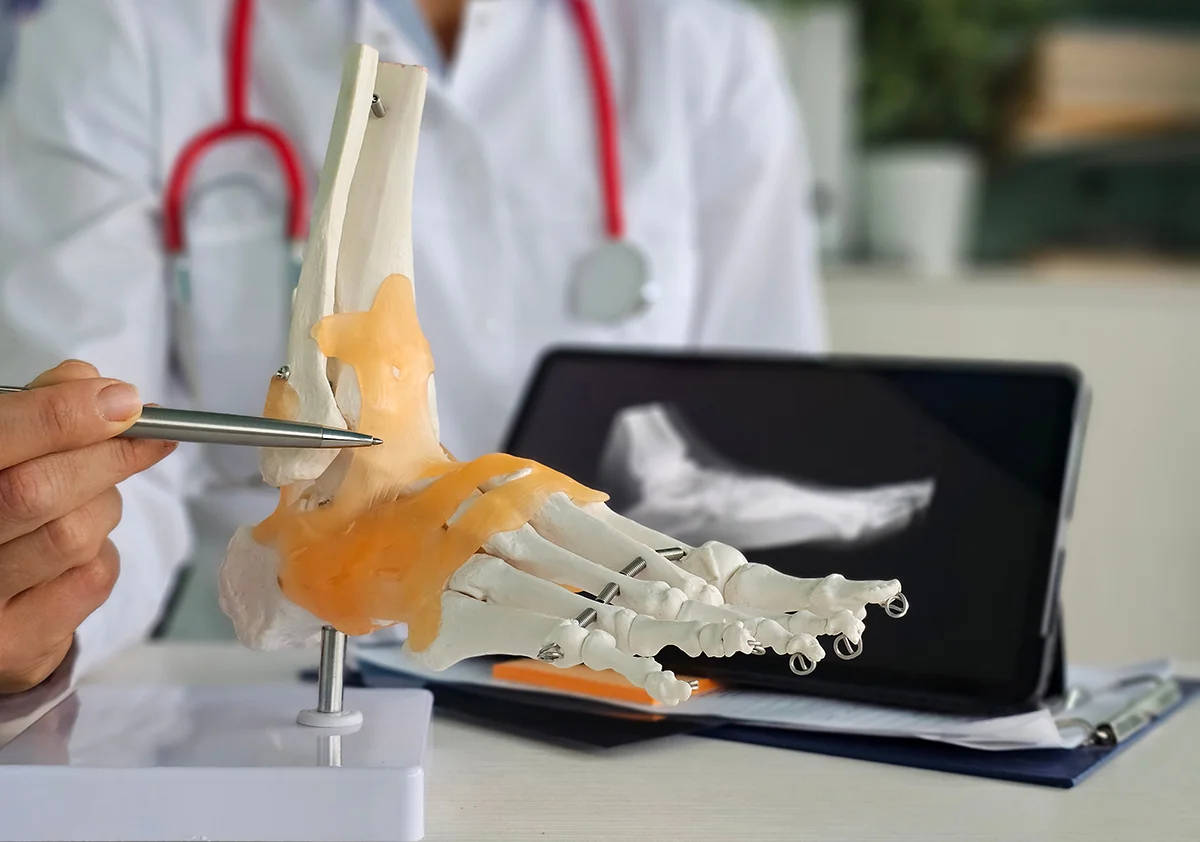
Your specialist will consider when the pain occurs, your activity levels and relevant medical history before examining your foot and ankle.
Depending on the findings, X-rays, ultrasound or MRI scans may be used to investigate ligament injuries, fractures, tendon disorders, joint degeneration or structural deformities. The results can then help determine which treatment options are relevant to your condition.
Changing your shoes can be a sensible first step for mild foot discomfort, but persistent pain deserves more than repeated trial and error. Finding out whether a structural, joint or soft tissue problem is involved can provide a clearer direction for managing your symptoms and maintaining comfortable movement.

Finding the Underlying Cause of Foot Pain
Changing your shoes can be a sensible first step for mild foot discomfort, but persistent pain deserves more than repeated trial and error. Finding out whether a structural, joint or soft tissue problem is involved can provide a clearer direction for managing your symptoms and maintaining comfortable movement.

Our Specialised Team
At HC Orthopaedic Surgery in Singapore, care is led by Dr Henry Chan, with Dr Tang Zhi Hao providing assessment and treatment for foot and ankle conditions. The wider orthopaedic team also includes Dr Nicholas Yeoh.
For foot pain that continues despite changes to your shoes, insoles or activities, arrange an assessment and find out what may be contributing to your symptoms.
FAQs About Foot Pain Beyond Footwear
Can a bunion continue to worsen even if I wear wider shoes?
Why does one pair of shoes hurt while another feels comfortable?
Should I bring my usual shoes to a foot specialist appointment?
Can my feet change shape as I get older?
Meet Our Doctors
Dr Henry Chan
Medical Director & Senior Consultant Orthopaedic Surgeon
MBBS (S’pore), MRCS (Edinburgh), MMed (Orthopaedic Surgery), FRCS (Edinburgh)
Dr Nicholas Yeoh
Senior Consultant Orthopaedic Surgeon
MBChB (Edinburgh), MRCS (Edinburgh), MMed (Orthopaedic Surgery), FRCS (Edinburgh)
Dr Tang Zhi Hao
Senior Consultant Orthopaedic Surgeon
MBBS (S’pore), MRCS (Edinburgh), MMed (Orthopaedic Surgery), FRCS (Edinburgh)