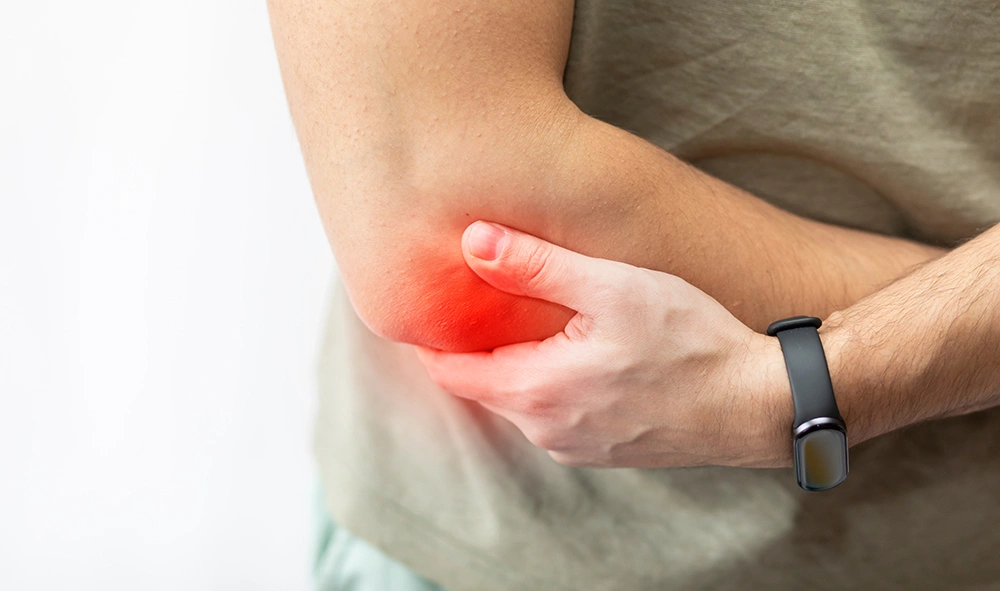
Tennis elbow dan golfer’s elbow adalah dua cedera akibat penggunaan berlebih yang paling sering menyerang lengan bawah dan siku. Meski namanya, kedua kondisi ini bisa terjadi pada siapa saja yang sering mengulangi gerakan lengan, pergelangan tangan atau menggenggam—tidak hanya atlet.
Meski sama-sama terjadi akibat otot dan tendon yang dipakai terus-menerus, letak nyeri pada kedua kondisi ini berbeda. Gejala umumnya muncul perlahan dan kadang awalnya dianggap sepele sehingga sering diabaikan sampai akhirnya mengganggu aktivitas sehari-hari seperti mengangkat benda, mengetik, atau memegang cangkir.
Intisari Singkat
- Tennis elbow sakit di bagian luar siku, sedangkan golfer’s elbow terasa di bagian dalam siku
- Keduanya disebabkan oleh tekanan berulang pada tendon akibat aktivitas menggenggam, mengangkat, atau pergerakan pergelangan tangan berulang
- Tennis elbow sering dikaitkan dengan gerakan meluruskan pergelangan tangan, sedangkan golfer’s elbow dengan gerakan menekuk pergelangan tangan dan memutar lengan bawah
- Sebagian besar kasus membaik dengan mengurangi aktivitas yang memicu, rehabilitasi, serta pengobatan nonbedah
- Nyeri berkelanjutan, kelemahan, atau genggaman melemah sebaiknya dikonsultasikan ke dokter ortopedi
Apa Itu Tennis Elbow dan Golfer’s Elbow?
Tennis elbow dan golfer’s elbow adalah cedera tendon akibat penggunaan berlebihan yang menyerang sisi siku yang berbeda. Tennis elbow atau lateral epicondylitis menyerang tendon di sisi luar siku, sedangkan golfer’s elbow atau medial epicondylitis di sisi dalam.
Keduanya dikenal sebagai cedera olahraga anggota tubuh bagian atas, terutama pada aktivitas yang banyak menggenggam, mengangkat, melempar, atau aktivitas pergelangan tangan berulang. Namun, juga sering dialami pekerja kantoran, penggiat gym, maupun pekerja fisik.
Gejala berkembang perlahan akibat tekanan bertahap, bukan cedera mendadak. Jika tidak diistirahatkan atau diobati, keluhan bisa makin parah, tangan melemah, hingga fungsi tangan memburuk.
Apa Perbedaan Tennis Elbow dan Golfer’s Elbow?
Meski sama-sama cedera beban pada tendon siku, biasanya lokasi nyeri dan gerakan yang memicu keluhan berbeda.
Fitur | Tennis Elbow | Golfer’s Elbow |
Lokasi nyeri | Bagian luar siku | Bagian dalam siku |
Tendon yang terkena | Tendon ekstensor lengan bawah | Tendon fleksor lengan bawah |
Gerakan yang memicu | Meluruskan pergelangan & menggenggam | Menekuk pergelangan & memutar lengan bawah |
Aktivitas pemicu | Tenis, mengetik, angkat barang, kerja fisik | Golf, angkat beban, olahraga lempar |
Gejala umum | Nyeri saat menggenggam/angkat | Nyeri saat menggenggam/melipat pergelangan |
Penderita tennis elbow biasanya nyeri saat bersalaman, mengangkat barang, menggenggam alat, atau memutar pegangan pintu. Nyeri bisa menjalar ke lengan bawah dan bertambah parah jika terus dipakai.
Golfer’s elbow biasanya menimbulkan nyeri di sisi dalam siku, kadang ke lengan bawah atau pergelangan. Keluhan makin berat jika mengangkat, menggenggam, melempar, atau sering melipat pergelangan tangan.
Bagaimana Kondisi Ini Didiagnosis?
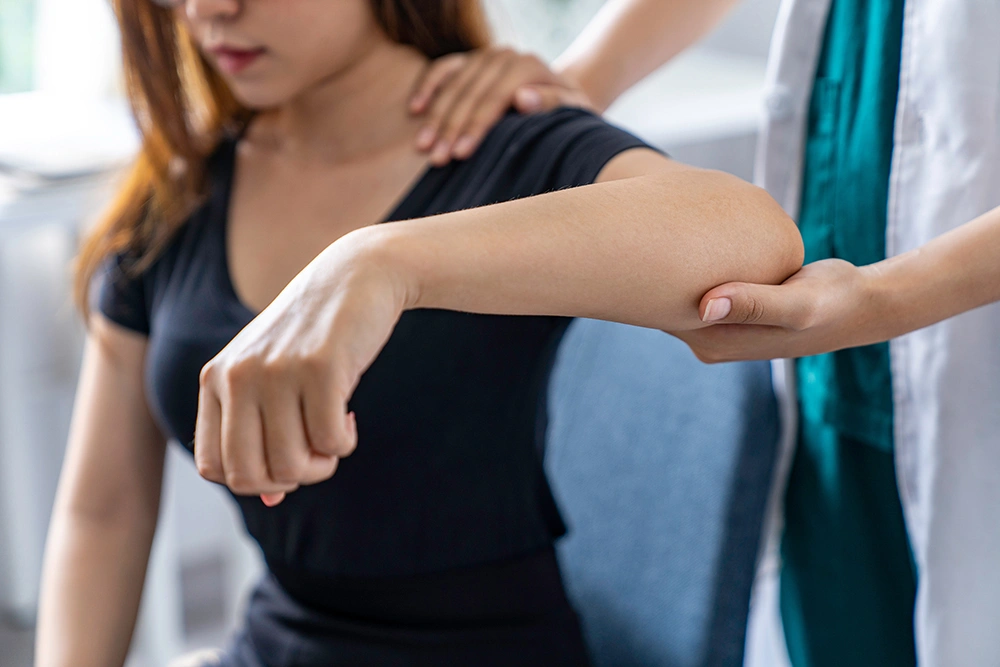
Diagnosis umumnya lewat pemeriksaan fisik dan wawancara keluhan. Dokter akan memeriksa lokasi nyeri, kekuatan genggaman, gerakan siku, dan sensasi saat Anda menahan gerakan pergelangan untuk membedakan dua kondisi tersebut.
Kadang diperlukan pemeriksaan pencitraan seperti USG atau MRI untuk melihat tingkat kerusakan tendon serta menyingkirkan penyebab nyeri siku lain.
Apa Saja Pilihan Pengobatannya?
Pengobatan tennis elbow & golfer’s elbow berfokus mengurangi beban tendon, mempercepat pemulihan, dan memulihkan fungsi. Sebagian besar kasus membaik tanpa operasi.
Pengaturan Aktivitas & Beban
Mengurangi atau memodifikasi aktivitas penyebab biasanya menjadi langkah pertama. Ini termasuk membatasi aktivitas menggenggam, mengangkat, atau gerakan pergelangan yang memberatkan tendon.
Perubahan kecil pada teknik olahraga, jumlah latihan, pengaturan meja kerja, atau cara mengangkat bisa membantu meringankan tekanan pada siku.
Fisioterapi & Latihan Rehabilitasi
Fisioterapi sangat penting untuk pemulihan. Penguatan dan peregangan secara bertahap membantu memperbaiki fungsi tendon, mengurangi beban, dan memulihkan kekuatan lengan.
Latihan rehabilitasi juga bisa memperbaiki kebiasaan gerak atau masalah biomekanik yang memperberat keluhan.
Penopang & Dukungan Gejala
Penopang siku atau strap kadang membantu mengurangi tekanan saat beraktivitas. Meski tidak menyembuhkan secara langsung, alat ini dapat meringankan gejala sementara selama pemulihan.
Obat & Terapi Suntikan
Obat antiinflamasi jangka pendek bisa meredakan nyeri saat keluhan memburuk.
Jika keluhan membandel, terapi suntikan bisa dipertimbangkan. Suntikan PRP juga dapat dibahas bila pengobatan standar tidak membuahkan hasil.
Operasi untuk Kasus Kronis
Operasi siku sangat jarang diperlukan dan hanya dipertimbangkan bila keluhan menetap berbulan-bulan walau sudah rehabilitasi, atau fungsi lengan sangat terganggu.
Tindakan operasi biasanya untuk mengangkat jaringan tendon yang rusak dan memperbaiki bagian yang sehat.
Pulihkan Gerakan Siku Dengan HC Orthopaedic Surgery
Pulihkan Gerakan Siku Dengan HC Orthopaedic Surgery

Tim Ahli Kami
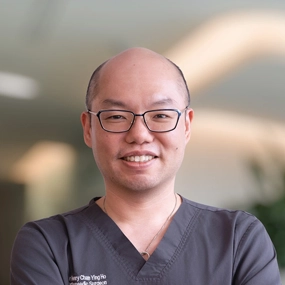
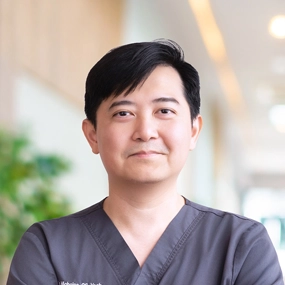
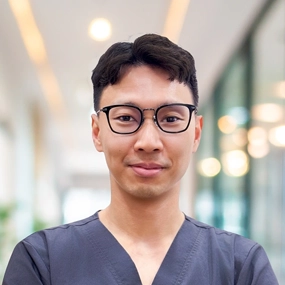
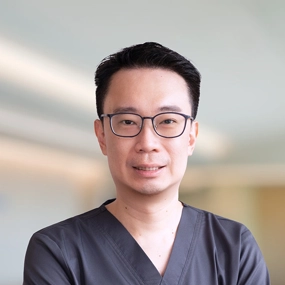
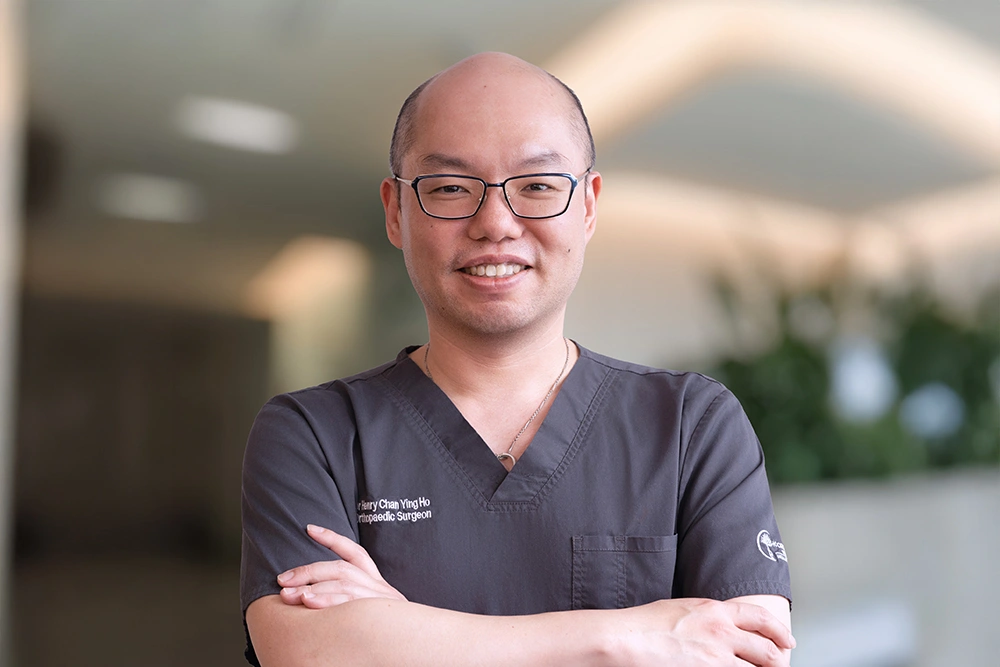
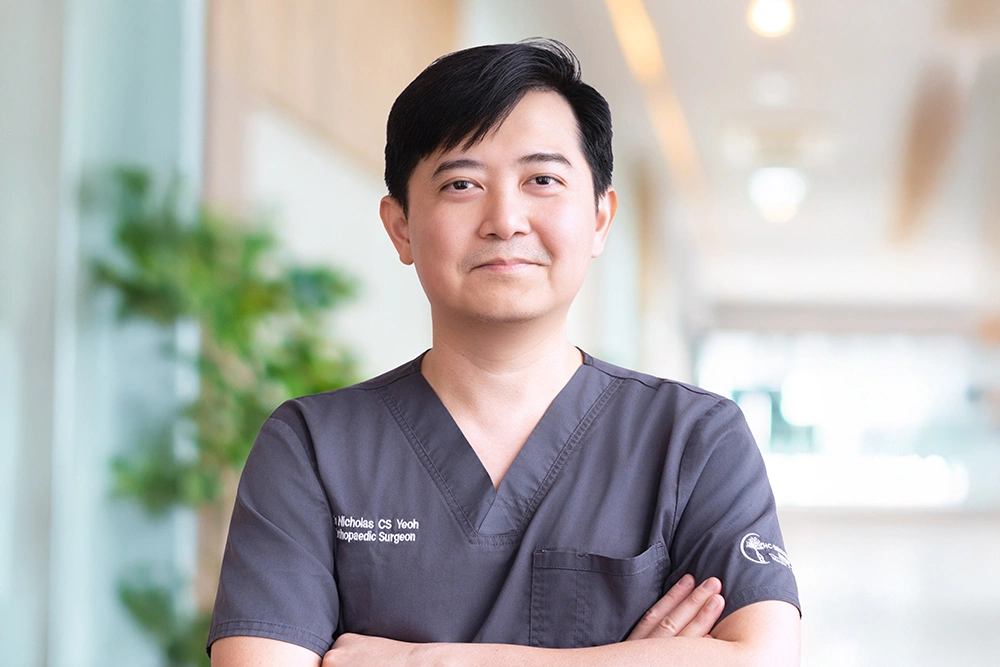
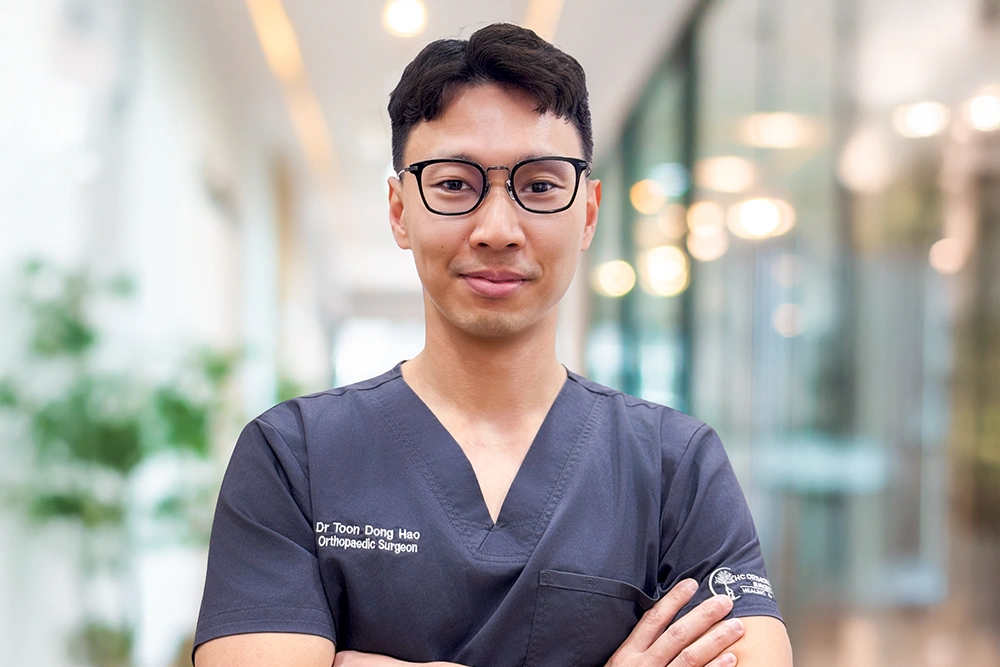
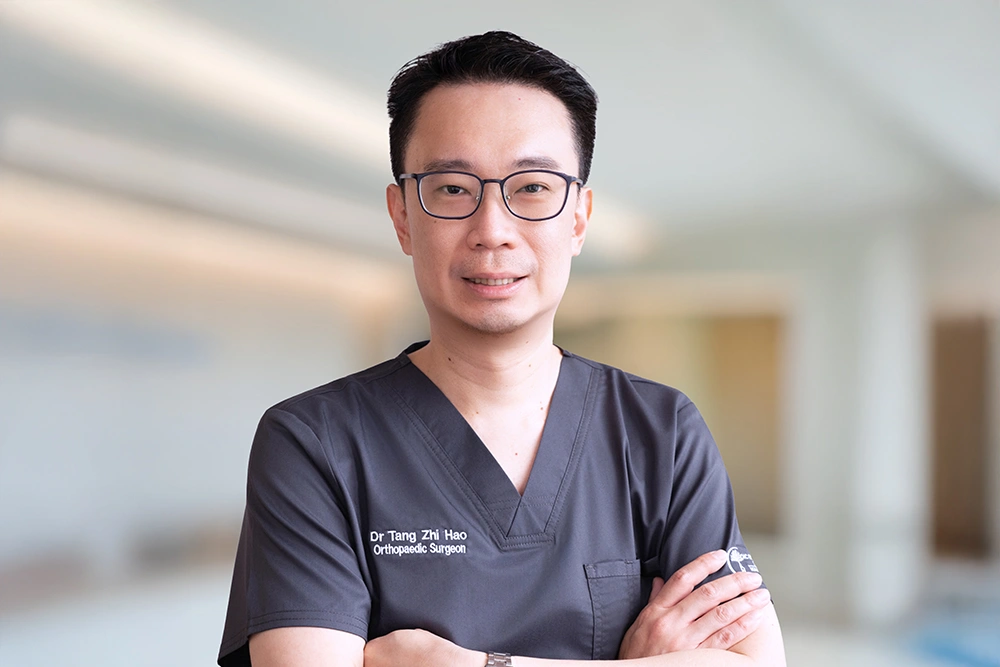
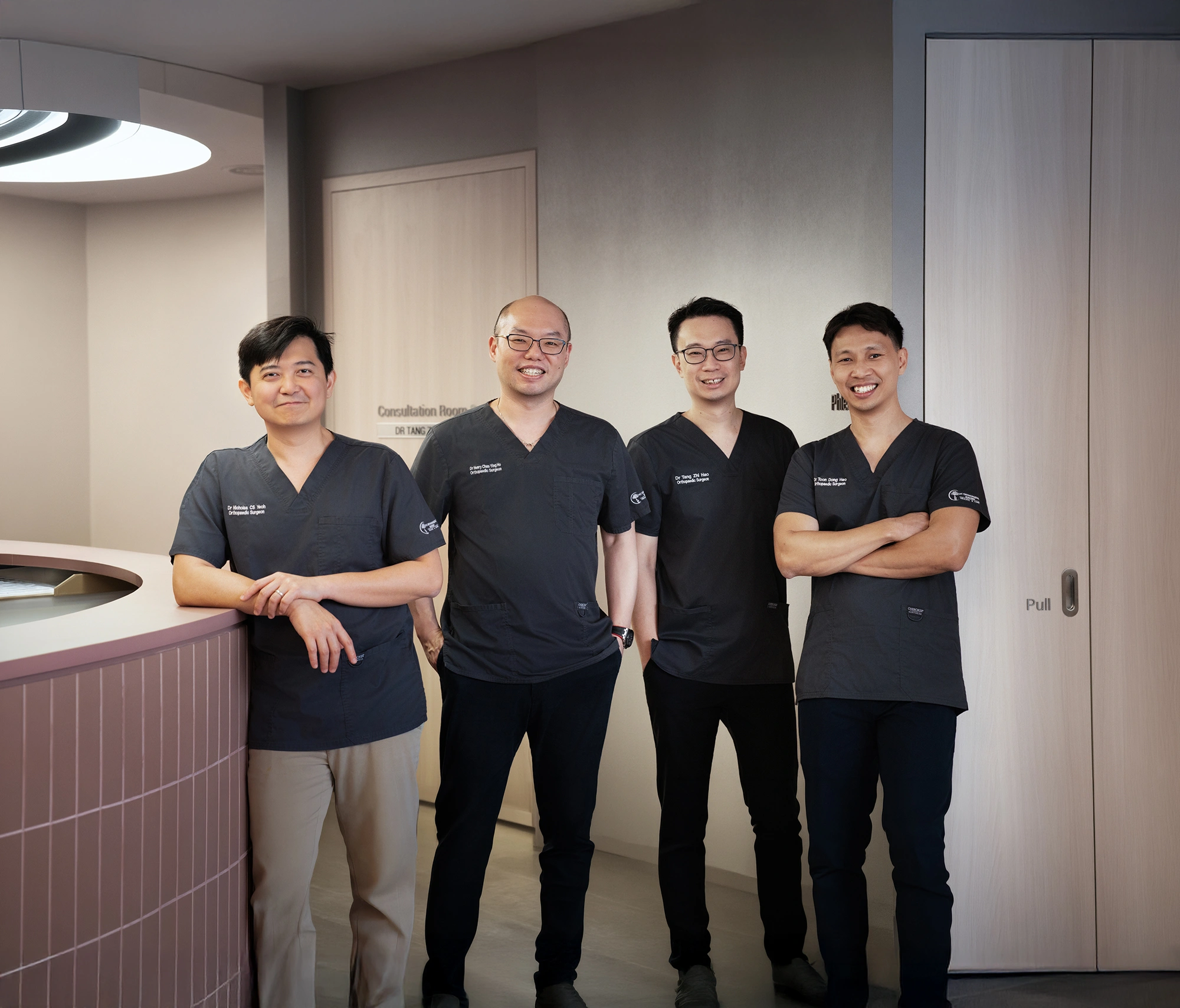
Di HC Orthopaedic Surgery Singapura, perawatan dipimpin oleh Dr Henry Chan didampingi Dr Toon Dong Hao yang berpengalaman menangani masalah siku & lengan atas. Tim kami juga beranggotakan Dr Nicholas Yeoh dan Dr Tang Zhi Hao untuk layanan ortopedi dan cedera otot-sendi secara menyeluruh. Jika nyeri siku Anda tidak kunjung membaik atau mengganggu aktivitas, atur konsultasi untuk evaluasi dan mulai langkah pemulihan siku.
Pertanyaan Umum tentang Tennis Elbow & Golfer’s Elbow
Bisakah seseorang mengalami tennis elbow & golfer’s elbow sekaligus?
Apakah tennis elbow hanya terjadi pada pemain tenis?
Apakah golfer’s elbow hanya menimpa pemain golf?
Berapa lama pemulihan cedera otot siku akibat aktivitas berulang?
Temui Spesialis Siku Kami di Singapura
Dr Henry Chan
Direktur Medis & Konsultan Senior Bedah Ortopedi
MBBS (S’pore), MRCS (Edinburgh), MMed (Orthopaedic Surgery), FRCS (Edinburgh)
Dr Nicholas Yeoh
Konsultan Senior Bedah Ortopedi
MBChB (Edinburgh), MRCS (Edinburgh), MMed (Orthopaedic Surgery), FRCS (Edinburgh)
Dr Toon Dong Hao
Konsultan Senior Bedah Ortopedi
MBChB (Leeds), MRCS (Edinburgh), MMed (Orthopaedic Surgery), FRCS (Edinburgh)
Dr Tang Zhi Hao
Konsultan Senior Bedah Ortopedi
MBBS (S’pore), MRCS (Edinburgh), MMed (Orthopaedic Surgery), FRCS (Edinburgh)